Pergola Ideas That Turn Your Patio Into an Outdoor Room
By Noah James
• 7 min read • Founder, DrivewAI
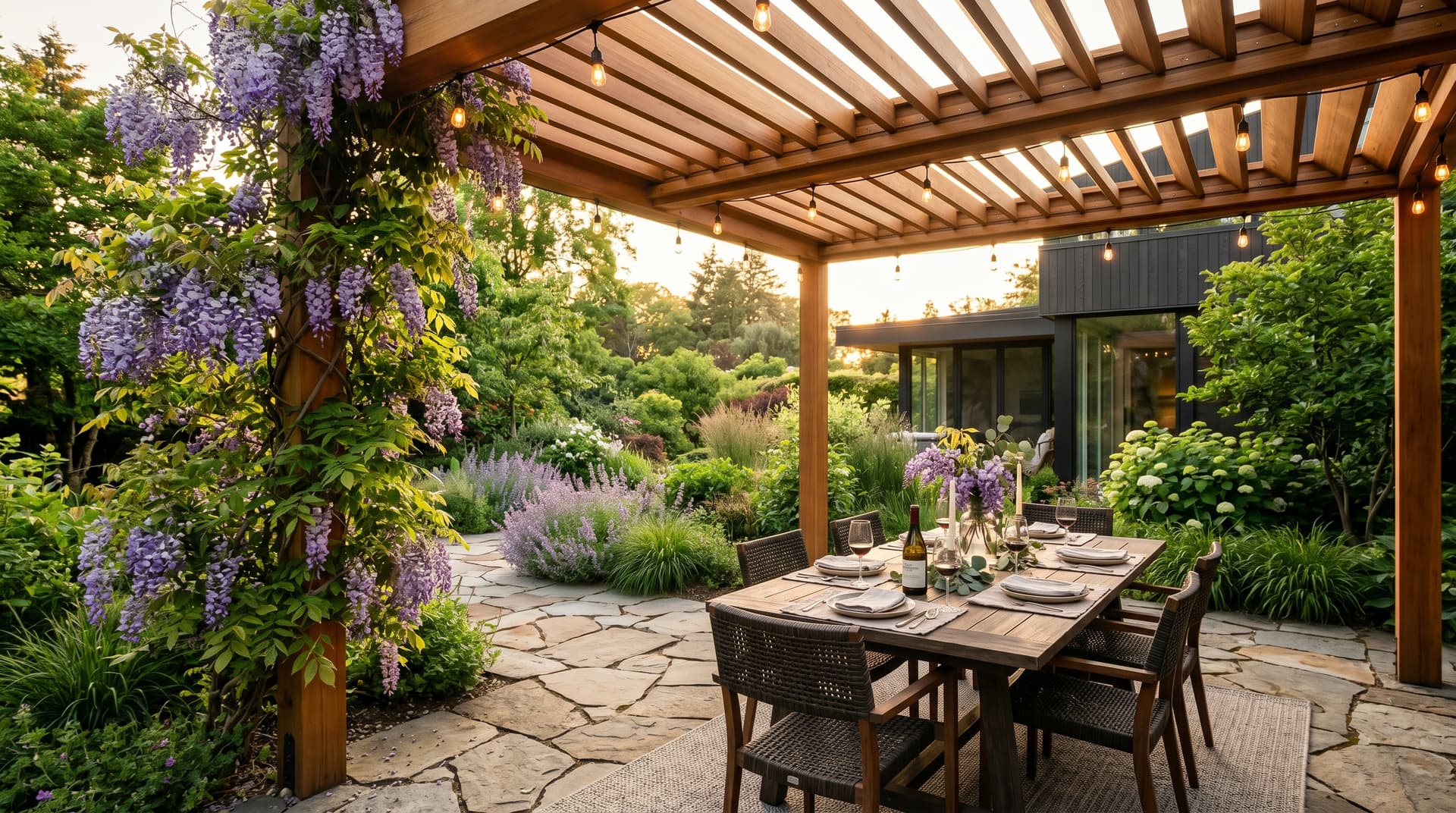
A patio without a pergola is just a slab. It's exposed, undefined, and forgettable — a place you walk across, not a place you stay. The right pergola ideas turn that slab into a room with a ceiling, walls made of shadow and vine, and a reason to eat dinner outside on a Tuesday.
Pergolas are having a moment in 2026 because homeowners are finally realizing that outdoor living isn't about furniture — it's about structure. A $3,000 pergola over a $5,000 patio creates a $20,000 feeling. Here's what's actually worth building.
Pergola Materials — What Lasts and What Doesn't
The material you choose determines how your pergola looks on day one and how it looks on year ten. The options:
Pressure-treated wood: - Cost: $3,000-$8,000 for a 12x16 structure - Lifespan: 10-15 years with maintenance - Pros: cheapest option, easy to build, takes stain well - Cons: warping, cracking, annual staining required, can look rough if not maintained
Cedar or redwood: - Cost: $5,000-$12,000 for a 12x16 structure - Lifespan: 15-25 years - Pros: naturally rot-resistant, beautiful grain, weathers to a silver-gray if left unsealed, aromatic - Cons: expensive, still needs periodic sealing if you want to maintain the original color, softer than hardwood
Aluminum: - Cost: $4,000-$10,000 for a 12x16 structure - Lifespan: 30+ years - Pros: zero maintenance, won't rot or warp, powder-coated in any color, lightweight - Cons: less natural warmth than wood, can feel industrial if not designed well, limited customization on site
Steel: - Cost: $8,000-$20,000 for a 12x16 structure - Lifespan: 30+ years with proper coating - Pros: strongest material, allows thinner beams with wider spans, modern architectural look - Cons: most expensive, must be powder-coated or galvanized to prevent rust, heavy — requires serious footings
Vinyl/PVC: - Cost: $3,000-$7,000 for a 12x16 structure - Lifespan: 20+ years - Pros: maintenance-free, won't rot or peel, clean white aesthetic - Cons: looks plastic up close, limited color options, can yellow in intense sun, not structural enough for heavy loads
For most homeowners, cedar hits the sweet spot — it looks premium, resists rot naturally, and ages gracefully even without staining. Aluminum is the right call if you want zero maintenance and don't mind a more modern aesthetic.
Attached vs. Freestanding — Which Layout Works
The first design decision isn't style — it's placement. Where the pergola sits determines its structure, permitting, and how it connects to your house.
Attached pergola: One side bolts to the house via a ledger board, the other side rests on posts. Creates a seamless indoor-outdoor transition — you walk out the back door directly under cover. Best when the pergola is adjacent to the kitchen or living room. The ledger attachment means it needs to be properly flashed and waterproofed, just like a deck ledger board. Most jurisdictions require a permit for attached structures.
Freestanding pergola: Sits on four or more posts, independent of the house. Can be placed anywhere in the yard — over a patio, next to a pool, in a garden corner. More flexibility in placement but requires four footings instead of two. Works well as a destination structure at the far end of the yard, creating a reason to walk through the landscape.
Pergola over existing patio: If you already have a patio, adding a pergola over part or all of it transforms the space without tearing anything up. The posts can be set in footings at the patio edge, and the beams span overhead. This is the fastest way to convert an open patio into a defined outdoor room.
Louvered Pergolas — the 2026 Upgrade
Fixed-beam pergolas provide partial shade through the gaps between rafters. Louvered pergolas let you control it. Motorized louvers rotate from fully open (maximum sun) to fully closed (complete shade and rain protection) with a remote or app.
Why they're taking over in 2026:
- Rain protection when closed — turns the pergola into a covered structure during storms, then opens back up when the sun returns - Adjustable shade angles — tilt the louvers to block low afternoon sun while letting in morning light - Integrated drainage — closed louvers channel water to built-in gutters along the posts, keeping the patio dry - LED lighting integration — many louvered systems include built-in LED strips along the beams
The catch: louvered pergolas cost 2-3x more than fixed-beam versions. A 12x16 motorized louvered pergola runs $12,000-$25,000 installed, compared to $5,000-$12,000 for a fixed cedar pergola. The question is whether the flexibility justifies the premium — for homeowners who want year-round use in climates with rain or intense sun, it usually does.
Pergola Ideas by Style
The best pergola matches your house, not just your Pinterest board. Style pairings that work:
Modern/Contemporary home: - Black aluminum or steel frame with clean horizontal beams - Minimal rafter spacing for a sleek profile - No climbing plants — let the architecture stand alone - Pair with concrete patio and minimalist furniture
Craftsman/Farmhouse: - Cedar with chunky beams and decorative rafter tails - Climbing roses, wisteria, or jasmine on one or two sides - String lights woven through the beams - Pair with flagstone or brick patio
Mediterranean/Spanish: - Stucco-covered columns with wood beams - Bougainvillea or grape vine canopy - Terracotta or Saltillo tile patio underneath - Iron light fixtures hung from the crossbeams
Coastal: - White-washed wood or white vinyl - Open rafter spacing for maximum light - Sail-style fabric draped between beams for casual shade - Pair with pea gravel or light-colored pavers
For more on matching your outdoor structures to your home's architecture, our exterior house colors guide covers the principles of visual continuity between house and landscape.
What to Put Under a Pergola
A pergola without a plan for the space beneath it is a roof over nothing. The best pergola setups pair the structure with a specific use:
Outdoor dining room: A table and chairs centered under the pergola, with a pendant light or chandelier hung from the center beam. This is the most popular use — the pergola frames the dining experience and makes a weeknight dinner feel intentional. Works best with a pergola at least 12x14 feet.
Lounge area: Low seating — a sectional or daybed — with a coffee table and floor-level planters. The pergola creates a sense of enclosure that makes outdoor lounging feel private. Add curtains or outdoor drapes on two sides for more intimacy.
Hot tub enclosure: A pergola over a hot tub provides privacy from above (second-story neighbors) and a framework for hanging lights, towel hooks, and privacy screens. Use rot-resistant material — the steam and splashing will test any wood finish.
[Outdoor kitchen](/blog/outdoor-kitchen-ideas) cover: A pergola spanning the cooking and prep area protects you from sun while grilling and keeps rain off the countertops. Louvered models work especially well here since you can close them during rain but open up for ventilation while cooking.
How Much Does a Pergola Cost
Full pergola costs depend on material, size, and whether it's DIY or professionally installed:
- DIY pressure-treated wood kit (10x12): $1,500-$3,000 - Professional cedar pergola (12x16): $5,000-$12,000 - Aluminum pergola (12x16): $4,000-$10,000 - Motorized louvered pergola (12x16): $12,000-$25,000 - Custom steel pergola: $15,000-$30,000+
The National Association of the Remodeling Industry reports that outdoor living additions — pergolas, patios, and decks — consistently rank among the top renovations for homeowner satisfaction, with joy scores above 90%.
Permits vary by jurisdiction. Freestanding pergolas under a certain size (often 200 square feet) may not require a permit, but attached pergolas almost always do. Check with your local building department before starting.
Preview Your Pergola Before You Build
A pergola changes the entire visual weight of your backyard. Too small and it looks like an afterthought. Too large and it overwhelms the patio. The wrong material clashes with your house. These are hard to fix after the concrete footings are poured.
DrivewAI lets you upload a photo of your backyard and preview how a pergola looks over your actual patio — before you commit to a material, size, or style. Test whether cedar or aluminum works better with your siding. See if an attached or freestanding layout fits your space. Preview the scale before committing to a structure you'll look at every day.
One rendering is free each month, and the Customized renders start at $9.00 each. covers enough to compare multiple directions.
For more outdoor structure planning, check out our guides on covered patio ideas, deck ideas, and backyard landscaping ideas.
About the author
Noah James
Founder, DrivewAI
Noah James is the founder of DrivewAI, an AI home visualization platform that helps homeowners, contractors, and real estate agents preview renovations before committing. He built DrivewAI to close the gap between inspiration and execution in home improvement.
His writing focuses on practical renovation decision-making, material comparisons, and how AI visualization tools are changing the way people plan projects — from driveway replacements to full interior staging.
See your home transformed by AI
Upload a photo and get AI renderings across every style. Designs from $9 with a 24-hour refund guarantee.
Try DrivewAI Free