Patio Ideas That Actually Work: Materials, Sizes, and Costs
By Noah James
• 8 min read • Founder, DrivewAI
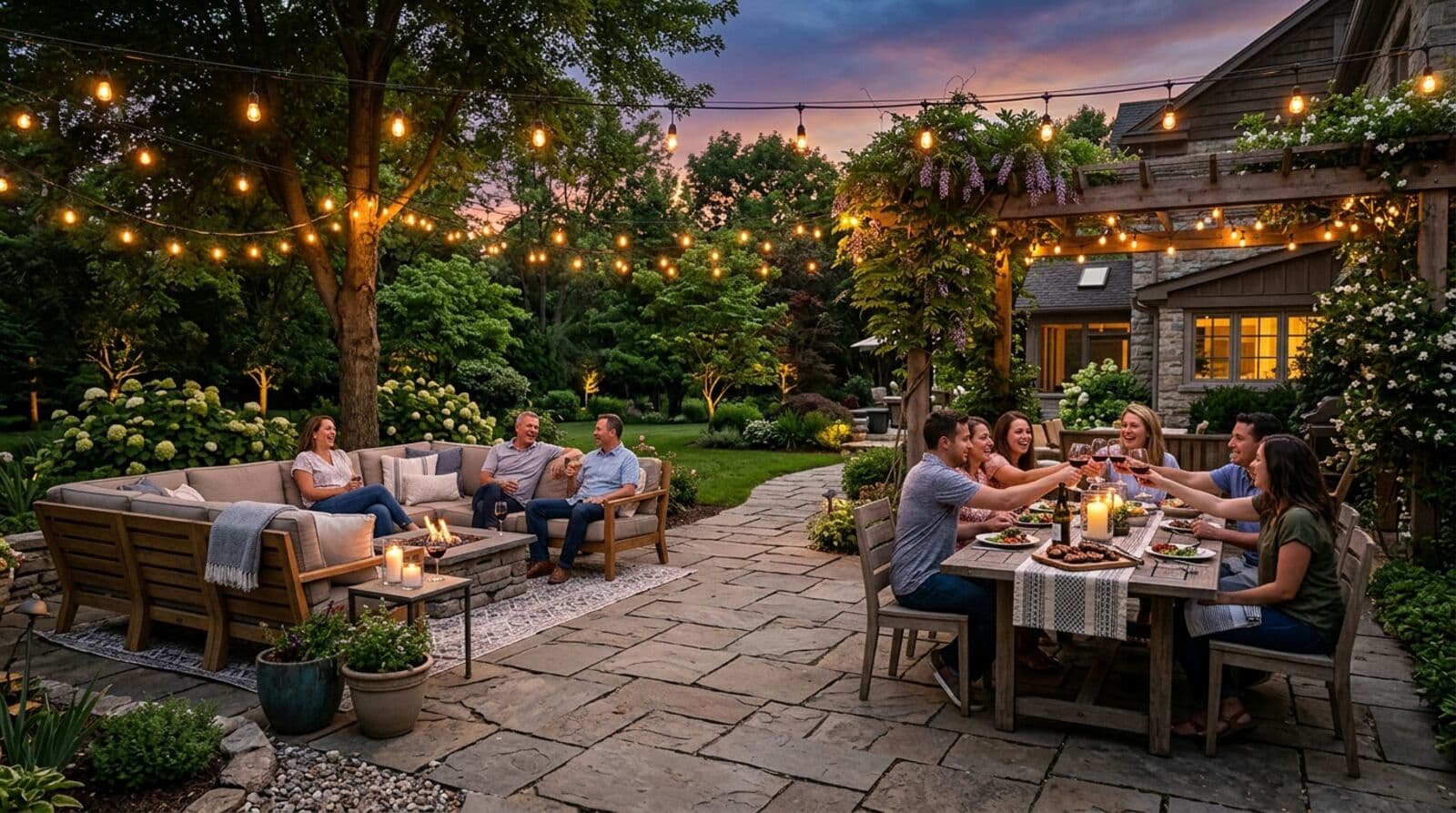
Most patio ideas you find online skip the part that actually matters: what it costs, how big it should be, and which material won't look terrible in three years. Instead you get a gallery of $80,000 outdoor kitchens in Scottsdale with zero context. This guide is different. We're going to walk through real materials, real budgets, and the sizing mistake that ruins more patios than anything else.
Patio Materials Compared: What You're Actually Choosing Between
Every patio starts with a material decision, and each one comes with tradeoffs you should understand before you commit.
Poured concrete runs $6-$12 per square foot installed. It's the workhorse option — durable, low-maintenance, and predictable. Stamped or stained concrete bumps that to $10-$18 per square foot but gives you the look of stone at a fraction of the price. The downside is cracking. Concrete will crack eventually, especially in freeze-thaw climates. Control joints help, but they don't eliminate it.
Concrete pavers cost $12-$25 per square foot installed. They're the most popular choice for good reason: they're modular, so individual pavers can be replaced if they crack or stain. The interlocking pattern also handles ground movement better than a solid slab. The catch is weeds between joints, though polymeric sand has mostly solved that problem.
Natural flagstone is the premium option at $15-$35 per square foot. It looks stunning and every piece is unique. But it's irregular, which means more labor to install and uneven surfaces that wobble furniture. If you're in a region with good local stone, prices drop significantly.
Gravel or decomposed granite is the budget play at $2-$5 per square foot. It works well for casual spaces, fire pit areas, or paths. It does migrate over time and needs edging to stay put. Don't put a dining table on gravel unless you enjoy chairs sinking into the ground.
Wood decking is technically a deck, not a patio, but people compare them constantly. Pressure-treated lumber runs $15-$25 per square foot; composite decking hits $25-$45. Decks make sense when you have a slope or want an elevated surface off a back door. For ground-level, a patio almost always wins on cost and longevity.
Size Planning: Why Most People Build Too Small
Here's the single biggest mistake with patio ideas that people execute in real life: they build too small. A 10x10 patio sounds reasonable until you put a table and four chairs on it and realize there's nowhere to push your chair back without falling off the edge.
The minimum for a dining area is 12x12 feet. That gives you a table for four to six people with enough room to move around. If you want a separate lounge area with a sofa or fire pit, you're looking at 16x20 feet minimum. A full outdoor living space with dining, lounging, and cooking zones needs 20x24 feet or more.
A helpful rule: measure your indoor dining room, then add 25%. Outdoor furniture is bulkier than indoor furniture, and you need more clearance because there are no walls guiding traffic flow.
Before you finalize your size, lay it out with painter's tape or garden hoses on the ground. Live with it for a weekend. Walk around it. Put your actual furniture in the space. Almost everyone who does this exercise makes the patio bigger than their original plan.
Budget Tiers: What You Actually Get at $1K, $5K, and $15K
The $1,000 patio gets you a 10x10 gravel pad with steel edging, a portable fire pit, and a couple of Adirondack chairs. It's not glamorous, but it's functional and you can do it in a weekend. This is the right starting point if you're not sure how much you'll use an outdoor space.
The $5,000 patio is where most homeowners land. You're looking at a 12x16 concrete or paver patio, professionally installed, with basic landscaping around the edges. Customized renders start at $9.00 each. This budget doesn't include furniture, lighting, or a cover — that's all extra. At this tier, spend the money on quality base preparation. A well-compacted base with proper drainage is the difference between a patio that lasts twenty years and one that heaves after two winters.
The $15,000 patio gives you the full experience: 16x20 or larger paver patio, integrated lighting, a built-in fire feature or seat wall, professional grading, and good landscape plantings around the perimeter. This is the level where your patio starts adding real value to your home — typically 50-80% ROI according to the American Society of Landscape Architects.
The Furniture Trap
Do not buy patio furniture before your patio is built. This sounds obvious, but it happens constantly. Someone gets excited, hits a Memorial Day sale, buys a seven-piece dining set, and then discovers their finished patio is too small for it. Or the color clashes with the stone they chose. Or the table legs don't sit flat on flagstone.
Build the patio first. Live with the empty space for a week or two. Figure out where the sun hits at dinner time, where the wind comes from, and where the shade falls in the afternoon. Then buy furniture that fits the space you actually have, not the space you imagined.
Also, budget separately for furniture. A decent outdoor dining set runs $800-$2,000. A quality outdoor sofa section is $1,500-$4,000. These costs sneak up on people who spent their entire budget on hardscaping.
Covered vs Open Patio Ideas
An open patio costs less and works fine in mild climates. But if you get serious afternoon sun, regular rain, or want to use the space more than five months a year, some kind of cover changes everything.
A pergola ($3,000-$8,000) adds structure and filtered shade but won't keep you dry. A solid patio cover ($5,000-$15,000) acts like a roof extension and creates true shelter. A shade sail ($200-$800) is the budget compromise — it blocks sun and looks modern, but it's not permanent and won't handle snow loads.
The decision often comes down to your climate. In the Pacific Northwest, a solid cover is almost mandatory. In Southern California, a pergola with climbing vines is plenty. In the Midwest, a retractable awning gives you flexibility for unpredictable weather. We go deeper on this in our covered patio ideas guide.
Drainage and Grading: The Boring Part That Matters Most
Your patio needs to slope away from your house at a minimum of 1/4 inch per foot. This isn't optional. Water pooling against your foundation causes basement leaks, frost heave, and structural damage that costs thousands to repair.
If your yard slopes toward your house, you'll need to address grading before the patio goes in. This might mean regrading the yard ($1,000-$3,000), installing a French drain ($2,000-$5,000), or building a slight step-down into the patio. This is the kind of work that doesn't show up in Pinterest photos but makes or breaks the project.
On the patio surface itself, permeable pavers or gravel handle drainage naturally. Solid concrete or tightly-set flagstone needs that slope engineered in. Don't skip the base layers: 4-6 inches of compacted gravel, 1 inch of leveling sand, then your surface material. Cutting corners on the base is the number-one cause of patio failure.
Patio Ideas for Small Yards
A small yard doesn't mean you can't have a great patio — it means you have to be smarter about layout. An L-shaped patio that wraps a corner of your house uses space that's otherwise dead. A circular patio creates a focal point that makes the yard feel intentional rather than cramped.
In yards under 500 square feet, consider making the patio the yard. A large paver surface with container gardens and a few strategic plantings can feel more usable than a tiny patch of struggling grass. This approach also eliminates mowing, which in a small yard barely feels worth the effort anyway.
For small-space landscaping ideas that complement a patio, think vertical: climbing plants on trellises, hanging planters, and tiered container arrangements. They add greenery without eating into your limited floor space.
How to Visualize Your Patio Before You Build
The hardest part of planning a patio is imagining how it'll actually look in your specific yard. Dimensions on paper don't capture how a flagstone patio will feel next to your brick house, or whether pavers will clash with your existing landscaping.
This is where visualization tools earn their keep. You can upload a photo of your current yard to our landscaping tool and preview different patio materials, sizes, and layouts before you spend a dollar on materials. It takes thirty seconds and saves you from the very expensive mistake of committing to a material or layout you end up hating.
Whether you're working with a $1,000 budget or a $15,000 vision, start with a clear picture of what you want. Measure twice, pour once — and make sure your patio is big enough to actually enjoy.
About the author
Noah James
Founder, DrivewAI
Noah James is the founder of DrivewAI, an AI home visualization platform that helps homeowners, contractors, and real estate agents preview renovations before committing. He built DrivewAI to close the gap between inspiration and execution in home improvement.
His writing focuses on practical renovation decision-making, material comparisons, and how AI visualization tools are changing the way people plan projects — from driveway replacements to full interior staging.
See your home transformed by AI
Upload a photo and get AI renderings across every style. Designs from $9 with a 24-hour refund guarantee.
Try DrivewAI Free