How to Choose Exterior House Colors That Actually Work
By Noah James
• 8 min read • Founder, DrivewAI
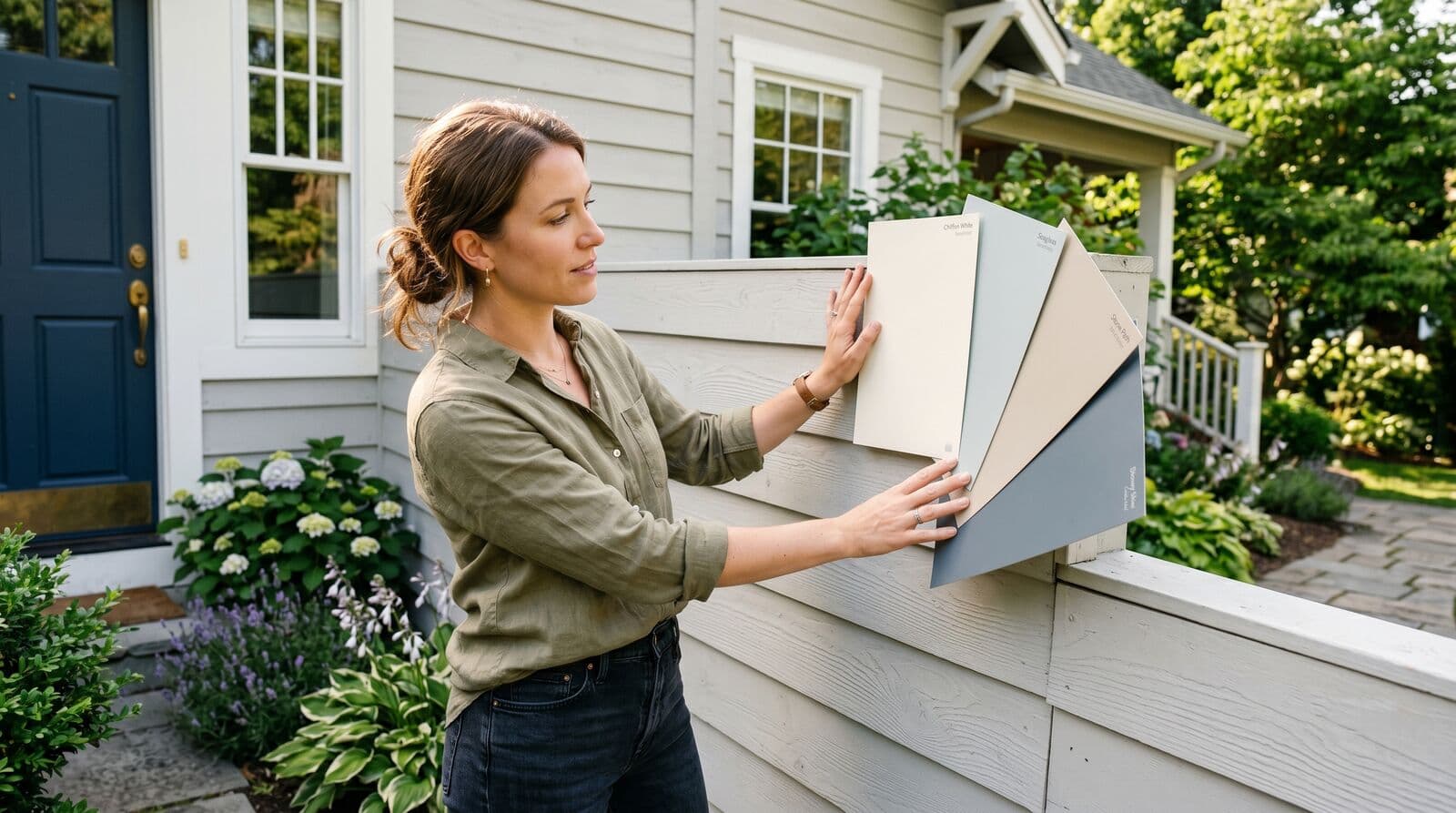
The Three-Color Rule for Exterior House Colors
Choosing exterior house colors is one of those decisions that seems simple until you're standing in a paint aisle staring at 47 shades of gray. Then it becomes paralyzing. Here's the framework that professional color consultants use, simplified: your house needs exactly three colors. Body, trim, and accent. That's it.
The body color covers the largest surface area — siding, stucco, or brick paint. This is the dominant color and should be something you can live with for a decade. The trim color highlights architectural details: window frames, door frames, fascia boards, corners, and eaves. The accent color appears on the front door and sometimes shutters or garage doors. It's your personality color — the one that can be bold.
Three colors create visual hierarchy without chaos. Two colors look flat and builder-grade. Four or more colors look like a Victorian that can't make up its mind. Stick with three, and your house will look intentionally designed rather than randomly painted.
The Undertone Trap — Why That Gray Looks Purple
This is the number one reason exterior paint jobs go wrong, and it catches even experienced homeowners off guard. Every paint color has an undertone — a secondary hue that becomes visible depending on the light. And exterior light is very different from the light inside a paint store.
Gray is the worst offender. Depending on the undertone, gray can shift blue, green, purple, or brown on your exterior. That "perfect greige" on the paint chip? It might look lavender at 3pm on a south-facing wall. This isn't the paint's fault — it's physics. Large surfaces amplify undertones, and natural sunlight intensifies them.
Beige and tan can shift pink or yellow. White can go blue, gray, or cream. Green can look more yellow or more blue depending on your landscaping's reflected light. Even black has undertones — some lean blue, others lean brown or green.
How to identify undertones before you commit:
- Compare the color to a pure white card. Hold the paint chip against pure white paper. Whatever hue you see in the comparison is the undertone. - Look at the color's position on the paint strip. The darkest color on the strip reveals the undertone most clearly. If the darkest shade of your gray is clearly purple, your medium gray has purple in it too. - Check the color in multiple light conditions. Morning light is cool and blue. Afternoon light is warm and yellow. Overcast days are neutral. Your exterior will experience all of these, every day.
The fix is simple but requires patience: test the actual paint on your actual house. We'll get to the specifics of testing in a moment.
How to Test Exterior House Colors the Right Way
Forget paint chips. Forget digital mockups from the paint store (they're helpful but not accurate enough for a final decision). The only way to truly know how a color will look on your house is to put actual paint on actual walls.
Buy sample pots. Most paint brands sell quart-sized samples for $8-$15. Buy your top 3-4 candidates. This $30-$60 investment could save you from a $3,000-$8,000 mistake.
Paint large swatches. A 2x2 foot swatch minimum, but 3x4 feet is better. Small swatches are misleading because surrounding colors influence how you perceive them. Larger swatches give you a more accurate read.
Paint on multiple walls. Your north-facing wall and south-facing wall receive completely different light. A color that looks perfect on the shaded side might wash out or intensify on the sunny side. Test on at least two walls with different exposures.
Check at four times of day. Morning, midday, late afternoon, and after dark with your exterior lights on. The color will look different at each point. You need to be happy with all four versions, not just the one you happened to see first.
Live with it for a week. Seriously. Don't make the decision in one afternoon. Weather changes, light changes, and your perception changes. A color that excites you on Monday might irritate you by Friday.
If you want a faster preview before buying sample pots, upload a photo of your house to DrivewAI, and test different color combinations digitally first. It won't replace physical paint samples, but it narrows your options from 47 grays down to 3 or 4 worth testing.
Trending Exterior Palettes for 2026 That Won't Date Quickly
Trends in exterior colors move slowly — much slower than interior paint trends. A bold interior accent wall is a weekend fix if you hate it. A full exterior repaint is a $5,000-$15,000 commitment. So the goal is to find colors that feel current without being so trendy they'll scream "2026" by 2030.
Warm neutrals are dominant right now. The cool gray era of 2015-2022 is fading. Homeowners and designers are gravitating toward warm whites, greiges with yellow or brown undertones, and earthy tones. Think warm putty, soft clay, and creamy whites instead of stark cool grays.
Palette 1 — Modern Warm: Warm white body (like Benjamin Moore White Dove or Sherwin-Williams Alabaster), charcoal gray trim, black front door. This combination is clean, timeless, and works on virtually any architectural style.
Palette 2 — Earthy Contemporary: Sage green or olive body, cream trim, warm wood or terracotta accent door. This palette connects the house to its landscape and has a natural, grounded feel that ages well.
Palette 3 — Dark and Dramatic: Charcoal or deep navy body, bright white trim, saturated accent door (red, yellow, or teal). High contrast, high impact. More on dark exteriors below — they come with specific considerations.
Palette 4 — Soft Classic: Pale blue-gray body, crisp white trim, navy or forest green door. Traditional without being dated, and works especially well on Colonial, Cape Cod, and Craftsman homes.
What to avoid: Pure, stark white as a body color (it shows every imperfection and dirt streak). Trendy colors pulled from interior design (that millennial pink is not going on a house exterior). Multiple bold colors competing for attention.
Sherwin-Williams' architectural color resources offer curated palettes organized by home style. They're a solid starting point, especially if you're completely stuck.
Dark Exterior House Colors: The Pros and Cons Nobody Mentions
Dark exteriors — black, charcoal, deep navy, dark forest green — have surged in popularity. They look stunning in photographs. They make architectural details pop when paired with white trim. They photograph well on Instagram. But before you commit to painting your house the color of a black credit card, consider the tradeoffs.
The real pros:
- Dramatic curb appeal. A dark house stands out on a street of beige and gray homes. It reads as confident and modern. - Hides imperfections. Dirt, mildew, and minor siding flaws are less visible on dark surfaces than on white or light colors. - Makes trim and landscaping pop. White trim against a dark body creates sharp, clean lines. Green foliage looks more vibrant against a dark backdrop.
The real cons:
- Heat absorption. Dark colors absorb significantly more solar radiation than light colors. On a south-facing wall in a hot climate, a dark exterior can increase surface temperatures by 20-40 degrees Fahrenheit compared to white. This can increase cooling costs and accelerate material degradation — particularly on vinyl siding, which can warp under extreme heat. In northern climates, this is less of an issue and can actually reduce heating costs slightly in winter. - Faster fading. UV radiation breaks down dark pigments faster than light ones. A dark charcoal may show noticeable fading within 5-7 years, while a medium tone might last 8-10 years before looking tired. Budget for more frequent repainting. - Shows dust and pollen. Yes, dark colors hide dirt, but they show dust and pollen clearly. If you live near farmland or in a high-pollen region, your dark house will develop a visible haze every spring. - Material restrictions. Some vinyl siding manufacturers void warranties if you paint the siding a color darker than the original. The heat absorption can literally warp the panels. Check your siding warranty before going dark.
The verdict: dark exteriors work best in moderate climates, on homes with good shade coverage, and on materials that can handle heat (fiber cement, wood, brick, stucco). They're risky on vinyl siding in hot climates and require more frequent paint maintenance everywhere.
Color Combinations by Architectural Style
Your home's architecture should influence your color choices. A color scheme that sings on a modern farmhouse might look absurd on a Mediterranean villa. Here's a style-by-style starting point.
Craftsman / Bungalow: Earthy, warm tones. Olive green, warm brown, russet, or deep gold body colors with cream or warm white trim. These homes have lots of wood detail and look best in colors that complement natural materials.
Colonial / Traditional: Classic, restrained palettes. White, pale gray, pale blue, or pale yellow body with white trim and a bold door color (red, black, or hunter green). These homes are designed for symmetry and formality.
Ranch / Mid-Century Modern: Earth tones and period-appropriate colors. Avocado green, warm gray, terracotta, or slate blue. These homes look dated in contemporary trendy colors and best in colors that nod to their era while feeling fresh.
Modern / Contemporary: High contrast works well. Dark body with white trim, or monochromatic schemes where body and trim are different shades of the same color. These homes can handle bold choices that would overwhelm fussier architecture.
Farmhouse: White or cream body with black or dark charcoal trim and accents. This is the farmhouse look for a reason — it works. Resist the urge to add a third bright color; the simplicity is the point.
Coordinating With Fixed Elements
Here's a constraint most color guides overlook: your roof, stone work, brick, and hardscape aren't getting painted. These fixed elements have colors that your new palette must coordinate with.
Your roof is your starting point. A warm brown roof fights with cool gray siding. A blue-gray roof looks odd next to warm beige. Hold your paint samples against your actual roof material and make sure they coexist peacefully.
Brick and stone are permanent. If your house has a brick or stone facade on any portion, your paint colors need to complement those tones. Red brick has warm undertones, so pair it with warm-leaning colors. Gray stone works with cool or neutral palettes.
Concrete and pavers matter too. Your driveway, walkways, and patio surfaces are part of your home's color story whether you planned it that way or not. A warm-toned house over a blue-gray concrete driveway creates a subtle but persistent visual conflict.
Previewing Your New Exterior Before Committing
Repainting a house exterior is a significant investment — typically $3,000-$8,000 for professional work on an average home, or $500-$1,500 in materials if you're doing it yourself. The last thing you want is to finish the job, step back to admire it, and realize the color looks nothing like you expected.
Physical paint samples on multiple walls remain the gold standard, but technology has made the early exploration phase much easier. Upload a photo of your house to DrivewAI and test different color combinations on your actual home. Customized renders start at $9.00 each. Swap body colors, try different trim tones, experiment with bold accent doors — all before you buy a single sample pot. It's particularly useful for comparing warm versus cool palettes and seeing how dark versus light body colors change your home's visual weight.
Choosing exterior house colors doesn't have to be agonizing. Follow the three-color rule, understand undertones, test on the actual house, and pick a palette that works with your home's style and fixed elements. A well-chosen color scheme can make a tired house look new and a new house look intentional.
For more ideas on boosting your home's exterior appeal, check out our guides to curb appeal ideas and front door ideas.
About the author
Noah James
Founder, DrivewAI
Noah James is the founder of DrivewAI, an AI home visualization platform that helps homeowners, contractors, and real estate agents preview renovations before committing. He built DrivewAI to close the gap between inspiration and execution in home improvement.
His writing focuses on practical renovation decision-making, material comparisons, and how AI visualization tools are changing the way people plan projects — from driveway replacements to full interior staging.
See your home transformed by AI
Upload a photo and get AI renderings across every style. Designs from $9 with a 24-hour refund guarantee.
Try DrivewAI Free