Room Makeover Ideas That Cost Under $500
By Noah James
• 8 min read • Founder, DrivewAI
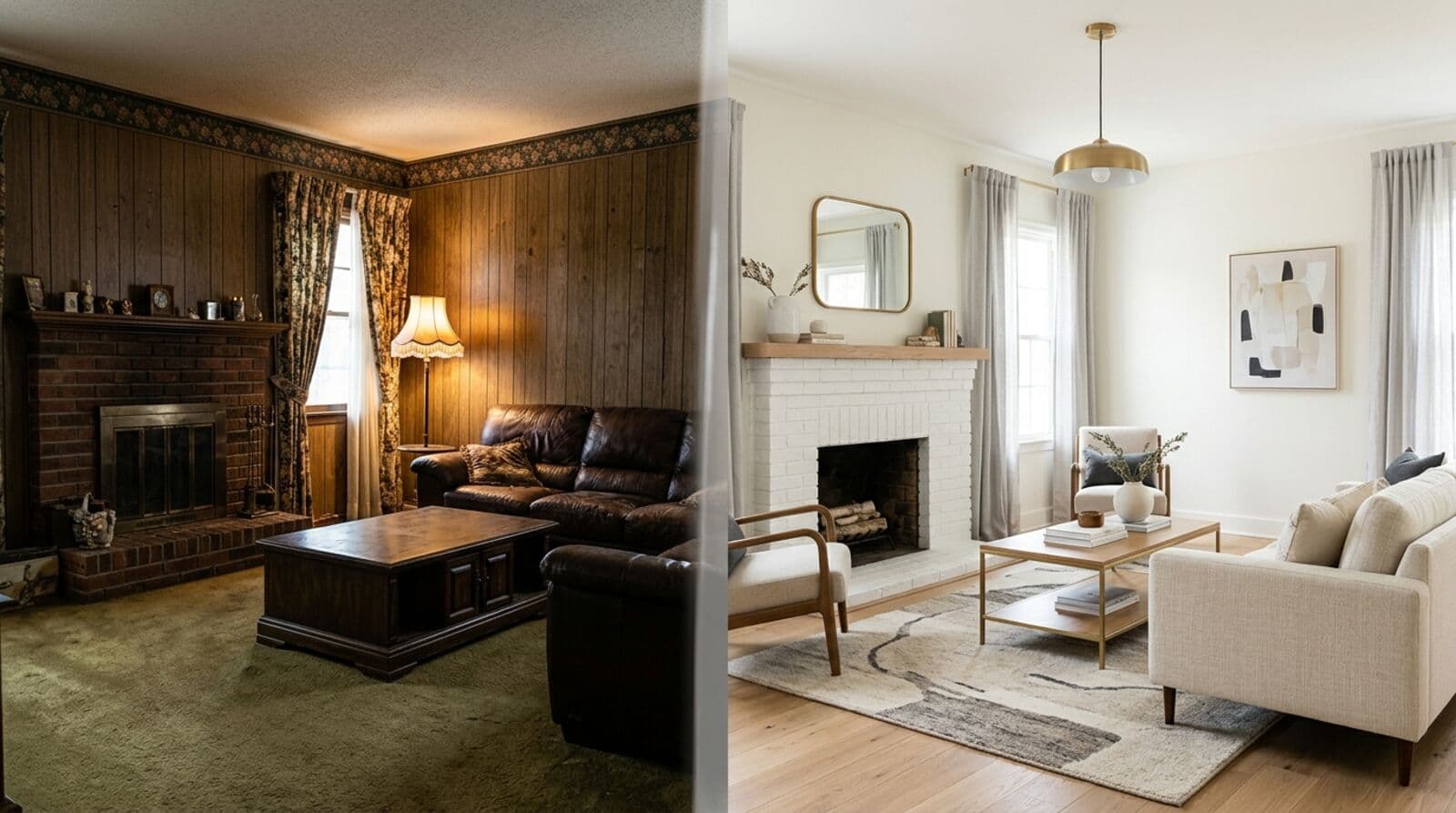
You don't need $20,000 and a demolition crew to transform a room. Most rooms that feel "off" aren't suffering from structural problems or ugly bones — they're suffering from bad lighting, dated paint, mismatched textiles, and furniture arrangements that nobody has questioned since move-in day. The best room makeover ideas cost surprisingly little, and the results are disproportionately dramatic. Here are the five changes that can transform any room for under $500, why some rooms feel wrong even when everything seems fine, and how to test your ideas before spending a dime.
The 5 Changes That Transform Any Room
These five elements account for roughly 80% of how a room looks and feels. Change all five, and people will ask if you renovated. The total cost, if you're strategic about sourcing, can stay under $500.
Paint ($50-150). Nothing has a higher impact-to-cost ratio than paint. A gallon covers 350-400 square feet and costs $30-60. An accent wall in a single room takes one gallon and a Saturday afternoon. The color shift from builder-beige to a warm white, a soft sage, or a muted blue fundamentally changes the mood of a space. Even painting your ceiling a shade lighter than your walls — a trick called "ceiling washing" — makes a room feel taller.
Lighting ($100-200). Swap the builder-grade boob light for a modern flush mount. Add a table lamp or floor lamp for a second light source. Put your overhead on a dimmer switch. The difference between one harsh overhead light and two or three layered sources is the difference between a waiting room and a living room.
Textiles ($100-150). New throw pillows, a blanket, and either curtains or a rug — pick two of the three. These are the elements that add color, texture, and softness. Old throw pillows flatten and fade. Curtains that are too short or too thin look cheap. A rug that's too small makes furniture float. Updating textiles is like updating a room's wardrobe.
Art placement ($50-100). Not necessarily buying new art — although thrift stores and estate sales have originals for under $50 — but hanging what you have correctly. Art should be centered at 57 inches from the floor to the center of the piece (that's average eye level). Gallery walls should be planned on the floor before a single nail goes in. A single large piece above a sofa beats a dozen small frames scattered randomly.
Decluttering ($0). Free, painful, and transformative. The average American home has 300,000 items in it, according to HGTV's reporting on home organization research. Even reducing visible clutter by 30% makes a room feel larger, calmer, and more intentional. This isn't about minimalism — it's about editing. Keep what you love, store what you need, and let go of what's just taking up space because you haven't made a decision about it.
Why Some Rooms Feel "Off"
You've been in a room that looked fine on paper — nice furniture, decent colors, nothing obviously wrong — but something felt uncomfortable. You couldn't put your finger on it. This is more common than people think, and it almost always comes down to one of two things: proportions or lighting.
Proportion problems happen when furniture is the wrong scale for the room. A small sofa in a large room makes the space feel empty and cold. An oversized sectional in a small room creates a feeling of being squeezed. A rug that doesn't extend under the front legs of the furniture makes everything look disconnected, like islands floating on a sea of flooring.
The fix is the "two-thirds rule" — your main furniture piece should be roughly two-thirds the length of the wall it sits against. Your rug should be large enough that all furniture either sits fully on it or has front legs on it. Side tables should be within a couple of inches of the sofa arm height. These relationships are invisible when they're right and palpable when they're wrong.
Lighting problems are even more common. A room with a single overhead light — especially a cool-toned one — will always feel harsh and flat, no matter how beautiful the furniture is. The human eye evolved to work with multiple light sources at varying heights and warmths (think campfire, lanterns, daylight through windows). A single point source overhead mimics nothing in nature, and our brains subtly reject it.
Quick Wins vs Slow Burns
Some makeover changes deliver instant gratification. Others take time to appreciate but have more lasting impact. Knowing the difference helps you prioritize.
Quick wins — changes you'll notice the same day:
- Paint an accent wall - Swap out light fixtures - Replace throw pillows and add a throw blanket - Rearrange furniture - Hang art at the right height
Slow burns — changes that compound over time:
- Decluttering and maintaining a less-cluttered state (this is an ongoing practice, not a one-time event) - Investing in one quality furniture piece that replaces two mediocre ones - Adding plants and letting them grow into the space - Gradually replacing mismatched items with pieces that share a palette
The mistake is treating the slow burns like quick wins. People buy a nice sofa, expect the room to feel transformed, and feel let down because the old rug and bad lighting cancel out the upgrade. The quick wins should come first because they create the context in which better furniture can actually shine.
The Rearranging Trick That Costs Nothing
Before you spend a dollar, try this: move your furniture. Not inches — move it to a completely different configuration. Pull the sofa off the wall and float it in the room. Angle the accent chairs. Move the bookshelf to a different wall. Change which piece is the first thing you see when you walk in.
This sounds too simple to work, and that's exactly why most people never try it. We place furniture on move-in day and then treat those positions as permanent. But the way you use a room changes — kids grow, work shifts to home, hobbies evolve — and the layout should change with it.
The most common revelation people have after rearranging is that the room is bigger than they thought. Furniture against walls creates a traffic lane through the center that feels like an aisle. Furniture arranged in zones — a reading zone, a conversation zone, a media zone — makes the room feel more functional and more spacious simultaneously.
If you're nervous about moving heavy pieces only to hate the result, sketch a few options on paper first. Or, better yet, upload a photo of the room and preview different arrangements with AI before you start shoving the couch around. Ten minutes on a screen is better than two hours rearranging only to realize the original layout was actually right.
Before and After: Proof You Don't Need a Gut Renovation
The home improvement industry has a vested interest in convincing you that rooms need to be "gutted" and "completely reimagined." Renovation shows need dramatic reveals, contractors need big projects, and brands need you to buy entire collections. But the most satisfying room transformations are often the simplest.
Customized renders start at $9.00 each. Consider what $500 can actually do when applied strategically. A room with warm white paint, proper lighting, updated textiles, correctly hung art, and a thoughtful arrangement of existing furniture will outperform a room with expensive furniture arranged poorly in bad light with the wrong paint color. Every time.
The proof is in before-and-after photos of rooms that weren't renovated at all — just refreshed. Same floors, same windows, same major furniture. Different paint, different lighting, different textiles, different arrangement. The room is unrecognizable. That's the power of the five changes, and it's available to anyone with a free weekend and a few hundred dollars.
Testing Changes With AI Before Spending
The beauty of low-cost makeovers is that they're low-risk. But even low-cost mistakes add up, and the non-monetary cost — the time spent painting a wall a color you end up hating, or buying curtains that turn out to clash — is real. This is where previewing your room makeover ideas with AI earns its keep.
Upload a photo of any room in your home and try the staging tool. Test paint colors on your actual walls with your actual lighting. See how new curtains would look against your existing furniture. Check whether that rug you've been eyeing is the right scale. Preview the room with different furniture arrangements without moving anything.
The tool won't tell you whether to choose Scandinavian or mid-century — that's your call, and our interior design ideas guide can help with that decision. What it will do is show you how your specific choices will look in your specific room, which is something no Pinterest board or paint swatch can do.
Getting Started Today
The best room makeover ideas share a common thread: they're about editing and elevating what you have, not replacing everything. Start with the room that bothers you most. Rearrange the furniture. Assess the lighting. Evaluate the paint. Look at the textiles. Decide what to keep, what to update, and what to remove.
If you want to go further, explore our guides on bathroom remodel ideas for the bathroom, home office design for your workspace, or modern living room design for the room where you spend the most time. And whatever room you're tackling, preview it first. The best makeover is the one you love the first time — not the second.
About the author
Noah James
Founder, DrivewAI
Noah James is the founder of DrivewAI, an AI home visualization platform that helps homeowners, contractors, and real estate agents preview renovations before committing. He built DrivewAI to close the gap between inspiration and execution in home improvement.
His writing focuses on practical renovation decision-making, material comparisons, and how AI visualization tools are changing the way people plan projects — from driveway replacements to full interior staging.
See your home transformed by AI
Upload a photo and get AI renderings across every style. Designs from $9 with a 24-hour refund guarantee.
Try DrivewAI Free