Interior Design Ideas: Find Your Style Without Losing It
By Noah James
• 9 min read • Founder, DrivewAI
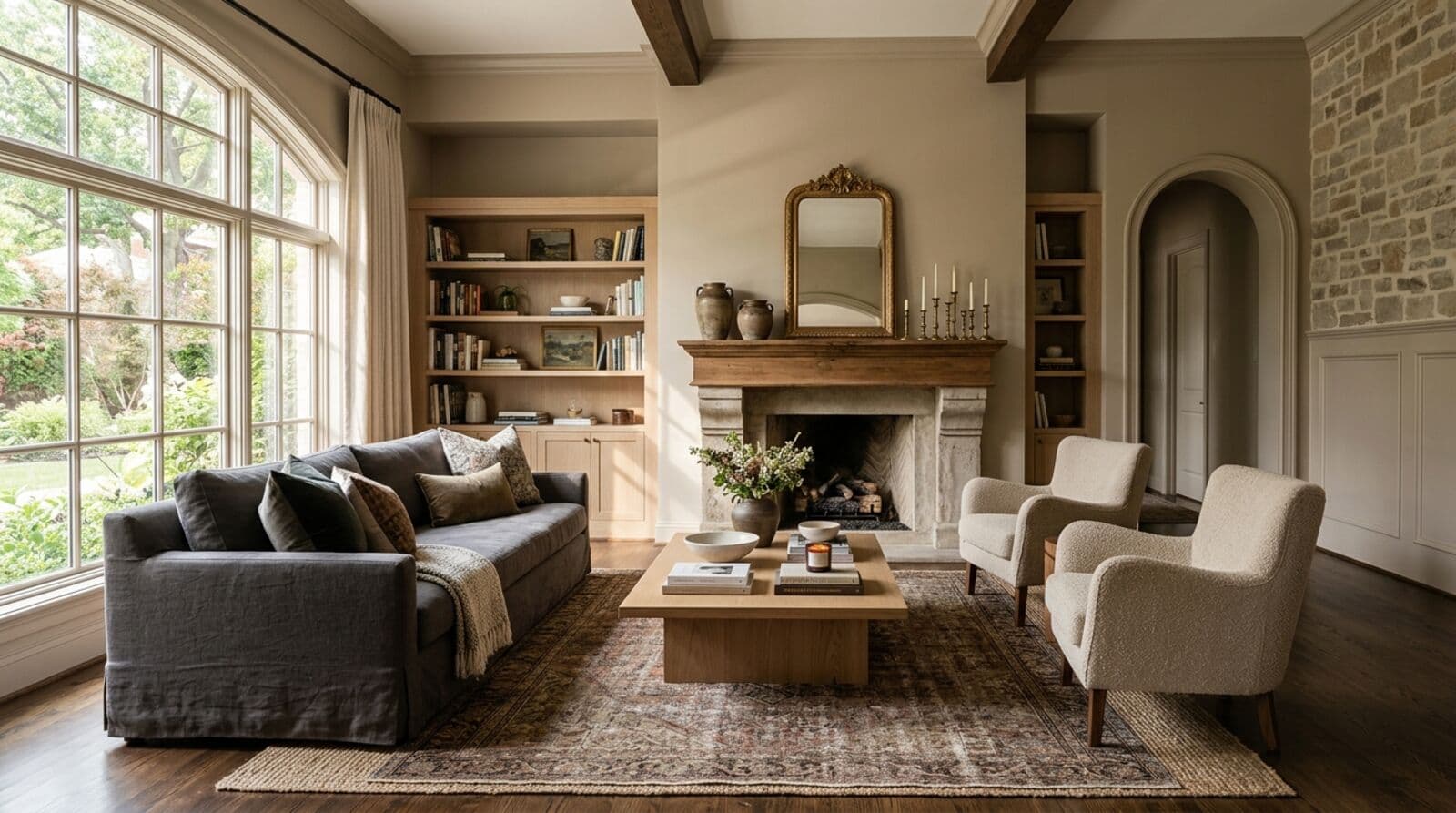
There are roughly 47 named interior design styles, and about 40 of them are either extinct, impractical, or so niche that only architects in Scandinavia can pull them off. If you're looking for interior design ideas that actually work in a real home — one with kids, pets, a budget, and rooms that don't have 14-foot ceilings — you can safely narrow the field to about six. The goal isn't to memorize design history. It's to find a direction that feels like you, and then execute it without making your home look like a showroom nobody lives in.
The 6 Interior Design Styles That Actually Work
Let's skip the ones that sound impressive but don't translate to real life. Art Deco is gorgeous in a hotel lobby. Maximalism works if you're a set designer. Japandi is lovely until you have children. Here are the six that hold up in actual homes where actual people live:
Modern — Clean lines, minimal ornamentation, neutral palettes with bold accents. Furniture sits low, spaces feel open, and every piece is chosen intentionally. This is the style most people think they want, but it requires discipline to maintain. One pile of mail and the whole aesthetic collapses.
Transitional — The sweet spot between traditional and modern. It takes the comfort and warmth of traditional design (soft fabrics, curved lines, layered textures) and strips away the fussiness. This is probably the most livable style for families, and it's forgiving of imperfection.
Scandinavian — Light woods, white walls, functional furniture, cozy textiles. It's the design equivalent of a well-organized closet: everything has a purpose, nothing is excess. Works brilliantly in smaller homes and apartments. The downside is that it can feel cold if you don't add enough texture and warmth.
Mid-Century Modern — The design style that refuses to die, and for good reason. Tapered legs, organic shapes, warm woods, and a palette that ranges from earthy to bold. It mixes well with almost everything, which is why pieces from this era show up in virtually every other style.
Industrial — Exposed brick, metal accents, raw wood, Edison bulbs. This works best in homes that already have some of these elements — lofts, converted warehouses, older homes with character. Forcing an industrial look into a suburban new-build feels incongruent, like putting a leather jacket on a golden retriever.
Coastal — Not the kitschy beach-house version with seashells and anchors on everything. Modern coastal is about light, airy spaces with natural textures — linen, rattan, jute — and a palette of whites, blues, and sandy neutrals. It works in any climate, despite what the name suggests.
How to Find YOUR Style, Not Instagram's
Instagram and Pinterest are useful for sparking ideas, but they're terrible for finding your personal style. The algorithm feeds you what's trending, not what suits you. You end up saving images that look nothing like your home, your life, or your budget.
A better approach: look at what you already own and love. Not what you bought because it was on sale or because someone told you to — what you actually reach for, sit in, or look at with satisfaction. Those pieces tell you something about your instincts. If your favorite chair is a worn leather armchair, you're probably not a Scandinavian minimalist no matter how many white-room pins you've saved.
Another tell: look at restaurants and hotels where you feel most comfortable. Not impressed — comfortable. The ones where you'd happily spend hours. That ambient feeling is closer to your real style than any design quiz.
The American Society of Interior Designers (ASID) has resources on understanding design styles and finding professionals if you want guidance, but the most reliable compass is your own history of choices.
The Mixing Rule: One Dominant, One Accent
Pure styles look great in magazines and feel sterile in homes. The best-looking real interiors mix two styles — one dominant, one accent. Transitional with mid-century modern accents. Scandinavian with industrial touches. Modern with coastal warmth.
The ratio should be roughly 80/20. Eighty percent of the room follows one coherent style — furniture shapes, materials, the overall feel. Twenty percent introduces elements from another style to add interest and personality. A modern living room with two mid-century accent chairs. A Scandinavian bedroom with an industrial bedside lamp. A coastal dining room with a rustic farmhouse table.
Where people go wrong is mixing at 50/50 or mixing three or more styles. That's not eclectic — it's chaotic. The room stops having a point of view and starts looking like a furniture store clearance section. Pick your dominant style based on what feels right. Pick your accent style based on what adds the warmth, edge, or personality that the dominant style lacks.
Color Palette Basics: The 60-30-10 Rule
If you take one thing from this article, let it be this. The 60-30-10 rule is the simplest, most reliable framework for choosing colors in any room. It works every single time, across every style.
60% — Dominant color. This is your walls, large furniture pieces, and major textiles. It's usually a neutral: white, cream, warm gray, greige, soft blue. It sets the baseline mood of the room.
30% — Secondary color. This shows up in upholstery, curtains, rugs, and smaller furniture. It adds depth and contrast. A warm wood tone, a deeper shade of your dominant color, or a complementary neutral.
10% — Accent color. Throw pillows, art, decorative objects, a single statement piece of furniture. This is where you can be bold — mustard yellow, emerald green, terracotta, deep navy. It's a small enough proportion that if you get tired of it, you can swap it out without repainting or reupholstering anything.
The reason this rule works is that it creates visual hierarchy. Your eye knows where to rest (the 60), what to explore (the 30), and what to land on (the 10). Without this structure, rooms feel either monotonous or overwhelming.
The Single Biggest Design Mistake
Buying everything from one store. It happens constantly, and the result is always the same — a room that looks assembled rather than curated. When every piece comes from the same collection, the room has no tension, no surprise, no story. It looks like page 34 of a catalog, and it feels about as personal.
The fix is simple: buy from at least three different sources. Your sofa from one place, your coffee table from another, your accessories from a third. Mix price points — a high-end sofa paired with a vintage coffee table and budget throw pillows. Mix eras — a new dining table with thrifted chairs. Mix materials — a velvet sofa, a wood coffee table, a metal floor lamp.
This is how designers create rooms that feel layered and interesting. It's not about spending more money. It's about spending it across a wider range of sources. Estate sales, Facebook Marketplace, local artisans, and big-box stores all have a role. The room that tells a story is the one where every piece came from a different chapter.
Room-by-Room vs Whole-Home Approach
There are two schools of thought on interior design, and both have merit. The room-by-room approach lets you focus your budget and attention, tackling one space at a time. The whole-home approach creates a cohesive flow from room to room.
The practical answer is somewhere in between. You should have a whole-home color palette and style direction, but you execute room by room. This means deciding upfront that your home is "transitional with warm neutrals and blue accents" and then designing each room within that framework. The living room might lean more toward the modern end of transitional, while the bedroom leans cozier, but they'll feel connected because the underlying palette and proportions are consistent.
What you want to avoid is a modern kitchen that opens into a farmhouse living room that leads to a bohemian bedroom. Walking through that home would feel like channel-surfing. A little variation is fine — a lot of contradiction is disorienting.
Why Previewing With AI Beats Mood Boards
Mood boards are a starting point, not a decision-making tool. A mood board can show you that you like warm wood tones and blue accents, but it can't show you how those elements will look in your specific room with your specific lighting and floor color. The gap between a mood board and reality is where most design disappointments live.
This is where previewing your interior design ideas with AI becomes genuinely useful. Upload a photo of your actual room — not an aspirational one from Pinterest, but the room as it exists today — and see how different styles, colors, and furniture arrangements would look in that exact space. Test whether Scandinavian works with your dark wood floors. See if that navy accent wall makes the room feel cozy or cave-like.
Customized renders start at $9.00 each. The value of testing designs before you buy is that it compresses the iteration cycle. Instead of buying a rug, living with it for a week, deciding it's wrong, returning it, and trying another, you can test five options in five minutes and order with confidence.
Bringing Your Interior Design Ideas to Life
Good interior design ideas start with knowing your style, understanding basic color principles, and being willing to mix sources. They don't require a degree or a designer — just some intention and a willingness to edit. Start with the 60-30-10 rule. Pick a dominant style and one accent. Buy from more than one store. And before you commit to the big purchases, preview them in your space to make sure what looks good in theory looks good in your room.
For more specific guidance, explore our posts on modern living room design, home office design, and room makeover ideas. Each one takes the same practical approach — real advice for real homes, no mood board required.
About the author
Noah James
Founder, DrivewAI
Noah James is the founder of DrivewAI, an AI home visualization platform that helps homeowners, contractors, and real estate agents preview renovations before committing. He built DrivewAI to close the gap between inspiration and execution in home improvement.
His writing focuses on practical renovation decision-making, material comparisons, and how AI visualization tools are changing the way people plan projects — from driveway replacements to full interior staging.
See your home transformed by AI
Upload a photo and get AI renderings across every style. Designs from $9 with a 24-hour refund guarantee.
Try DrivewAI Free