Bathroom Remodel Ideas That Actually Hold Up Over Time
By Noah James
• 8 min read • Founder, DrivewAI
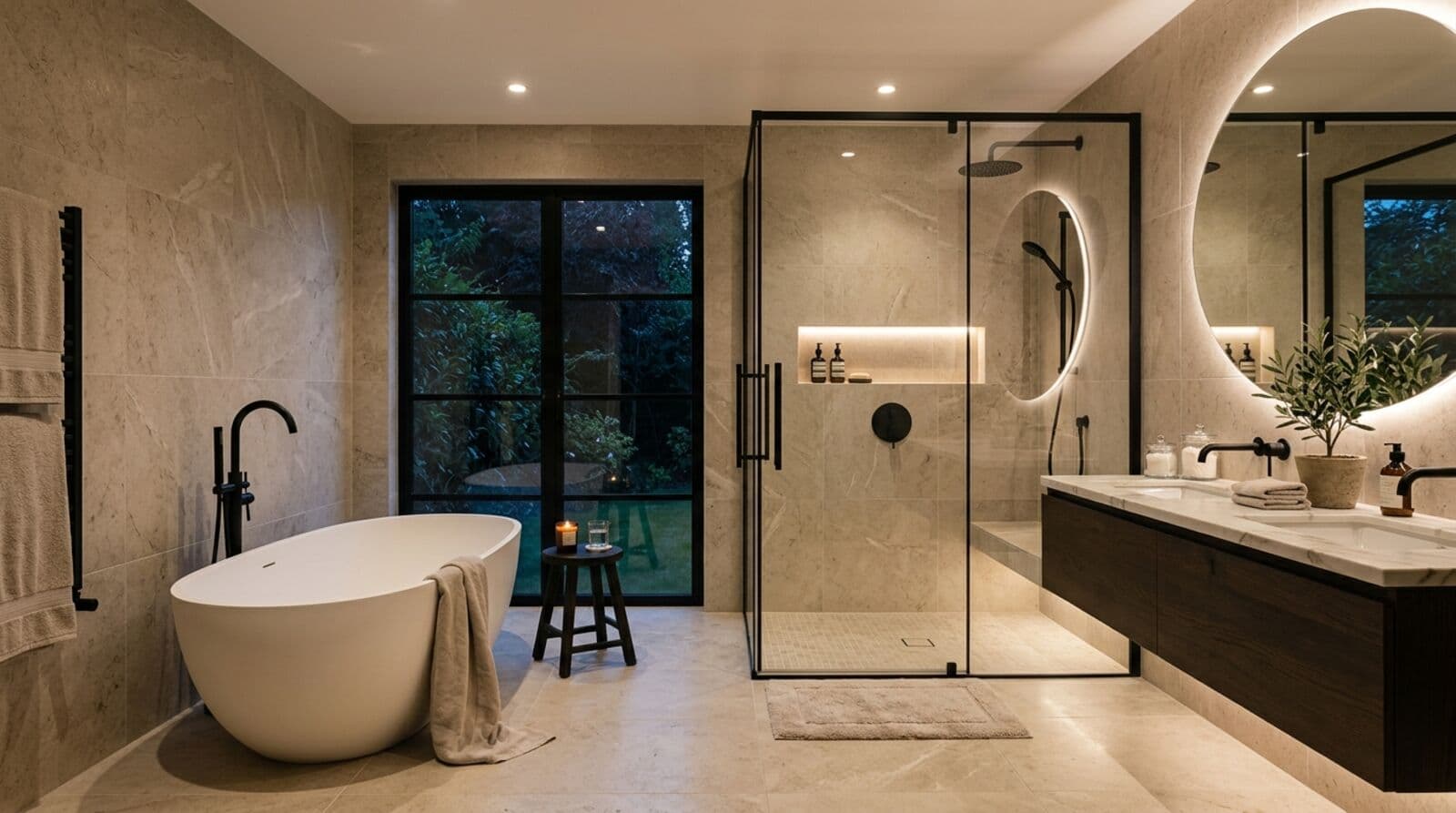
The internet is drowning in bathroom remodel ideas, and about half of them will look dated before you finish paying off the contractor. That all-black-everything bathroom you saw on Pinterest? Give it three years. The floor-to-ceiling penny tile? Already fading. The trick isn't chasing trends — it's knowing which ones have staying power and which ones are the bathroom equivalent of shag carpet. Let's sort the timeless from the trendy, and talk about how to actually make decisions you won't regret.
Walk-in Shower vs Tub: The Resale Value Debate
This is the single most polarizing question in bathroom design, and the answer is more nuanced than most designers admit. Walk-in showers look incredible, feel luxurious, and make a bathroom feel bigger. They're also the number one thing buyers with young kids look for — wait, no. That's a bathtub.
Here's the real rule: keep at least one bathtub in your home. If you have two or more bathrooms, convert one to a walk-in shower and leave the other with a tub. If you only have one bathroom, keep the tub unless you're planning to stay in that home for a very long time. According to the National Kitchen & Bath Association, homes without any bathtub can see reduced buyer interest, particularly from families.
The walk-in shower itself doesn't hurt resale — the absence of any tub does. That's the distinction most renovation shows gloss over. A curbless walk-in shower with a rain head and built-in niche is a genuine selling point. Just don't rip out your only tub to get there.
Tile Trends That Last vs Tile You'll Regret
Large-format tiles are having a moment, and unlike most moments, this one has legs. Fewer grout lines mean easier cleaning, a more seamless look, and a sense of spaciousness in small bathrooms. 24x48 or even 48x48 porcelain tiles in matte finishes — white, warm gray, greige — these are as close to timeless as tile gets.
What's fading? Penny tile, especially on floors. It looked charming for about eighteen months, and then people realized they'd signed up for a lifetime of scrubbing tiny grout lines. Hexagonal tile is following a similar trajectory. It's not ugly, but it's becoming "that thing everyone did in 2022."
Subway tile remains safe, but only in classic formats. The 3x6 white subway with contrasting grout is a permanent resident in the design canon. The elongated 4x12 subway is a subtle update that still reads clean and classic. Where people go wrong is stacking them vertically or using unusual colors — sage green subway tile was everywhere for a minute, and it's already starting to feel specific to an era.
For shower walls, go with porcelain that mimics natural stone. You get the look of marble without the maintenance, and the technology has gotten good enough that you have to touch it to tell the difference.
Vanity Styles: Floating vs Freestanding
Floating vanities make small bathrooms feel bigger by exposing floor space underneath. They look modern, they're easy to clean around, and they give you a place to tuck a small basket or scale. The downside: they require proper wall blocking during installation, and they offer less storage than a full freestanding cabinet.
Freestanding vanities feel more traditional, offer more drawer space, and are generally easier to install. They also hide plumbing better. If your bathroom is under 50 square feet, a floating vanity is probably worth the tradeoff. If you have more room, a freestanding vanity with drawers (not doors — drawers are far more functional) will serve you better day to day.
The wood tone of your vanity matters more than the style. White oak and walnut tones are holding strong. High-gloss white is losing ground. Painted vanities in muted colors — think sage, navy, or warm gray — are a solid middle path that adds personality without screaming "trend."
Storage Solutions for Small Bathrooms
The biggest storage mistake in small bathrooms is thinking you need a bigger vanity. You need vertical storage. A recessed medicine cabinet with mirrored doors gives you hidden storage without taking up any floor space. A tall, narrow linen tower in a corner can hold towels, toiletries, and cleaning supplies.
- Recessed niches in the shower eliminate the need for a hanging caddy and look built-in and intentional - Floating shelves above the toilet use dead space that's otherwise wasted - Drawer organizers inside your vanity double usable capacity without adding furniture - Hooks instead of towel bars take up less wall space and actually get used
The goal isn't to find a place for everything you currently own. It's to edit what you keep in the bathroom down to what you actually use daily, then design storage around that smaller set. Most bathrooms are cluttered not because they're too small, but because they're holding too much.
The One Upgrade Everyone Should Do
If you only change one thing in your bathroom, upgrade the lighting. This is the single highest-impact, lowest-cost change you can make, and almost nobody prioritizes it. A bathroom with a single overhead fixture — that builder-grade dome light from 2008 — is working against you no matter how nice the tile is.
Better bathroom lighting costs around $200-400 and involves three layers. First, overhead ambient light — a flush mount or recessed cans. Second, vanity lighting on either side of the mirror (not above it — side-mounted sconces eliminate shadows on your face). Third, consider a dimmer switch so the bathroom isn't blinding at 2 AM.
That's it. No demolition, no plumber, possibly no electrician if you're swapping fixtures on existing wiring. The room will look bigger, the tile will look better, and your morning routine will improve. It's the most underrated bathroom upgrade, and it's one of the cheapest.
Costs and Planning Before You Start
Customized renders start at $9.00 each. For context, a mid-range bathroom remodel typically runs $15,000-$30,000 depending on scope and market. A cosmetic refresh — new vanity, fixtures, lighting, paint, and accessories — can land between $3,000 and $8,000.
The expensive parts are always the same: moving plumbing, waterproofing, and tile labor. If you can keep your toilet and shower in their current positions, you'll save thousands. If you can keep the existing tub and just refinish it, you'll save more. The visual impact of a remodel comes from surfaces and fixtures, not from relocating drains.
Get your design locked in before the first tile comes off the wall. Changes mid-project are where budgets explode. Contractors charge for indecision, and rightfully so — every change cascades into delays and material reorders.
Why You Should Preview Your Bathroom Before Demo Day
Here's where most bathroom remodels go sideways: people commit to a full design based on a Pinterest board and a paint swatch. They pick tile from a 4-inch sample, choose a vanity from a photo online, and select fixtures from a catalog. Then everything arrives, gets installed, and something feels off. The tile is darker than expected. The vanity is too big for the space. The overall look is busier than it seemed in their head.
You can avoid this entirely by previewing your bathroom redesign with AI before committing to anything. Upload a photo of your current bathroom, and test different tile colors, vanity styles, and layouts. See how a floating vanity actually looks in your space versus a freestanding one. Compare white subway tile against large-format stone-look porcelain.
It's not a replacement for working with a designer or contractor, but it eliminates the most expensive mistakes — the ones that come from guessing. If you're weighing a few different directions for your remodel, try the room staging tool to see them side by side. Better to iterate on a screen than to realize mid-project that you should have gone with a different tile.
Putting It All Together
The best bathroom remodels aren't the most expensive ones. They're the ones where someone made deliberate choices — kept the tub where it mattered, chose tile that would age well, invested in lighting, and previewed the full picture before swinging a hammer. If you're collecting bathroom remodel ideas, start with the changes that matter most (lighting, vanity, tile) and leave the layout alone unless you have the budget and patience for a full gut job. And before you commit to anything, see it first. Your future self will thank you.
About the author
Noah James
Founder, DrivewAI
Noah James is the founder of DrivewAI, an AI home visualization platform that helps homeowners, contractors, and real estate agents preview renovations before committing. He built DrivewAI to close the gap between inspiration and execution in home improvement.
His writing focuses on practical renovation decision-making, material comparisons, and how AI visualization tools are changing the way people plan projects — from driveway replacements to full interior staging.
See your home transformed by AI
Upload a photo and get AI renderings across every style. Designs from $9 with a 24-hour refund guarantee.
Try DrivewAI Free