Outdoor Kitchen Ideas That Are Actually Worth Building
By Noah James
• 8 min read • Founder, DrivewAI
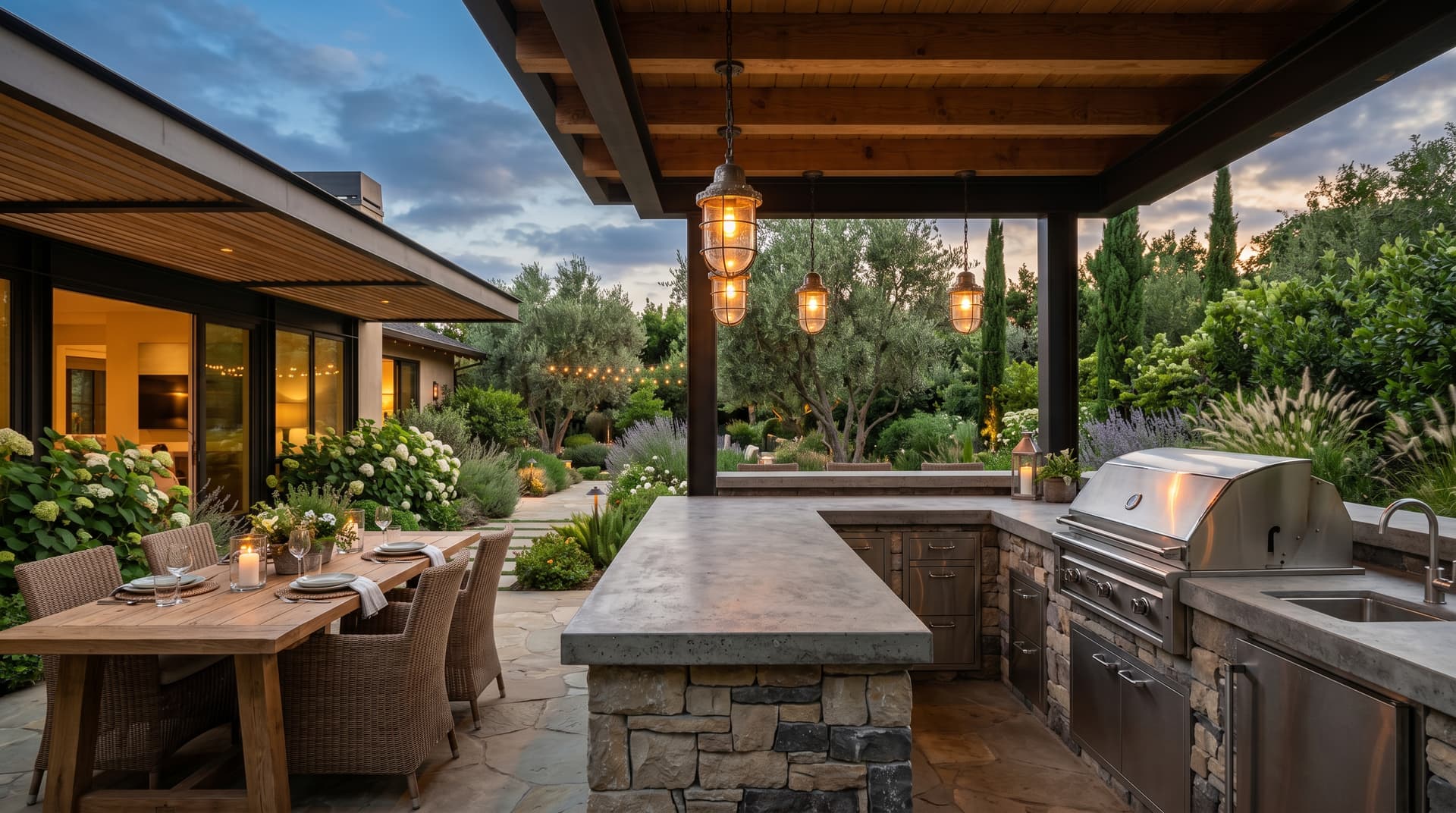
Outdoor kitchen ideas look incredible in magazine spreads — massive stone islands, professional-grade grills, pizza ovens glowing at sunset. Then you price one out and realize that photoshoot cost $85,000. The good news: you don't need a resort-grade setup to cook outside. The best outdoor kitchens are the ones that match how you actually use your backyard, not the ones that look best on Houzz.
Here's what's actually worth building, what it costs, and how to preview your outdoor kitchen design before committing to concrete and plumbing.
What an Outdoor Kitchen Actually Costs
Outdoor kitchen costs range from $5,000 for a basic grill station to $100,000+ for a fully plumbed, covered setup with appliances, lighting, and seating. Most homeowners land between $10,000 and $25,000 for a functional outdoor kitchen that includes a built-in grill, counter space, storage, and basic electrical.
Here's the breakdown by tier:
- Basic grill station ($5,000-$10,000) — built-in grill, 4-6 feet of counter space, storage cabinet below, no plumbing - Mid-range outdoor kitchen ($10,000-$25,000) — L-shaped or island layout, grill, sink with running water, refrigerator, 8-12 feet of counter, overhead structure or pergola - High-end outdoor kitchen ($25,000-$60,000) — full U-shape or large island, pizza oven, smoker, dishwasher, multiple seating areas, covered structure, professional lighting - Resort-level ($60,000+) — full outdoor room with HVAC, TV, bar seating, wine storage, multiple cooking stations
The biggest cost variable isn't the appliances — it's the base and countertop material. A concrete block base with tile costs $3,000-$5,000. Natural stone veneer pushes that to $8,000-$15,000. The grill itself is often only 15-20% of the total budget.
Start With Layout — Not Appliances
Most people start shopping for grills and smokers before they've figured out where the kitchen goes. That's backwards. Layout determines everything else — which appliances fit, where plumbing runs, how traffic flows between cooking and dining.
The three layouts that work in real backyards:
Straight run (I-shape): 8-12 feet of counter against a wall or fence. Best for narrow spaces and budgets under $15,000. Simple plumbing — one water line, one drain. The limitation: no separation between cooking and prep space.
L-shape: One arm for cooking (grill, burner), the other for prep and serving. Creates a natural work triangle. Works well tucked into a corner of the patio. The most popular layout for mid-range budgets because it maximizes counter space without dominating the yard.
Island: Freestanding, accessible from all sides. Best for large patios where the kitchen is the centerpiece. More expensive because you need buried utility lines and a larger countertop. But it creates a bar-seating social dynamic that wall-mounted layouts can't match.
Before locking in a layout, preview it in your actual space. DrivewAI's landscape visualization lets you upload a photo of your backyard and test how different configurations look against your house, fence line, and existing hardscaping.
Choose Countertops That Survive Outside
Indoor countertop rules don't apply outdoors. Marble stains in rain. Butcher block warps in humidity. Laminate peels in sun. Outdoor kitchen countertops need to handle UV exposure, temperature swings, rain, and food prep — simultaneously.
Materials that actually work:
- Granite — the default choice for good reason. Heat-resistant, stain-resistant with sealing, handles freeze-thaw cycles. $50-$100 per square foot installed. Dark colors hide wear better than light. - Concrete — customizable color and finish, extremely durable, handles heat from grills. $60-$90 per square foot. Needs sealing every 1-2 years. Can be cast in any shape, which makes it ideal for custom layouts. - Porcelain slab — newer option gaining traction. UV-stable, non-porous, heat-resistant. $70-$120 per square foot. Looks like natural stone without the maintenance. - Tile — budget-friendly at $20-$40 per square foot but grout lines collect dirt and food. Works for serving areas, not ideal around grills.
Skip quartz for outdoor use despite its indoor popularity. Most quartz manufacturers void their warranty for outdoor installations because UV exposure causes discoloration over time.
The Grill Is Not the Whole Kitchen
A common outdoor kitchen mistake is spending 60% of the budget on a premium grill and neglecting everything around it. A $4,000 grill surrounded by $500 worth of counter space is just an expensive barbecue on a pedestal.
Budget allocation that actually works:
- Grill and cooking appliances: 25-30% of total budget - Base construction and countertops: 30-35% - Plumbing and electrical: 15-20% - Overhead structure (pergola/roof): 15-20% - Lighting and finishing: 5-10%
For the grill itself, a solid built-in gas grill runs $1,500-$3,000. Going above $3,000 gets you better BTU output and stainless quality, but the cooking difference between a $3,000 and $6,000 grill is marginal for most home cooks. Put the savings into better counter space or a sink with running water — those upgrades change daily usability more than an extra 10,000 BTUs.
Add a Roof or Pergola — You'll Use It Twice as Much
An uncovered outdoor kitchen sits unused every time it drizzles, gets too hot in direct sun, and collects leaves and debris when you're not cooking. A covered structure — even a simple pergola — extends the usable season by months and protects your investment.
Coverage options by cost:
- Shade sail ($200-$500) — budget solution that blocks sun but not rain. Easy to install and remove seasonally. - Pergola with climbing plants ($2,000-$5,000) — partial coverage that filters light and adds visual warmth. Takes 1-2 seasons for vines to fill in. - Pergola with solid roof panels ($3,000-$8,000) — full weather protection with the aesthetic of a pergola. The sweet spot for most homeowners. - Full roof extension ($8,000-$20,000) — permanent structure that ties into the house roof line. Requires permits in most jurisdictions but creates a true outdoor room.
The International Association of Certified Home Inspectors notes that covered outdoor living spaces return 65-80% of their cost at resale — higher than most interior renovations.
Plan Utilities Before You Pour
The most expensive outdoor kitchen mistake is pouring a concrete pad and then realizing you need a gas line, water supply, and electrical run underneath it. Utility planning comes first — before any hardscaping.
What you need and what it costs:
- Gas line ($500-$2,000 to run from house) — required for built-in gas grills and side burners. Hire a licensed plumber. Some municipalities require permits. - Water supply and drain ($800-$3,000) — required for sinks and dishwashers. The drain is the expensive part — it needs to tie into your sewer or a dry well. - Electrical ($500-$1,500) — GFCI outlets for appliances, lighting circuits, and potentially a 220V line for electric grills or heaters. Must be outdoor-rated. - Internet/TV ($200-$500) — optional but worth running conduit now if you ever want it. Retrofitting is 3x the cost.
Plan all four utility runs at once, even if you're only installing gas and electric now. Running conduit for water and data during initial construction costs an extra $200-$400. Running them after the patio is built costs $2,000-$4,000 in demolition and reconstruction.
Integrate With Your Existing Landscape
An outdoor kitchen that looks bolted onto the backyard — different materials, no landscape connection, sitting on a concrete pad with nothing around it — reads as an afterthought. The kitchen should feel like part of the landscape, not a separate construction project.
Integration strategies:
- Match the base material to existing hardscaping — if your patio is flagstone, use flagstone veneer on the kitchen base. If you have a paver driveway, use the same paver brand and color for the kitchen pad. - Plant around the kitchen — low hedges, ornamental grasses, or herb gardens along the base soften the transition between structure and landscape. - Connect with pathways — a defined path from the back door to the kitchen, using the same material as your walkways, makes the outdoor kitchen feel intentional rather than isolated. - Extend the dining area — a table and chairs adjacent to the kitchen, under the same pergola or shade structure, creates a complete outdoor dining experience.
Preview Your Outdoor Kitchen Before Building
An outdoor kitchen is one of the most expensive backyard projects you can take on — and one of the hardest to change after construction. The base is concrete or masonry. The countertops are cut to size. The utilities are buried. Once it's built, you're living with the layout, proportions, and material choices for years.
DrivewAI lets you upload a photo of your backyard and preview how an outdoor kitchen setup looks in your actual space — before you hire a contractor or pour a single footer. Test whether an L-shape or island works better with your patio. See how stone veneer looks against your house siding. Preview the scale before committing to a layout you can't easily undo.
Your Every render is covered by a 24-hour refund guarantee, and a $9 4-pack unlocks enough comparison room before you call a contractor.
For more backyard planning, check out our guides on backyard landscaping ideas, covered patio ideas, and fire pit ideas — all of which complement an outdoor kitchen project.
About the author
Noah James
Founder, DrivewAI
Noah James is the founder of DrivewAI, an AI home visualization platform that helps homeowners, contractors, and real estate agents preview renovations before committing. He built DrivewAI to close the gap between inspiration and execution in home improvement.
His writing focuses on practical renovation decision-making, material comparisons, and how AI visualization tools are changing the way people plan projects — from driveway replacements to full interior staging.
See your kitchen restyled by AI
Upload a photo and get AI renderings across every style. Designs from $9 with a 24-hour refund guarantee.
Try DrivewAI Free