Fire Pit Ideas: Built-In vs Portable, Costs, and Safety
By Noah James
• 8 min read • Founder, DrivewAI
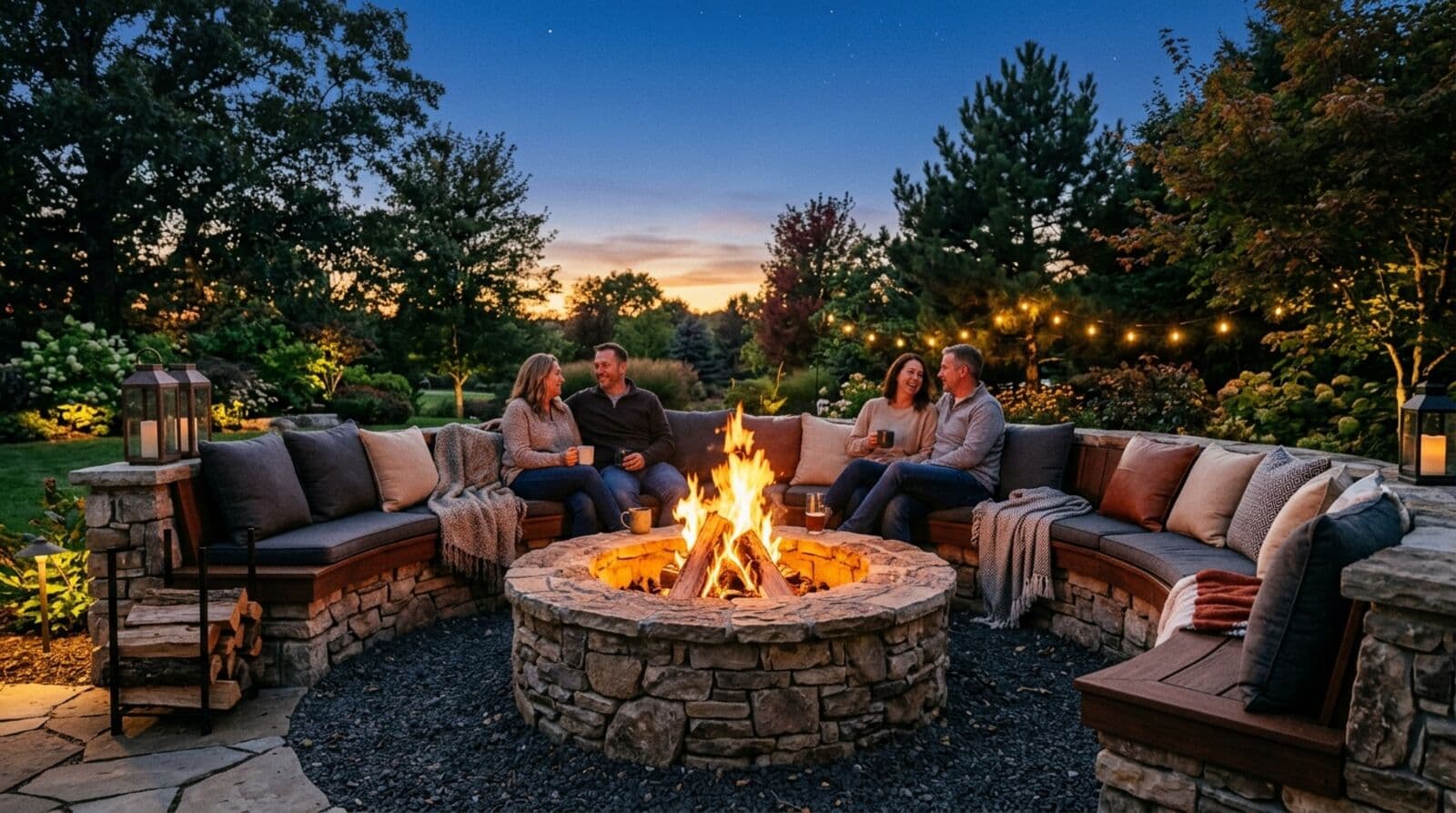
If you search for fire pit ideas right now, you'll find two types of content: $200 DIY tutorials that skip every safety detail, and $50,000 resort-style installations that have nothing to do with normal backyards. The reality of fire pits sits squarely in the middle — they're one of the highest-impact backyard upgrades you can make, but only if you get the placement, fuel type, and budget right. Let's break down what actually matters.
Built-In vs Portable Fire Pits: The Real Comparison
The first decision is whether you want a permanent built-in fire pit or a portable one you can move around. This isn't just an aesthetic choice — it affects your budget, your flexibility, and potentially your permit requirements.
Portable steel fire pits run $100-$500 for a quality unit. The Solo Stove and Breeo are the popular names in the smokeless category, typically $250-$450. A basic steel bowl from a hardware store is $80-$150. Portables are great for renters, people who aren't sure about placement, or anyone who wants the option to reclaim their yard space. The downside is they look temporary, because they are.
Built-in stone or block fire pits cost $500-$3,000 depending on materials and size. A simple ring of stacked retaining wall blocks is a weekend DIY project for under $500 in materials. A professionally installed natural stone fire pit with a flagstone cap runs $1,500-$3,000. These become a permanent landscape feature and tend to look substantially better than anything portable.
Gas fire pit inserts land between $1,000-$5,000 installed, including the gas line. You're paying for the convenience of a switch or button ignition, no ash cleanup, and consistent flame. The gas line is the expensive part — if you already have a gas stub near your patio, costs drop significantly. If a plumber needs to run 40 feet of line from your house, expect $1,500-$3,000 just for that.
Setback Requirements You Can't Ignore
Here's the part that most fire pit ideas articles gloss over: your fire pit can't go wherever you want it. Every municipality has setback requirements, and they're more restrictive than most people expect.
The general rule is 10-25 feet from any structure, including your house, garage, fence, deck, and shed. Many jurisdictions also require 10 feet of clearance from property lines. Overhead clearance matters too — no branches, pergolas, or awnings within 10-15 feet above the fire.
This means that in a typical suburban backyard of 30x40 feet, your placement options are surprisingly limited. Map out the setbacks before you get attached to a specific spot. A fire pit centered in your yard might be the only location that meets code, even if you originally wanted it on the patio.
Check with your local fire department or building department before you build. Some municipalities require permits for permanent fire features. Some HOAs ban wood-burning fire pits entirely. A few cities have seasonal burn bans that can make a wood-burning pit usable only part of the year. The National Fire Protection Association publishes comprehensive safety guidelines that are worth reading before you commit.
Wood-Burning vs Gas: The Honest Tradeoff
People have strong opinions about this, and most of them boil down to one thing: do you care more about the experience or the convenience?
Wood-burning gives you the crackle, the smell, the ritual of building and tending a fire. There's a reason humans have gathered around wood fires for thousands of years — it's deeply satisfying in a way that a gas flame can't replicate. But wood-burning means smoke (even "smokeless" pits produce some), ash cleanup, storing and hauling firewood, and the 15-minute startup process. In windy conditions, you're battling smoke no matter where you sit.
Gas fire pits give you instant on/off, adjustable flame height, no smoke, no ash, and no firewood storage. They're cleaner and easier in every practical way. But they also feel a bit like a fancy candle. The flame is decorative, not functional — you can't cook over it, it doesn't throw the same heat, and it lacks the sensory experience of real fire. Gas fire pits also depend on your gas supply. A natural gas line gives unlimited burn time; a propane tank gets you 4-6 hours before it needs refilling.
The honest answer for most people: if you'll use your fire pit more than twice a month, gas wins on convenience. If the fire pit is an occasional weekend ritual, wood-burning wins on experience. If you're in an area with regular burn bans, gas might be your only legal option.
The One Design Rule That Makes Every Fire Pit Better
Here's a strong opinion backed by every landscape designer worth hiring: fire pit seating should be low, continuous, and circular. Not high dining chairs scattered randomly around a fire. Not your patio dining set dragged over. Low, purpose-built seating arranged in a circle.
This means built-in seat walls (18 inches high, 12-18 inches deep) around a recessed or grade-level fire pit. Or low Adirondack chairs in a tight circle. The fire pit area should feel like a separate room — a destination in your yard, not an afterthought on your patio.
The ideal fire pit seating diameter is 10-14 feet measured from seat edge to seat edge, with the fire pit in the center. This puts everyone close enough to feel the warmth but far enough to be comfortable. Closer than 10 feet and people roast; farther than 14 feet and you lose the intimacy that makes a fire pit worth having.
If you're building a seat wall, budget $1,500-$4,000 for a half or full circle in matching stone or block. This is often where people cheap out, and it's a mistake. The seating is what makes the space usable — a beautiful fire pit surrounded by wobbly folding chairs is a missed opportunity.
Fire Pit Ideas by Budget
Under $300: A portable steel fire pit on a gravel pad. Buy a 6-foot diameter circle of pea gravel (about $50 in materials), set it in a cleared area, and put a portable pit in the center. Add four low camp chairs. It's simple, it works, and you can upgrade later.
$500-$1,500: A DIY built-in fire pit using concrete retaining wall blocks. A 42-inch diameter ring is three courses of blocks — about $200-$400 in materials. Add a steel insert liner ($50-$100) to protect the blocks from direct flame. Surround it with gravel or flagstone stepping stones. Customized renders start at $9.00 each.
$1,500-$3,000: A professionally built stone fire pit with a flagstone or block patio area and the beginning of a seat wall. This is where the fire pit starts looking like it belongs in a magazine.
$3,000-$5,000: A gas fire pit with a full seat wall, integrated into a patio design. At this budget, you're creating a complete outdoor room, not just adding a fire feature.
$5,000+: Custom natural stone, gas with electronic ignition, fire glass or lava rock media, integrated lighting in the seat wall, and professional landscaping around the perimeter. This is the "destination" fire pit that becomes the centerpiece of your outdoor living space.
Common Fire Pit Mistakes
Building on a wood deck. Even with a heat shield, this is risky and often against code. Embers travel, radiant heat damages decking, and insurance companies are not fans. If you must have a fire feature on a deck, use a gas unit with a certified heat shield and check with your insurer first.
No drainage plan. A recessed fire pit fills with water every time it rains. You need either a drain at the bottom or a cover to keep water out. Sitting around a soggy ash pond isn't anyone's idea of a good time.
Skipping the base. Even a simple fire pit needs a compacted gravel base to prevent settling. Two inches of compacted gravel underneath the first course of blocks keeps everything level for years. Without it, freeze-thaw cycles will shift your blocks out of alignment within a season or two.
Cheap fire glass in a wood-burning pit. Fire glass (those colorful glass pebbles) is designed for gas fire pits. In a wood-burning pit, soot coats the glass within a few uses and it looks terrible. Stick with natural stone or lava rock for wood-burning setups.
Forgetting about wind. Observe your yard at different times of day for a week before choosing placement. Consistent wind from one direction means smoke will always blow toward whoever sits on the downwind side. Orient your primary seating to the upwind side, or use a smokeless pit design that reduces the issue.
How Fire Pits Affect Your Landscape Design
A fire pit isn't a standalone feature — it changes the flow and layout of your entire backyard. It creates a second gathering zone separate from your dining area, which means you need pathways connecting the two. A good walkway between your patio and fire pit area turns two separate features into a cohesive outdoor living space.
The landscaping around a fire pit matters more than most people realize. You want low-growing, fire-resistant plants — not ornamental grasses that dry out and become kindling. Hardscaping (gravel, stone, pavers) should extend at least 3-4 feet beyond the fire pit in every direction. This creates a safe buffer zone and keeps embers from reaching mulch or dry vegetation.
If your yard has slopes, a fire pit can anchor a retaining wall design beautifully. Terracing a sloped yard with a seat wall that doubles as a retaining wall and wrapping it around a fire pit is one of the best landscape moves you can make.
Visualize Before You Dig
Placement is everything with a fire pit, and it's the hardest thing to get right from a blueprint or sketch. Where the smoke drifts, how the light falls at night, whether it feels too close to the house or too far from the patio — these are spatial questions that are tough to answer on paper.
Upload a photo of your backyard to our landscaping visualization tool and preview where a fire pit would sit in your actual space. You can test different locations, materials, and surrounding landscaping before you commit. It's the cheapest way to avoid a $3,000 mistake — and it takes less time than driving to the hardware store.
About the author
Noah James
Founder, DrivewAI
Noah James is the founder of DrivewAI, an AI home visualization platform that helps homeowners, contractors, and real estate agents preview renovations before committing. He built DrivewAI to close the gap between inspiration and execution in home improvement.
His writing focuses on practical renovation decision-making, material comparisons, and how AI visualization tools are changing the way people plan projects — from driveway replacements to full interior staging.
See your home transformed by AI
Upload a photo and get AI renderings across every style. Designs from $9 with a 24-hour refund guarantee.
Try DrivewAI Free