Walkway Ideas: Materials, Costs, and Design Tips
By Noah James
• 8 min read • Founder, DrivewAI
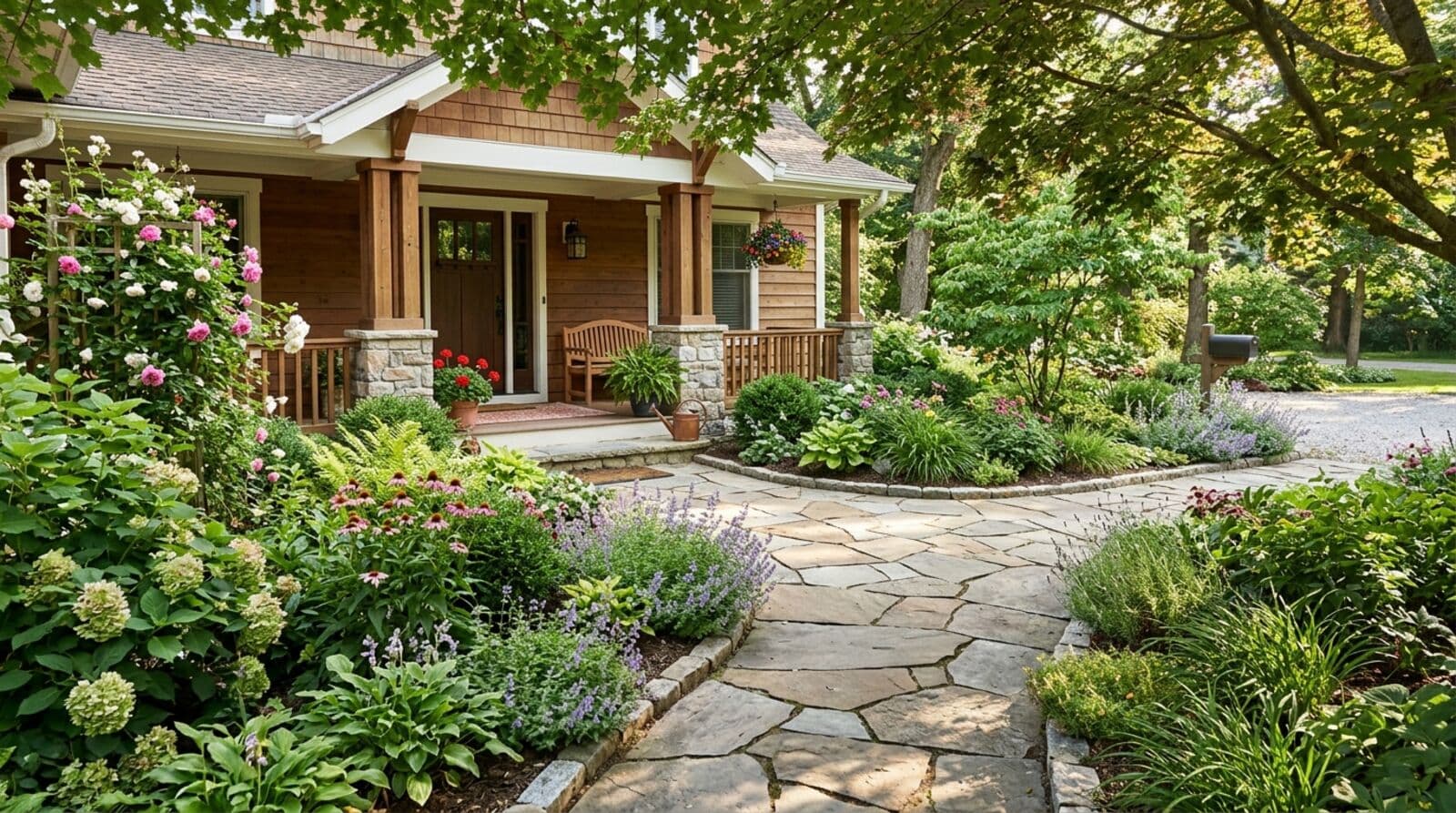
The Walkway Is the First Thing You Walk On and the Last Thing You Think About
Your front walkway is the most-used hardscape on your property. Every person who visits your home walks on it. Every package delivery, every holiday guest, every time you come home from work — you are on that walkway. And yet most walkway ideas come down to "pour some concrete and be done with it." That is fine, functionally. But a thoughtful walkway transforms the entire front yard experience. It guides the eye, creates a sense of arrival, and ties the home to the landscape. If you are upgrading your curb appeal and ignoring the walkway, you are leaving one of the biggest impact areas untouched.
A front walkway also has real safety implications. Cracked concrete, uneven pavers, and dark paths without lighting are trip hazards and liability issues. So whether you are motivated by aesthetics or practicality, the walkway deserves your attention.
Front Walkway vs. Garden Path: Different Jobs, Different Rules
Not all walkways serve the same purpose, and designing them identically is a common mistake.
Front walkways are primary circulation paths. They connect the driveway or street to the front door. These need to be wide (at least 4 feet, ideally 5 feet so two people can walk side by side), well-lit, and made of stable, level materials. A front walkway is not the place for loose gravel or widely spaced stepping stones. People carrying groceries, pushing strollers, or navigating in heels need a surface they can trust.
Garden paths are secondary paths. They meander through landscaping, connect the backyard to a shed, or wind through a flower garden. These can be narrower (2-3 feet), more casual, and built with less formal materials. Stepping stones with ground cover between them, decomposed granite, or mulch paths all work here because the pace is slower and the purpose is different.
Side yard paths are utility paths. They connect the front to the back and usually run along the house wall. These tend to be narrow by necessity and should prioritize drainage and weed resistance over aesthetics. Pavers or concrete with a slight slope away from the foundation are the practical choice.
Mixing up these categories leads to problems. A formal bluestone walkway winding through a vegetable garden looks overbuilt. Loose stepping stones as your primary front walk looks underbuilt. Match the material formality to the path's function.
Material Options and What They Actually Cost
Flagstone ($15-$30 per square foot installed)
Flagstone is the premium natural option. Irregularly shaped stones are set in a sand or mortar bed, creating an organic, high-end look. Flagstone works for both formal and casual paths depending on the setting pattern. Dry-laid (on sand) allows for ground cover to grow between stones. Wet-laid (on mortar) creates a more formal, permanent surface. The main downside is that flagstone is uneven by nature, which means it is not ideal for wheeled access (strollers, wheelchairs). Also, lighter-colored flagstones can become slippery when wet.
Pavers ($10-$25 per square foot installed)
Concrete pavers offer the most design flexibility. They come in every color, shape, and pattern. Brick-style pavers suit traditional homes. Large-format smooth pavers suit contemporary ones. The interlocking base system means pavers can be repaired individually if one cracks or shifts, which is a genuine advantage over poured concrete. The biggest cost variable is the pattern complexity — a running bond pattern is cheaper to install than a herringbone because herringbone requires more cuts. For detailed paver information, check our paver driveway guide, which covers many of the same principles.
Poured concrete ($8-$15 per square foot installed)
Poured concrete is the most cost-effective permanent walkway. Plain broom-finished concrete is functional but uninspiring. Stamped concrete mimics the look of stone or brick for $12-$18 per square foot. Exposed aggregate concrete (where the surface is washed to reveal stones in the mix) adds texture for a modest premium. The big drawback of concrete is cracking — it will crack eventually, especially in freeze-thaw climates. Control joints help direct where cracks occur, but they do not prevent them entirely.
Gravel and decomposed granite ($3-$8 per square foot installed)
Gravel is the budget champion. Decomposed granite (DG) compacts into a firmer surface than round gravel and looks cleaner. The obvious downside is that loose materials migrate — they end up in your lawn, your shoes, and eventually in your house. Edging helps but does not eliminate the problem. Gravel works well for garden paths and rustic settings. For a primary front walkway in a suburban neighborhood, it reads as unfinished unless your entire landscape has a naturalistic design.
Stepping stones ($5-$15 per square foot installed)
Stepping stones spaced in a lawn or ground cover are casual, charming, and cheap. They work beautifully for garden paths. For a front walkway, they have a significant limitation: spacing. If the stones are too far apart, people shorten or lengthen their stride awkwardly. The ideal center-to-center spacing is 24-26 inches, which matches a natural walking stride. Get this wrong and the walkway becomes annoying to use daily.
Curved vs. Straight: The Geometry Debate
Straight walkways are efficient. They get you from point A to point B by the shortest route. In most front yard layouts — where the driveway and front door are relatively close — a straight path makes sense. It looks intentional, formal, and clean.
Curved walkways are more visually interesting but only when the curve has a reason. A curve that follows a garden bed, avoids a tree, or creates a sense of discovery around a planting works. A curve that exists for no reason — winding through an open lawn — looks contrived. People will cut across the grass to walk straight, which tells you everything you need to know about whether the curve was justified.
The middle ground is a straight path with a subtle sweep or a single gentle curve. This gives visual interest without the "why am I walking sideways" feeling of an aggressively curved path.
For longer walkways (30+ feet from street to door), a curve or at least a midpoint feature (a landing, a wider section, a planted intersection) breaks up the visual monotony and gives the walk a sense of progression.
Width Matters More Than You Think
The most common walkway mistake is making it too narrow. Here are the functional widths you need.
- Front walkway: 4-5 feet. Two people side by side, comfortably. This is non-negotiable for a primary entrance path. A 3-foot front walkway feels like walking on a balance beam. - Secondary paths: 3-4 feet. Paths to a side gate, back patio, or secondary entrance can be narrower because they carry one person at a time. - Garden paths: 2-3 feet. These are strolling paths. Single-file is fine because the purpose is enjoyment, not transportation. - Utility paths: 2-3 feet. Side yard paths between the house and fence. Narrower is acceptable because these are just functional.
An underrated tip: widen the walkway at the transition points. Where the walkway meets the driveway, where it meets the front porch, or where two paths intersect, a wider pad or landing area creates a visual pause and prevents the pinched feeling of a narrow path meeting a wide surface.
The Lighting Rule: Every Walkway Needs Light
This is not optional. An unlit walkway is a safety hazard after dark, and it wastes the curb appeal investment you made during the day.
Path lights (solar or low-voltage) along the walkway edges are the most common solution. Space them 6-8 feet apart, staggered on alternating sides. Avoid the "runway lighting" look of lights lined up in perfect formation — stagger them for a more natural feel. Solar path lights cost $5-$15 each and require zero wiring. Low-voltage lights ($20-$50 each plus transformer and wiring) are brighter and more reliable.
Step lights are essential if your walkway includes steps. A lit step is safe. An unlit step is a lawsuit waiting to happen.
Uplighting from the landscape near the walkway provides ambient light without fixtures in the path itself. Uplighting a tree that overhangs the walkway creates dappled light on the path surface and looks dramatically better than path lights alone.
Bollard lights work for contemporary homes and commercial-style entries. They are more architectural than path lights and cast light in a wider pattern. They also cost more ($100-$300 each) and require hardwiring.
The American Society of Landscape Architects emphasizes that landscape lighting is one of the most underutilized tools in residential design, and walkways are the place where it matters most for both safety and aesthetics.
Cost Per Linear Foot: Planning Your Budget
For a standard 4-foot-wide front walkway, here is what to expect per linear foot.
- Poured concrete: $32-$60 per linear foot - Stamped concrete: $48-$72 per linear foot - Concrete pavers: $40-$100 per linear foot - Flagstone (dry-laid): $60-$120 per linear foot - Gravel/DG: $12-$32 per linear foot - Stepping stones in lawn: $20-$60 per linear foot
A typical front walkway is 20-40 feet long, so you are looking at $640-$4,800 depending on the material and length. Add $500-$1,500 for basic landscape lighting along the path.
These costs vary significantly by region. Labor rates in the Northeast and West Coast are 30-50% higher than in the Southeast and Midwest. Material availability matters too — flagstone is cheaper in regions where it is quarried locally.
Design Your Walkway Before You Break Ground
The walkway sets the rhythm of your entire front yard. It connects the public sidewalk to your private home. It guides eyes toward the front door. It frames whatever landscaping flanks it. Getting it right has an outsized impact on how your home feels from the street.
Before committing to materials or calling a contractor, upload a photo of your front yard to DrivewAI and preview different walkway styles, materials, and layouts. DrivewAI plans start at just $9.00, and seeing a rendering of your specific home with a new walkway is infinitely more useful than staring at material samples in a showroom.
For related upgrades, explore our driveway redesign ideas — your driveway and walkway should feel like they belong to the same property, not two different design languages.
About the author
Noah James
Founder, DrivewAI
Noah James is the founder of DrivewAI, an AI home visualization platform that helps homeowners, contractors, and real estate agents preview renovations before committing. He built DrivewAI to close the gap between inspiration and execution in home improvement.
His writing focuses on practical renovation decision-making, material comparisons, and how AI visualization tools are changing the way people plan projects — from driveway replacements to full interior staging.
See your home transformed by AI
Upload a photo and get AI renderings across every style. Designs from $9 with a 24-hour refund guarantee.
Try DrivewAI Free