Driveway aprons: what they are, who pays, what they cost
By Noah James
• 8 min read • Founder, DrivewAI
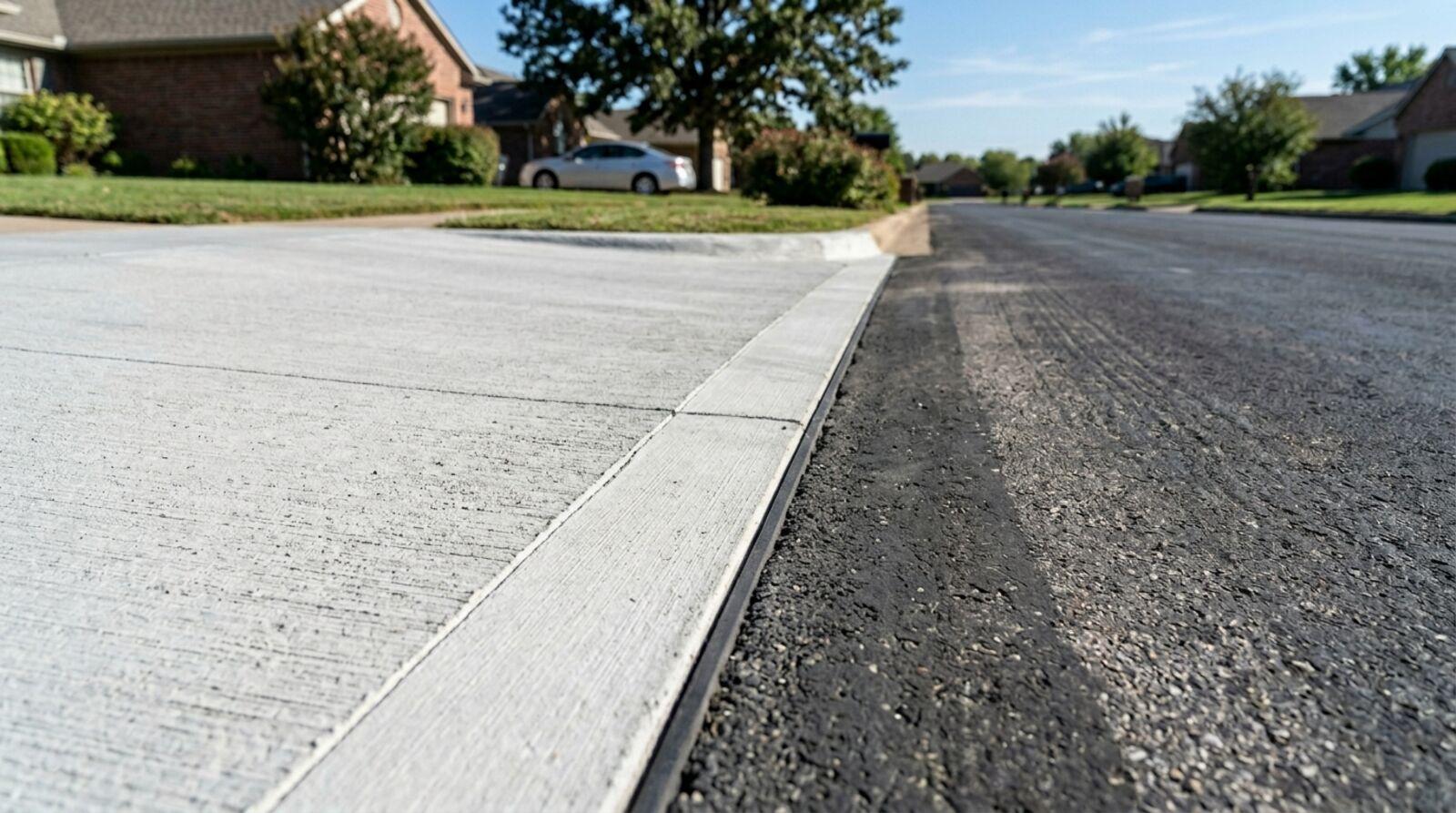
The driveway apron is the most expensive section of driveway per square foot that nobody thinks about until it cracks. It's the short section — usually 6-12 feet long — that connects your driveway to the street, spanning from the curb line across the sidewalk (if there is one) to your property line. Driveway apron replacement costs $1,500-$4,000, and the question every homeowner asks first isn't "how much" but "who pays for this — me or the city?"
The answer depends on where you live, and getting it wrong can cost you thousands or delay repairs for months. Here's the full picture.
What a Driveway Apron Actually Is
The driveway apron is the structural transition between the public road and your private driveway. It handles two specific engineering challenges that the rest of your driveway doesn't face:
First, it needs to be strong enough for heavier loads. Garbage trucks, delivery vehicles, and sometimes snowplows cross your apron regularly. The rest of your driveway only supports your cars. That's why aprons are typically thicker (6-8 inches of concrete vs. 4 inches for a residential driveway) and sometimes reinforced with rebar or wire mesh.
Second, it needs to manage the grade transition between the road surface and your driveway grade. This transition includes the curb cut — the lowered section of curb that allows vehicles to cross — and a slope that connects road grade to driveway grade without scraping the undercarriage of a standard sedan.
If your driveway crosses a public sidewalk, the apron includes that section too. The apron typically extends from the back of the curb to the property line (or sometimes a few feet past it, depending on local codes).
Who Pays for Driveway Apron Repairs
This is the most contentious question in residential driveway maintenance, and the answer varies by municipality. There is no universal rule.
Scenario 1: The city is responsible for the apron (common in many cities). The driveway apron sits in the public right-of-way — the strip of land between the road and your property line that the city controls. In many jurisdictions, the city maintains and repairs this section, including the curb cut. If your apron cracks, you submit a request, the city adds it to a repair schedule, and they fix it at no cost to you. The catch: city repair lists are long. Wait times of 6-18 months are normal.
Scenario 2: You're responsible for the apron (also common). Some municipalities place maintenance responsibility on the property owner, even though the apron is in the right-of-way. You pay for the repair, but you typically need a permit and must build to city specifications (thickness, reinforcement, ADA compliance for any sidewalk crossing). Check with your local Department of Public Works or Department of Transportation.
Scenario 3: Split responsibility. The city handles the curb and the section within the roadway, you handle the section from the curb to your property line. This is a hybrid approach that creates confusion about exactly where the boundary lies.
How to find out: Call your city's public works department and ask. Reference your specific address. Some cities maintain a database of right-of-way responsibility. You can also check your property survey — the property line determines where your responsibility begins, and the right-of-way line determines where the city's domain starts. The U.S. Department of Transportation's Federal Highway Administration provides background on how right-of-way works at the federal level, though specific residential rules are always local.
One more thing: even in cities where the city pays for apron repair, if *you* damage the apron (a heavy contractor vehicle, for example), you may be on the hook. And if you want to modify the apron (widen it, change the material, add a second driveway entrance), that's always a permit and always your expense.
Driveway Apron Replacement Costs
Apron replacement costs $1,500-$4,000 for a standard single-width driveway apron (roughly 10-12 feet wide by 8-12 feet deep). Here's where the money goes:
- Demolition and removal of existing apron — $500-$1,000. Concrete aprons require sawcutting at the edges and jackhammering the slab. Disposal of concrete debris adds $200-$400. - Base preparation — $200-$500. Compacting the sub-base and adding fresh gravel base material. - Concrete pour — $600-$1,500. The apron is typically poured at 6-8 inches thick with 4,000 PSI concrete and reinforced with rebar or wire mesh. Thicker and stronger than a standard driveway slab, which adds cost per square foot. - Forming and finishing — $200-$500. Aprons need precise forming to match the curb height, road grade, and driveway grade. - Permit — $50-$300. Required in almost every municipality because the work is in the right-of-way.
If you're replacing the apron as part of a full driveway replacement, the marginal cost is lower — maybe $800-$1,500 extra — because the contractor is already mobilized with equipment and crew. Our driveway replacement cost guide includes apron costs in the full breakdown.
Double-wide or circular driveway aprons cost more. A double-wide apron (20-24 feet) runs $2,500-$5,000. Circular driveways with two aprons double the cost since each apron is a separate curb cut.
Common Driveway Apron Materials
Most aprons are poured concrete, and there's a practical reason: concrete handles the heavy loads and freeze-thaw cycles that aprons endure better than most alternatives, and it matches the municipal sidewalk and curb materials.
That said, other materials are used depending on the rest of the driveway:
- Standard concrete — by far the most common. $8-$15 per square foot for the apron section, poured at 6-8 inches thick. Lasts 25-30 years with proper maintenance. - Stamped or colored concrete — matches stamped concrete driveways. Add $3-$8 per square foot to standard concrete cost. Check with your city — some municipalities require the apron to be plain concrete regardless of the driveway material. - Asphalt — acceptable in some jurisdictions, especially where the road is asphalt. Costs $5-$10 per square foot. Less durable than concrete for aprons because it deforms under heavy static loads (like a parked garbage truck). - Pavers — possible but uncommon for aprons because of the heavy load requirement. If allowed, use vehicular-grade pavers (minimum 80mm thick) on a reinforced base. Expect $20-$35 per square foot installed. See our paver driveway complete guide for paver thickness and base requirements. - Brick — used in historic districts where code requires it. Expensive ($25-$40 per square foot) and requires regular maintenance. Similar considerations apply as with a cobblestone driveway.
In most cases, matching the apron material to the driveway looks best. But if code requires concrete, you can use a decorative border or scoring pattern to make the transition less abrupt.
When a Crumbling Apron Signals Bigger Problems
A cracked apron isn't always just an apron problem. Sometimes it's the visible symptom of a deeper issue.
Tree root damage. Street trees planted between the sidewalk and curb commonly send roots under the apron. The roots heave the concrete, creating cracks and uneven surfaces. Replacing the apron without addressing the roots means the new apron will crack within 5-7 years. Root pruning or root barriers ($200-$500) should be part of the repair plan.
Drainage failure. If water consistently runs from the street onto your driveway (or vice versa), the apron grade may be incorrect. A properly graded apron directs water along the gutter line, not into your driveway. If water is flowing the wrong way, regrading during replacement is critical. Our driveway drainage solutions guide covers how apron grade fits into the broader drainage system.
Utility work. Cities frequently cut into aprons to access water mains, sewer lines, and gas lines that run under the right-of-way. Utility patches often crack and settle because they're not poured to the same standard as the original apron. If your apron has a patchwork of cuts and fills, the patches will keep failing until you replace the whole section.
Base erosion. Water washing under the apron erodes the gravel base, creating voids. The concrete bridges the void until it can't, then cracks and settles. If you can hear hollow sounds when tapping the apron with a heavy tool, the base has voids. A new apron needs a new base.
Subgrade issues. In areas with expansive clay soils, the subgrade swells and shrinks with moisture changes, cracking the apron from below. In these areas, a thicker gravel base (8-12 inches instead of 4-6 inches) and proper compaction are essential for the replacement to last.
How to Get Your Apron Repaired
If the city is responsible:
- Call your local Department of Public Works or 311 line and file a repair request. - Document the damage with photos and note any safety hazards (trip hazard on the sidewalk, for example — safety hazards sometimes move you up the list). - Be patient. Municipal repair timelines are long. - If the damage creates an immediate safety hazard, the city may expedite, but don't count on it.
If you're responsible:
- Get a permit from your city before starting work. Working in the right-of-way without a permit can result in fines and forced removal. - Hire a concrete contractor who has done apron work before. Aprons have specific thickness, reinforcement, and grade requirements that differ from standard flatwork. - Get 3 quotes. Apron work is bread-and-butter for concrete contractors, so pricing should be competitive. - Coordinate with the city inspector. Most jurisdictions require inspection of the forms and rebar before the pour, and a final inspection after.
Visualize Your New Driveway From Apron to Garage
If you're replacing your apron as part of a broader driveway renovation, it helps to see how different materials look on your specific property before committing to a full plan. DrivewAI lets you upload a photo of your driveway and preview materials from the apron to the garage — stamped concrete, pavers, exposed aggregate, and more. Your Every render is covered by a 24-hour refund guarantee, and a $9 4-pack unlocks enough room to compare options.
For comprehensive renovation planning that includes the apron, our driveway renovation planning guide covers budgeting, contractor selection, and the full project timeline. And if the apron damage is part of a larger repair situation, our driveway repair guide helps you decide whether to patch, resurface, or replace the whole driveway.
About the author
Noah James
Founder, DrivewAI
Noah James is the founder of DrivewAI, an AI home visualization platform that helps homeowners, contractors, and real estate agents preview renovations before committing. He built DrivewAI to close the gap between inspiration and execution in home improvement.
His writing focuses on practical renovation decision-making, material comparisons, and how AI visualization tools are changing the way people plan projects — from driveway replacements to full interior staging.
See your home transformed by AI
Upload a photo and get AI renderings across every style. Designs from $9 with a 24-hour refund guarantee.
Try DrivewAI Free