Retaining Wall Design: When You Need One and What It Costs
By Noah James
• 8 min read • Founder, DrivewAI
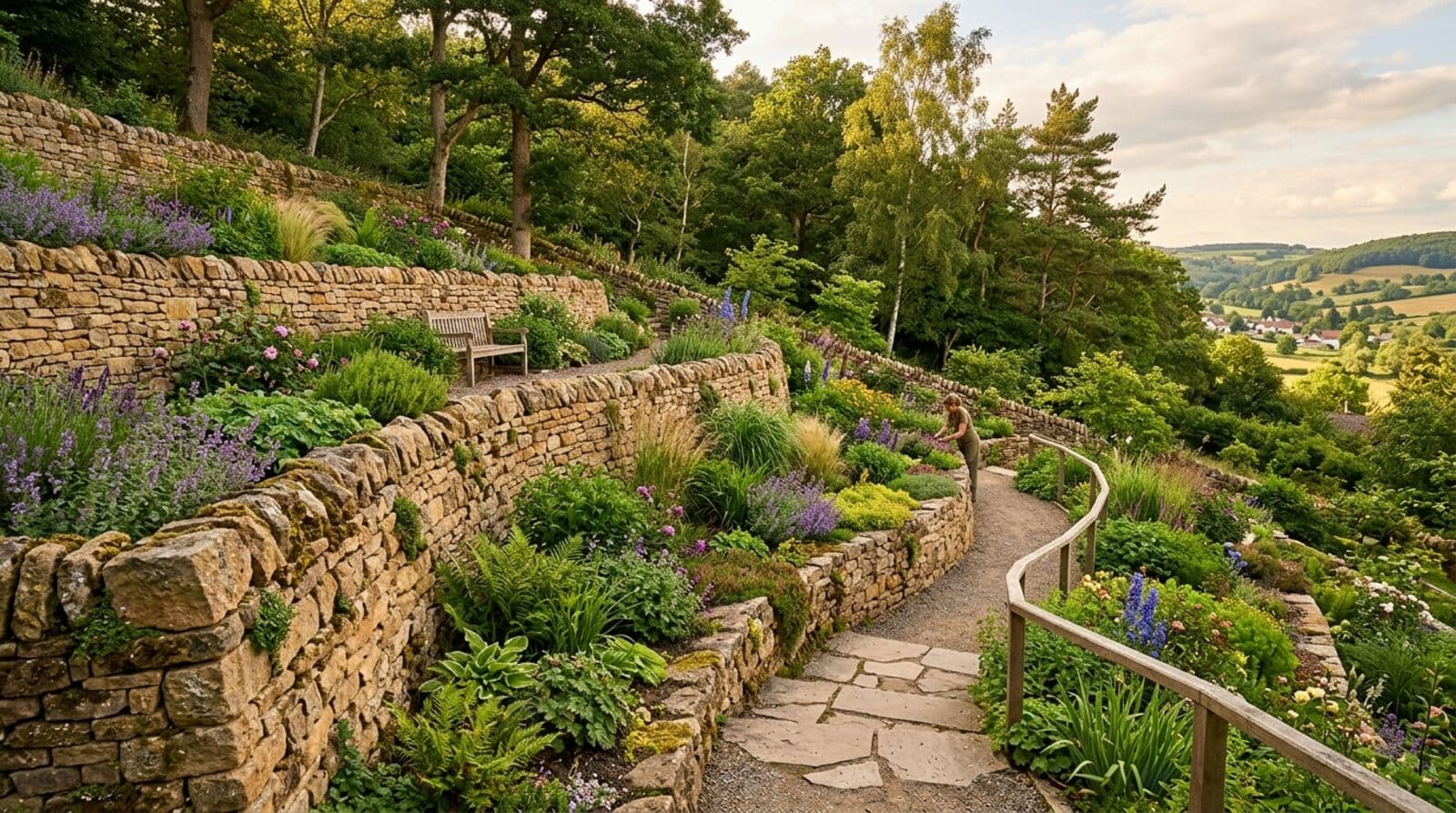
Retaining wall design isn't something most homeowners think about until water pools against their foundation, their hillside starts creeping toward the neighbor's property, or they realize that gorgeous terraced backyard on Instagram required actual engineering. Retaining walls are one of the few landscape features that are structural first and aesthetic second — get the engineering wrong and you get a very expensive pile of rubble. Get it right and you unlock usable space on slopes that were previously just a mowing hazard.
When You Actually Need a Retaining Wall
Not every slope needs a retaining wall. Gentle grades can be managed with ground cover plants, terraced garden beds, or simple regrading. The rule of thumb: if your slope exceeds a 3:1 ratio (three feet of horizontal run for every one foot of vertical rise), you're entering retaining wall territory.
Here are the common scenarios where a retaining wall goes from optional to necessary:
Erosion control. If soil is washing away during rain, especially toward a structure, driveway, or neighbor's property, a retaining wall stabilizes the slope and redirects water flow.
Creating usable space. A sloped backyard is mostly unusable. A retaining wall lets you carve out flat terraces for patios, play areas, gardens, or just a level spot to put a chair. This is the most common reason homeowners invest in retaining walls.
Foundation protection. If the grade around your house slopes toward the foundation, a retaining wall combined with proper drainage can redirect water before it becomes a basement problem.
Driveway or road support. When a driveway or road sits above or below grade, retaining walls hold the adjacent soil in place. These are often engineered walls with strict structural requirements.
Retaining Wall Materials Compared
The material you choose affects cost, appearance, longevity, and whether you can DIY or need a contractor. Here's the honest breakdown.
Segmental retaining wall blocks (Allan Block, Versa-Lok, Pavestone) cost $12-$25 per square face foot installed. They're engineered with a built-in setback angle, interlocking pins or lips, and consistent dimensions. This makes them the most DIY-friendly option for walls under 3-4 feet. They look uniform and modern — some people love the clean lines, others find them generic.
Natural stone costs $20-$45 per square face foot installed. Fieldstone, limestone, and bluestone create walls with genuine character. Every stone is different, which means more skilled labor to fit them together. Natural stone walls age beautifully, developing moss and patina that make them look like they've been there forever. The tradeoff is cost and installation complexity.
Timber or railroad ties run $10-$18 per square face foot. They're cheap and easy to install, which is why they show up in so many DIY projects. But wood rots. Even pressure-treated timber starts deteriorating in 10-15 years when in contact with soil. Railroad ties also leach creosote, which is a concern in garden applications. Timber walls are fine for short-term, low-height applications but not a long-term solution.
Poured concrete costs $20-$35 per square face foot. It's the strongest option and the only reasonable choice for walls over 6 feet or walls bearing significant loads. Poured concrete walls are almost always engineered and professionally installed. They can be finished with stucco, stone veneer, or left as exposed concrete for a modern look.
Boulder walls run $15-$30 per square face foot and use large natural boulders stacked to create a rustic, naturalistic look. They work well on properties with a rural or woodland character. Placement requires heavy equipment (the boulders weigh hundreds or thousands of pounds each), so DIY isn't realistic.
The Engineering Threshold: When to Call a Professional
This is the most important section of any retaining wall design guide, and the one most DIY articles dangerously underplay.
Walls over 4 feet in retained height typically require engineered design. This isn't a suggestion — in most jurisdictions, it's building code. An engineer analyzes soil conditions, hydrostatic pressure, surcharge loads (what's above the wall — a driveway? a building?), and seismic factors to design a wall that won't fail.
Engineering fees run $2,000-$5,000 for residential retaining walls. That feels expensive until you consider that a failed 6-foot retaining wall can cause $20,000-$50,000 in property damage, or worse, injure someone. The National Concrete Masonry Association provides technical resources on engineered retaining wall systems.
Even for walls under 4 feet, consider professional help if: - The soil is clay (which creates more hydrostatic pressure when wet) - There's a structure, driveway, or pool within a distance equal to the wall height - The slope above the wall continues upward significantly - Your area has significant freeze-thaw cycles - You're building on fill soil rather than undisturbed native soil
Building departments in most areas require permits for retaining walls over 4 feet, and some require them for any wall over 30 inches. Pull the permit. If the wall fails and you didn't permit it, your homeowner's insurance may not cover the damage.
Cost by Height and Material
Retaining wall costs scale non-linearly with height. A 6-foot wall doesn't cost twice as much as a 3-foot wall — it costs three to four times as much because of the engineering, deeper footing, heavier materials, and more complex drainage required.
2-foot wall: $15-$30 per linear foot (DIY-friendly, minimal engineering) 3-foot wall: $25-$50 per linear foot 4-foot wall: $40-$80 per linear foot (engineering threshold) 6-foot wall: $80-$150 per linear foot (engineered, professional installation) 8-foot wall: $120-$250 per linear foot (serious structural engineering, heavy equipment)
Customized renders start at $9.00 each. For a typical 40-linear-foot retaining wall at 3 feet high using segmental blocks, expect $1,500-$2,500 for DIY materials or $2,500-$4,000 professionally installed.
An alternative to one tall wall: build two or three shorter terraced walls. Two 2-foot walls with a planting bed between them cost roughly the same as one 4-foot wall, avoid the engineering requirement, and create space for attractive landscaping between the tiers. The terraced approach also looks less imposing and more natural.
Drainage: The Thing That Makes or Breaks Your Wall
If you remember one thing from this article, make it this: the most common reason retaining walls fail is poor drainage. Water saturates the soil behind the wall, dramatically increasing the lateral pressure against it. A wall designed to hold back dry soil can't handle the same soil when it's waterlogged.
Every retaining wall needs a drainage system behind it. The standard approach includes:
Drainage gravel: 12 inches of clean crushed stone (not round river rock) behind the wall from footing to within 6 inches of the top. This creates a zone where water can flow freely downward rather than building up pressure.
Perforated drain pipe: A 4-inch perforated pipe at the base of the wall, embedded in the gravel, sloped to daylight at one or both ends. This collects water that flows through the gravel and routes it away from the wall.
Filter fabric: Landscape fabric between the drainage gravel and the native soil prevents fine soil particles from migrating into the gravel and clogging the drainage system over time.
Weep holes: In solid concrete walls, weep holes every 4-6 feet allow water to pass through the wall face rather than building up behind it.
Skipping drainage to save $500-$1,000 on a $5,000 wall is a guaranteed way to spend $10,000 on a wall replacement in five years. Water always wins. Design for it.
DIY-Friendly vs Professional-Only Walls
Let's be direct about what you can and can't build yourself.
DIY-appropriate: Walls 3 feet or under using segmental blocks, on stable native soil, with no structures or driveways above the wall, and with proper drainage installed. If you're comfortable with physical labor and can follow manufacturer installation guides precisely, these are achievable weekend projects. Expect to move a lot of heavy material — a 30-linear-foot wall at 2 feet high requires roughly 3-4 tons of block and gravel.
Hire a professional: Anything over 3-4 feet, any wall near a structure, walls on clay or fill soil, walls requiring permits, and any situation where failure would threaten property or safety. The cost difference between DIY and professional is 40-60% — meaningful, but not worth the risk if your wall is doing real structural work.
A middle path: hire a contractor for the excavation, base preparation, and drainage installation, then lay the block yourself. The base is where most DIY walls go wrong, and it's the hardest part to fix after the fact. Getting the base right and doing the visible work yourself is a reasonable compromise.
Integrating Retaining Walls Into Your Landscape Design
A retaining wall doesn't have to look like an engineering project. The best retaining wall design integrates the wall into the broader landscape so it feels like a natural part of the yard.
Cap stones that double as informal seating turn a retaining wall into a functional feature. A wide, flat cap on a 2-foot wall creates bench seating around a fire pit area or along a garden path.
Planting pockets built into the wall face soften the appearance and break up large expanses of stone or block. Trailing plants like creeping thyme, sedum, or trailing rosemary cascade over the wall face and blur the hard edges.
Integrated lighting in the wall face or under the cap illuminates paths and patios while adding nighttime drama. LED strip lights or recessed puck lights work well and use minimal electricity.
Terraced planting beds between wall tiers create layered garden spaces that transform a problem slope into a showcase feature. Each terrace can hold different plants, creating depth and variety that a flat yard can't match.
Preview Your Retaining Wall Before Construction
Retaining walls are permanent. Once they're built, moving them means demolishing them and starting over. Unlike a garden bed you can reshape or a patio you can extend, a retaining wall is committed infrastructure.
Before you break ground, upload a photo of your slope to our landscaping tool and visualize how different wall heights, materials, and terracing options would look in your actual yard. Test natural stone versus block, single wall versus terraced, and different cap and planting options. Thirty seconds of visualization can save you from a permanent decision you'd rather undo.
About the author
Noah James
Founder, DrivewAI
Noah James is the founder of DrivewAI, an AI home visualization platform that helps homeowners, contractors, and real estate agents preview renovations before committing. He built DrivewAI to close the gap between inspiration and execution in home improvement.
His writing focuses on practical renovation decision-making, material comparisons, and how AI visualization tools are changing the way people plan projects — from driveway replacements to full interior staging.
See your home transformed by AI
Upload a photo and get AI renderings across every style. Designs from $9 with a 24-hour refund guarantee.
Try DrivewAI Free