Driveway Sealing Guide: Asphalt and Concrete Explained
By Noah James
• 9 min read • Founder, DrivewAI
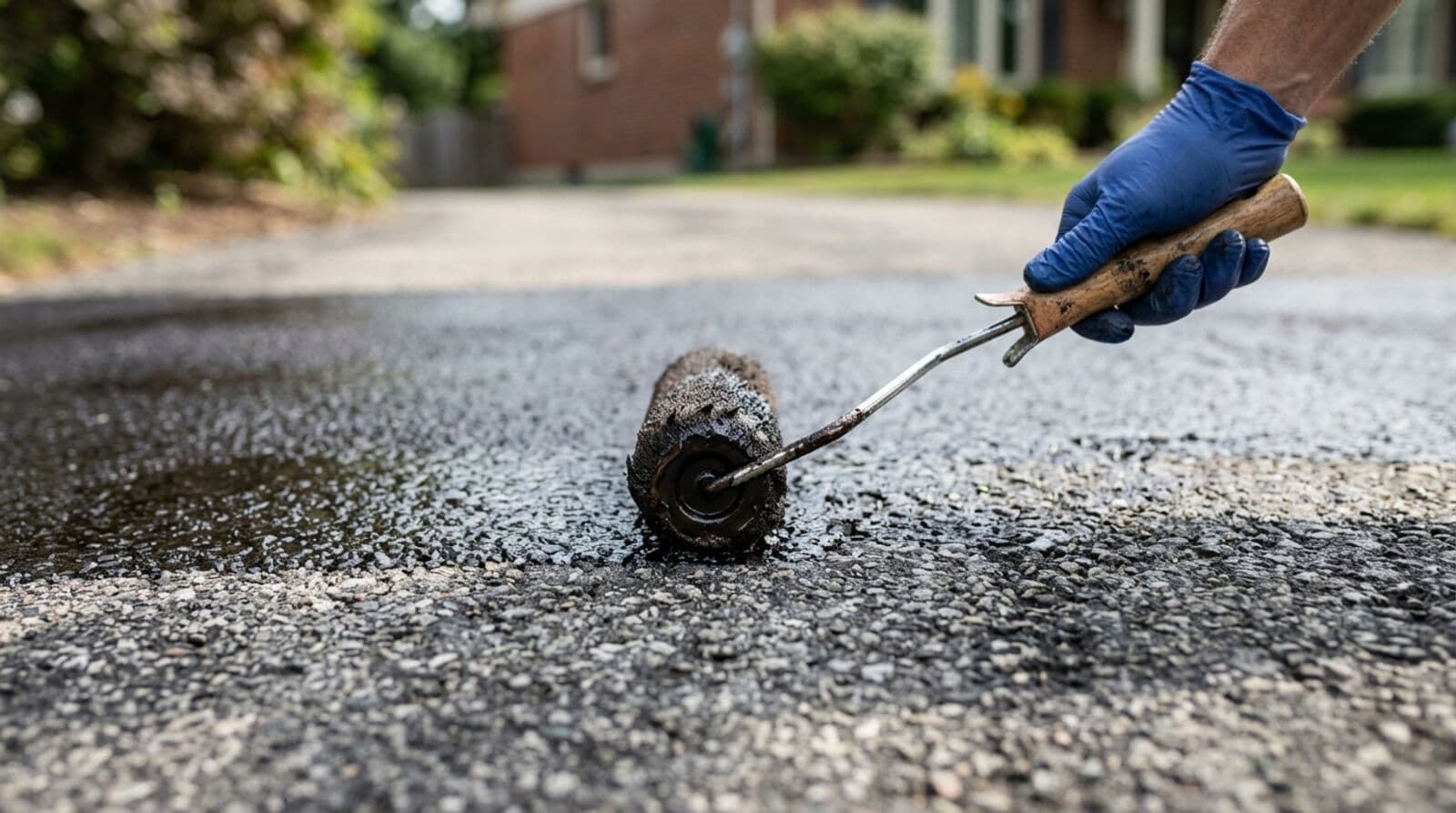
Driveway sealing is a $3 billion industry in the United States, and a solid chunk of that money is wasted. Not because sealing doesn't work — it absolutely does when done right — but because most homeowners seal too often, use the wrong product for their surface, or seal driveways that don't need it yet. The sealcoating truck that rolls through your neighborhood every spring isn't there because your driveway needs help. It's there because recurring revenue is a great business model.
That said, proper driveway sealing at the right intervals can double the lifespan of both asphalt and concrete surfaces. The trick is knowing which sealer matches your driveway material, when to apply it, and when to save your money. This guide covers both asphalt and concrete — because the products, timing, and techniques are completely different for each.
Asphalt Driveway Sealing vs Concrete Driveway Sealing
These are fundamentally different processes, and confusing them is more common than you'd think.
Asphalt sealcoating uses coal tar or asphalt emulsion products that create an opaque black coating. It blocks UV rays from oxidizing the petroleum binder in asphalt and prevents water penetration. The sealer is the color — that fresh black look IS the seal coat.
Concrete sealing uses penetrating sealers or topical film-forming sealers that are usually transparent or semi-transparent. Concrete sealers block moisture absorption, resist stains, and can enhance color on decorative concrete. They don't change the fundamental appearance the way asphalt sealer does.
Never use asphalt sealer on concrete or concrete sealer on asphalt. I know this sounds obvious, but I've seen it happen. The results are ugly and expensive to fix.
When Driveway Sealing Actually Helps
Sealing your driveway makes genuine sense in these situations:
- Asphalt driveways 1-2 years old that have fully cured and are starting to show their first gray oxidation - Concrete driveways in freeze-thaw climates where water absorption causes spalling and surface pop-outs - Decorative concrete (stamped, colored, exposed aggregate) where you want to preserve the color and finish - Driveways with oil staining risk — if you park old cars or work on vehicles, sealer prevents petroleum from dissolving asphalt binder or staining concrete - High-traffic concrete in commercial or multi-vehicle residential settings
Sealing is probably unnecessary for:
- New asphalt less than 6-12 months old (it needs to cure first) - Concrete driveways in mild, dry climates with no freeze-thaw cycles - Driveways you plan to replace within 2-3 years - Asphalt driveways that were sealed within the last 2 years
The Sealcoating Industry's Dirty Secret
Here's what the guy in the sealcoating truck won't tell you: most residential driveways are oversealed. The industry pushes annual or biennial sealing because that's how they make money. The reality, backed by pavement engineering research, is that asphalt driveways need sealing every 3-5 years, and many concrete driveways need it even less frequently.
Over-sealing asphalt creates a thick, brittle shell that cracks independently of the asphalt beneath it. Each coat is only about 1/32" thick, but after five or six coats in ten years, you've built up a rigid layer that can't flex with temperature changes. The result is peeling, flaking, and a surface that looks worse than if you'd never sealed at all.
The Federal Highway Administration documents the same diminishing-returns curve for highway sealcoating. There's an optimal interval, and going below it doesn't add protection — it adds problems.
How to tell if your asphalt needs resealing: pour a small amount of water on the surface. If it beads up, the existing sealer is still working. If it soaks in and darkens the asphalt, it's time to reseal. Simple.
DIY Driveway Sealing: Process and Products
For asphalt driveways:
The process is straightforward. Clean the surface thoroughly — pressure wash, degrease oil spots, let it dry completely. Fill any cracks wider than 1/8 inch with asphalt crack filler and let it cure per the product instructions. Then apply sealer with a squeegee applicator in two thin coats, 24 hours apart, with the second coat perpendicular to the first.
Product options for asphalt: - Coal tar emulsion ($0.10-$0.20/sq ft): Most durable, but restricted in some areas due to environmental regulations. Check local laws. - Asphalt emulsion ($0.08-$0.18/sq ft): More environmentally friendly, slightly less durable. - Acrylic polymer ($0.20-$0.35/sq ft): Premium option, longer lasting, UV-stable.
For detailed asphalt sealing advice, see our dedicated asphalt driveway sealing guide.
For concrete driveways:
Concrete sealing is less labor-intensive but more product-dependent. Clean and dry the surface. Apply the sealer with a roller, sprayer, or pump sprayer depending on the product type.
Product options for concrete: - Penetrating silane/siloxane sealer ($0.15-$0.30/sq ft): Soaks into the concrete and repels water from within. Doesn't change appearance. Best for plain gray concrete in freeze-thaw climates. - Acrylic topical sealer ($0.15-$0.25/sq ft): Creates a visible film on the surface. Enhances color and adds a slight sheen. Ideal for decorative concrete. Needs reapplication every 2-3 years. - Polyurethane sealer ($0.25-$0.50/sq ft): Extremely durable film-forming sealer. Great for high-traffic areas. Can yellow with UV exposure if you buy the wrong formulation — get the aliphatic (UV-stable) version, not the aromatic. - Epoxy sealer ($0.30-$0.60/sq ft): The most durable option but also the most prone to yellowing and peeling if applied incorrectly. Best left to professionals.
Professional Driveway Sealing Costs
Asphalt sealcoating by a pro: $0.15-$0.30/sq ft, or $300-$600 for a typical 600 sq ft driveway. This includes crack filling for minor cracks, cleaning, and two coats of commercial-grade sealer applied with a spray system.
Concrete sealing by a pro: $0.50-$1.50/sq ft depending on the product and number of coats. Decorative concrete sealing (stamped, colored) costs more because the stakes are higher — a bad sealer application on a $10,000 stamped driveway is a costly fix.
When to hire a pro: If your driveway has extensive cracking that needs hot-pour crack repair, if you have decorative concrete that requires specialized sealers, or if you simply hate the idea of spending a Saturday hunched over a squeegee, professional sealing is reasonable money.
Climate Considerations for Driveway Sealing
Your climate determines both how often you should seal and which products to use:
Cold climates (freeze-thaw zones): Sealing is most critical here. Water infiltration + freezing = destruction. Asphalt needs sealing every 3 years. Concrete needs a penetrating sealer to prevent spalling. Always use products rated for freeze-thaw resistance.
Hot, sunny climates: UV damage is the primary concern for asphalt. Seal every 4-5 years. Concrete in hot climates benefits less from sealing unless you have decorative finishes you want to preserve.
Wet climates (Pacific Northwest, Southeast): Moss and algae growth on sealed surfaces can be a problem. Some sealers include mildewcides. Alternatively, plan on periodic cleaning with a dilute bleach solution.
Dry climates: Sealing is least critical here. Without freeze-thaw and with lower rainfall, the main enemy is UV. Asphalt can go 5 years between coats. Plain concrete may not need sealing at all.
Common Driveway Sealing Mistakes
Sealing in the wrong weather. Below 50 degrees Fahrenheit, most sealers won't cure. Above 90 degrees on a dark asphalt surface, they dry too fast and don't bond. Rain within 24 hours washes everything away. Check a 48-hour forecast before you start.
Not cleaning thoroughly. Sealer doesn't bond to dirt, oil, tree sap, or rubber marks. Pressure washing is ideal. At minimum, sweep aggressively and use a degreaser on oil spots. The prep is honestly more important than the sealer itself.
Applying too thick. More is not better. Each coat should be thin enough to see brush or squeegee marks that level out as it dries. A thick puddle of sealer takes days to dry and never cures properly at the bottom.
Using a sprayer on asphalt without experience. Professional spray equipment applies sealer evenly at the right thickness. A garden pump sprayer does not. If you're DIYing asphalt, use a squeegee. Save the sprayer for concrete penetrating sealers, which are more forgiving.
Sealing over damage. Sealer is a protective coating, not a repair product. It won't fill cracks, level potholes, or bind crumbling surfaces. Fix all damage first, then seal. Our driveway repair guide covers fixing common issues before sealing.
How Long Does Driveway Sealer Last
Realistic lifespans by product type:
- Coal tar on asphalt: 3-5 years - Asphalt emulsion on asphalt: 2-4 years - Acrylic on asphalt: 4-6 years - Penetrating sealer on concrete: 5-10 years - Acrylic topical on concrete: 2-3 years - Polyurethane on concrete: 5-7 years
These assume proper application on a clean, prepared surface. Cut all numbers in half if you slap sealer over a dirty driveway on a cold day.
Should You Seal Your Driveway This Year
Ask yourself three questions. Is your current sealer still repelling water? If yes, wait. Is your driveway showing structural damage that sealing won't fix? If yes, repair first. Is the weather going to cooperate for the next 48 hours? If no, schedule for next month.
If you're thinking about sealing as part of a bigger curb appeal project, it might be worth considering what a completely different surface would look like. Upload a photo of your driveway on DrivewAI to preview everything from fresh sealcoat on your existing surface to a full redesign with pavers or stamped concrete. Customized renders start at $9.00 each. For material comparisons, our guide to the best driveway materials for curb appeal breaks down your options, and the driveway renovation planning guide helps you think through the full project.
About the author
Noah James
Founder, DrivewAI
Noah James is the founder of DrivewAI, an AI home visualization platform that helps homeowners, contractors, and real estate agents preview renovations before committing. He built DrivewAI to close the gap between inspiration and execution in home improvement.
His writing focuses on practical renovation decision-making, material comparisons, and how AI visualization tools are changing the way people plan projects — from driveway replacements to full interior staging.
See your home transformed by AI
Upload a photo and get AI renderings across every style. Designs from $9 with a 24-hour refund guarantee.
Try DrivewAI Free