Asphalt Driveway Sealing: When, How, and Why It Matters
By Noah James
• 8 min read • Founder, DrivewAI
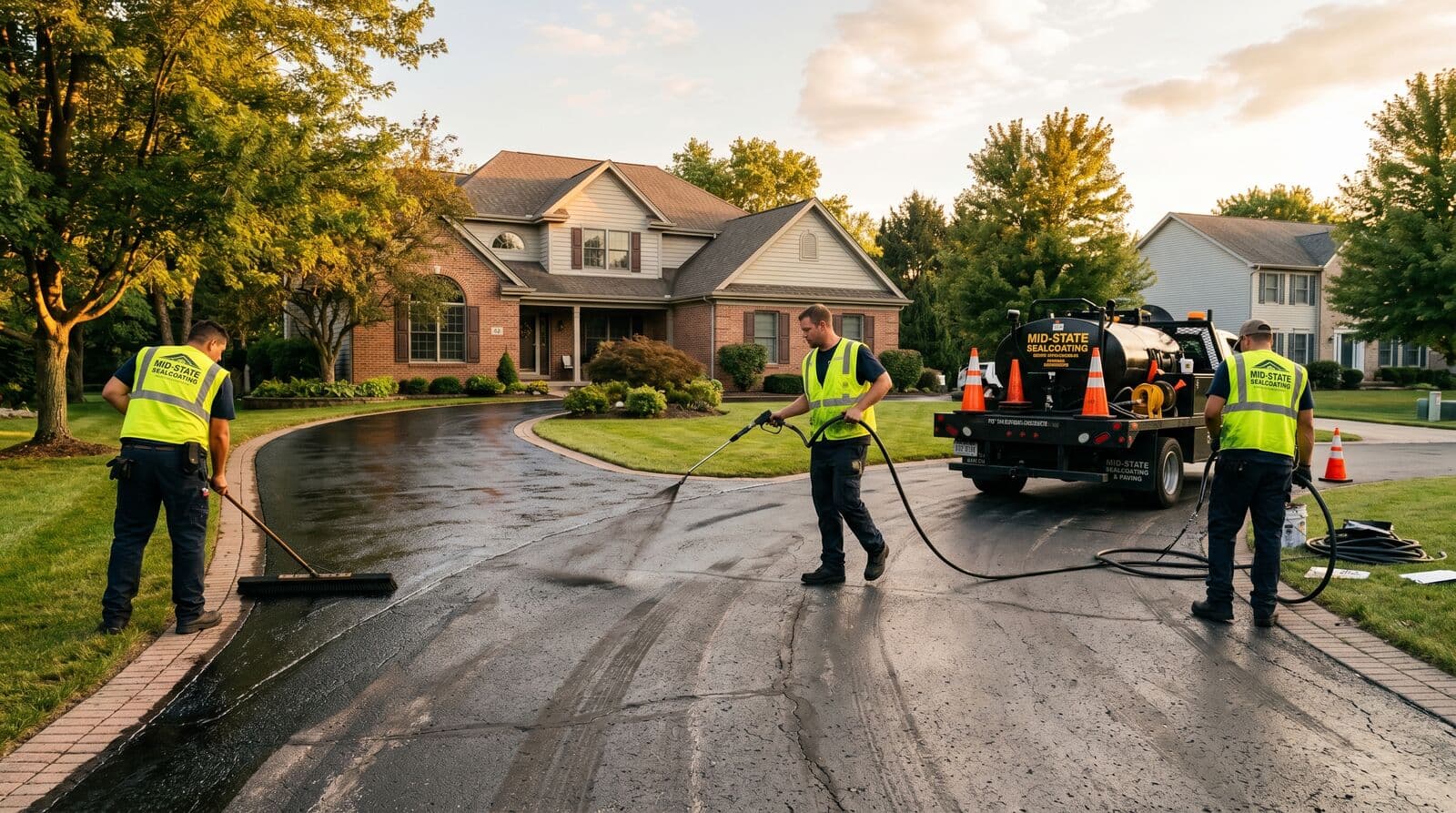
Asphalt driveway sealing is one of those home maintenance tasks that sounds simple but trips up homeowners constantly. Seal too early and you trap oils that prevent proper curing. Seal too late and you watch hairline cracks turn into craters. Get the timing right and you can add 10-15 years to your driveway's life for a few hundred bucks. Get it wrong and you're peeling up a gooey mess next spring.
I've seen driveways that were sealed every single year look worse than ones sealed every four years. The sealcoating industry has a financial incentive to tell you "seal annually," but the science says otherwise. Here's what actually works.
Why Asphalt Driveway Sealing Matters
Asphalt is essentially gravel held together by a petroleum-based binder. Over time, UV rays oxidize that binder, turning your flexible black surface into a brittle gray one. Water seeps into the oxidized surface, freezes, expands, and creates cracks. Those cracks let in more water. You know where this is going.
A proper seal coat blocks UV degradation and prevents water infiltration. It also resists oil and gasoline stains that can dissolve the binder. The Federal Highway Administration documents the same oxidation process on highways — your driveway faces identical chemistry, just on a smaller scale.
The real cost of skipping sealing entirely? A full asphalt driveway replacement runs $3-7 per square foot. For a standard 600 sq ft driveway, that's $1,800-$4,200. A seal coat costs $150-$400 DIY or $300-$600 professional. The math is obvious.
When to Seal a New Asphalt Driveway
This is where most people mess up. New asphalt needs to cure for at least 6 months before sealing — some experts recommend a full 12 months. During that time, lighter oils in the asphalt evaporate and the surface hardens properly.
Seal a brand-new driveway right away and you trap those volatile oils underneath the seal coat. The result is a soft, tacky surface that scuffs easily and never fully cures. I've talked to paving contractors who see this mistake multiple times per season, usually from homeowners who hired a separate sealcoating company that showed up too soon.
The rule is simple: if you can still smell the asphalt strongly, it's not ready to seal. If your shoes leave imprints on a warm day, it's not ready. Wait it out.
How Often Should You Seal Your Asphalt Driveway
The sweet spot is every 3-5 years for most climates. Not every year. Not every two years. Every 3-5 years.
Here's why over-sealing backfires: each coat of sealer adds a thin layer that can build up and eventually crack, peel, or flake. Too many layers and you've created a brittle shell on top of flexible asphalt. When the asphalt underneath expands and contracts with temperature changes, that thick shell cracks.
Climate adjustments to consider:
- Northern freeze-thaw zones: Every 3 years. The constant freeze-thaw cycles accelerate oxidation. - Hot southern climates: Every 4-5 years. UV is more intense, but you don't get freeze-thaw damage. - Moderate climates: Every 4 years is plenty for most mid-Atlantic and Pacific Northwest driveways. - Shaded driveways: Every 5 years. Less UV exposure means slower degradation.
Your driveway tells you when it needs sealing. When the surface turns from black to medium gray and you start seeing fine hairline cracks, it's time.
Best Asphalt Sealer Products and Types
Not all sealers are created equal, and the labels can be confusing. Here's what you're choosing between:
- Coal tar emulsion: The traditional option and still the most durable. Excellent UV and chemical resistance. However, coal tar is increasingly restricted in some states and municipalities due to environmental concerns — it's toxic to aquatic life when it washes into storm drains. Check your local regulations before buying.
- Asphalt emulsion sealer: Made from the same material as your driveway. Less durable than coal tar but more environmentally friendly. Most consumer-grade products at home improvement stores are this type.
- Acrylic sealer: More expensive ($0.20-0.35/sq ft vs $0.10-0.20 for emulsions) but lasts longer and resists UV better. Good choice if you want to extend your sealing interval.
- Fast-dry polymer-modified sealer: Premium option that cures in 2-4 hours instead of 24-48. Worth the extra cost if you can't keep cars off the driveway for two days.
Skip the cheapest bucket at the hardware store. The $15 five-gallon pail covers maybe 300 sq ft and contains more water than sealer. Spend $25-35 per five-gallon bucket for a product with actual solids content above 30%.
DIY Asphalt Sealing vs Hiring a Pro
DIY sealing is genuinely doable for most homeowners. The materials cost $100-$200 for a standard two-car driveway. You'll need a squeegee applicator or sprayer, a leaf blower, crack filler, and a free weekend.
DIY cost breakdown for a 600 sq ft driveway: - Sealer (2-3 buckets): $60-$105 - Crack filler: $15-$30 - Squeegee applicator: $25-$40 (reusable) - Driveway cleaner/degreaser: $10-$15 - Total: $110-$190
Professional cost for the same driveway: - $300-$600 depending on your market and driveway condition
The pro advantage isn't skill — it's equipment. Professional crews use spray systems that apply a more even coat than hand-squeegeeing. They also use commercial-grade products with higher solids content. If your driveway has significant cracking that needs hot-pour crack filling (not the cold stuff from a tube), hire a pro. Hot-pour equipment costs $500+ to buy.
One warning about pros: the sealcoating industry has a lot of fly-by-night operators. Door-to-door sealcoating solicitors are notorious for watering down product, applying too thin a coat, and disappearing. Get at least three quotes and check reviews. A reputable company won't pressure you into sealing a driveway that doesn't need it.
Weather and Temperature Requirements for Sealing
Sealer needs specific conditions to cure properly. Miss these windows and you'll have problems:
- Temperature: Must be above 50°F during application AND for 24 hours after. Below that, the sealer won't coalesce into a solid film. - Rain: No rain forecast for at least 24 hours (48 hours for coal tar). Even a light drizzle on uncured sealer creates white streaks and washes product into your lawn. - Humidity: Below 80% is ideal. High humidity dramatically slows cure time. - Sun vs shade: Direct afternoon sun on dark sealer can cause it to dry too fast on the surface while staying wet underneath. Morning application is best for south-facing driveways.
Best months for sealing: May through September in northern states. March through November in the south. The ideal window is late spring — warm enough for proper curing, but before the brutal summer heat that makes working on black asphalt miserable.
Common Asphalt Sealing Mistakes to Avoid
Skipping crack repair. Sealer is not crack filler. It's a surface coating maybe 1/16" thick. If you seal over cracks, water still gets in. Fill every crack wider than 1/8" with proper crack filler and let it cure before sealing.
Not cleaning the surface. Sealer doesn't bond to dirt, oil, or vegetation. Pressure wash or scrub the entire driveway. Hit oil stains with a degreaser. Pull weeds from cracks. This prep work takes longer than the actual sealing and is more important.
Applying too thick. Two thin coats beat one thick coat every time. A thick coat takes forever to dry and is more likely to peel. Apply the first coat, wait 24 hours, then apply the second coat perpendicular to the first.
Sealing over existing peeling sealer. If old sealer is flaking, you need to remove it before resealing. Otherwise your new coat will peel too. This is labor-intensive — a wire brush or power washer on the flaking areas, then spot-prime before sealing.
Making the Decision: Is Your Driveway Ready
Look at your asphalt driveway right now. Is it still reasonably black? Probably doesn't need sealing yet. Is it medium to light gray with visible aggregate stone showing through? Time to seal. Are there alligator cracks (interconnected cracks resembling alligator skin) across large areas? Sealing won't save it — you're looking at driveway replacement territory.
If you're weighing asphalt against other materials entirely, check out our breakdown of concrete vs asphalt driveways to see which makes more sense for your situation. And if you're curious what your driveway could look like with a completely different surface, try uploading a photo on DrivewAI — you can preview stamped concrete, pavers, or a dozen other finishes overlaid on your actual driveway before spending a dime. Customized renders start at $9.00 each.
About the author
Noah James
Founder, DrivewAI
Noah James is the founder of DrivewAI, an AI home visualization platform that helps homeowners, contractors, and real estate agents preview renovations before committing. He built DrivewAI to close the gap between inspiration and execution in home improvement.
His writing focuses on practical renovation decision-making, material comparisons, and how AI visualization tools are changing the way people plan projects — from driveway replacements to full interior staging.
See your home transformed by AI
Upload a photo and get AI renderings across every style. Designs from $9 with a 24-hour refund guarantee.
Try DrivewAI Free