13 Best Driveway Materials for Maximum Curb Appeal
By Noah James
• 8 min read • Founder, DrivewAI
Your driveway is one of the first things people see when they approach your home, and according to the National Association of Realtors, exterior improvements deliver some of the highest ROI of any home renovation. It makes up 30–50% of your front-facing property. Choosing the right material can dramatically increase your home's curb appeal and value.
Here are 13 driveway materials ranked by curb appeal impact, with honest pros and cons for each.
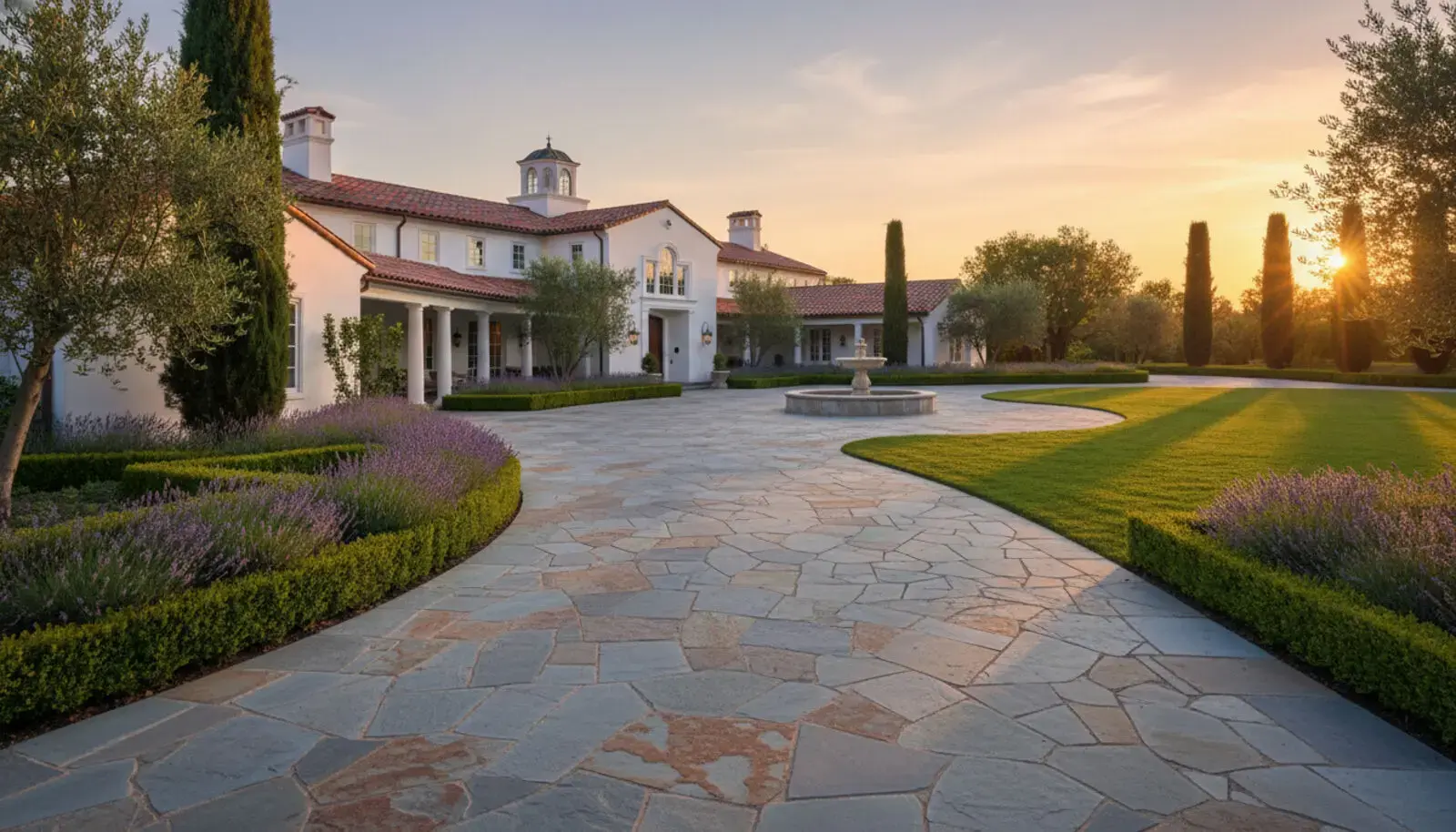
1. Natural Stone (Flagstone / Bluestone)
Curb appeal rating: 10/10
Nothing beats natural stone for pure visual impact. Each slab is unique with natural veining, color variation, and texture. Bluestone, flagstone, and travertine create an instant luxury impression.
Pros: Unmatched beauty, unique character, increases home value significantly, extremely durable (50+ years).
Cons: Most expensive option ($20–$50/sq ft), labor-intensive installation, can be slippery when wet, requires periodic sealing.
Best for: High-end homes, colonial and Mediterranean architecture, homeowners who want maximum visual impact.
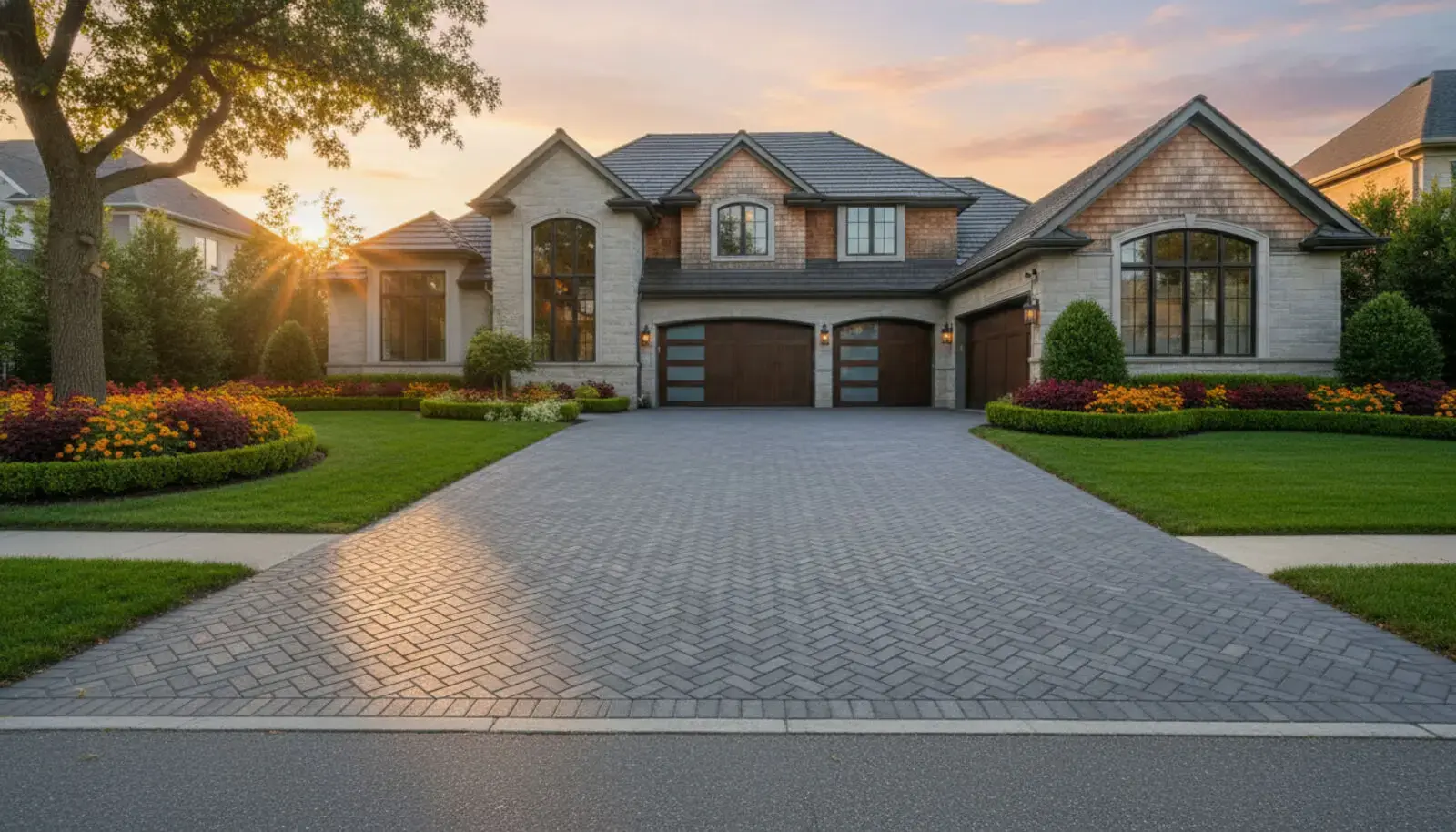
2. Interlocking Pavers
Curb appeal rating: 9/10
Pavers offer incredible design flexibility. Herringbone, basketweave, running bond — the pattern options are endless. Mix colors for borders and accents. The three-dimensional texture adds depth that flat surfaces can't match.
Pros: Huge variety of colors and patterns, individually repairable, excellent drainage with permeable options, 25+ year lifespan.
Cons: Higher cost ($15–$30/sq ft), weeds can grow between joints, may shift over time in freeze-thaw climates.
Best for: Traditional and transitional homes, homeowners who want design flexibility, cold climates (better than concrete for freeze-thaw).
3. Stamped Concrete
Curb appeal rating: 8/10
Stamped concrete mimics the look of natural stone or brick at a fraction of the cost. Modern stamping techniques have gotten remarkably realistic. Color options are virtually unlimited.
Pros: Great look for the price ($12–$18/sq ft), wide range of patterns and colors, relatively low maintenance, 25+ year lifespan.
Cons: Can crack (especially in cold climates), repairs are visible, needs resealing every 2–3 years, pattern repeats are noticeable up close.
Best for: Budget-conscious homeowners who want the look of stone or brick, warm climates, large driveways where pavers would be cost-prohibitive.
4. Exposed Aggregate
Curb appeal rating: 7.5/10
Exposed aggregate reveals the natural stones and pebbles embedded in the concrete, creating a unique, textured surface. The natural earth tones blend beautifully with most landscaping.
Pros: Excellent traction (slip-resistant), unique natural appearance, durable, moderate cost ($12–$20/sq ft).
Cons: Rough on bare feet, can be difficult to match if repairs are needed, limited pattern options compared to stamped concrete.
Best for: Craftsman and ranch-style homes, properties with natural landscaping, homeowners who want texture and traction.
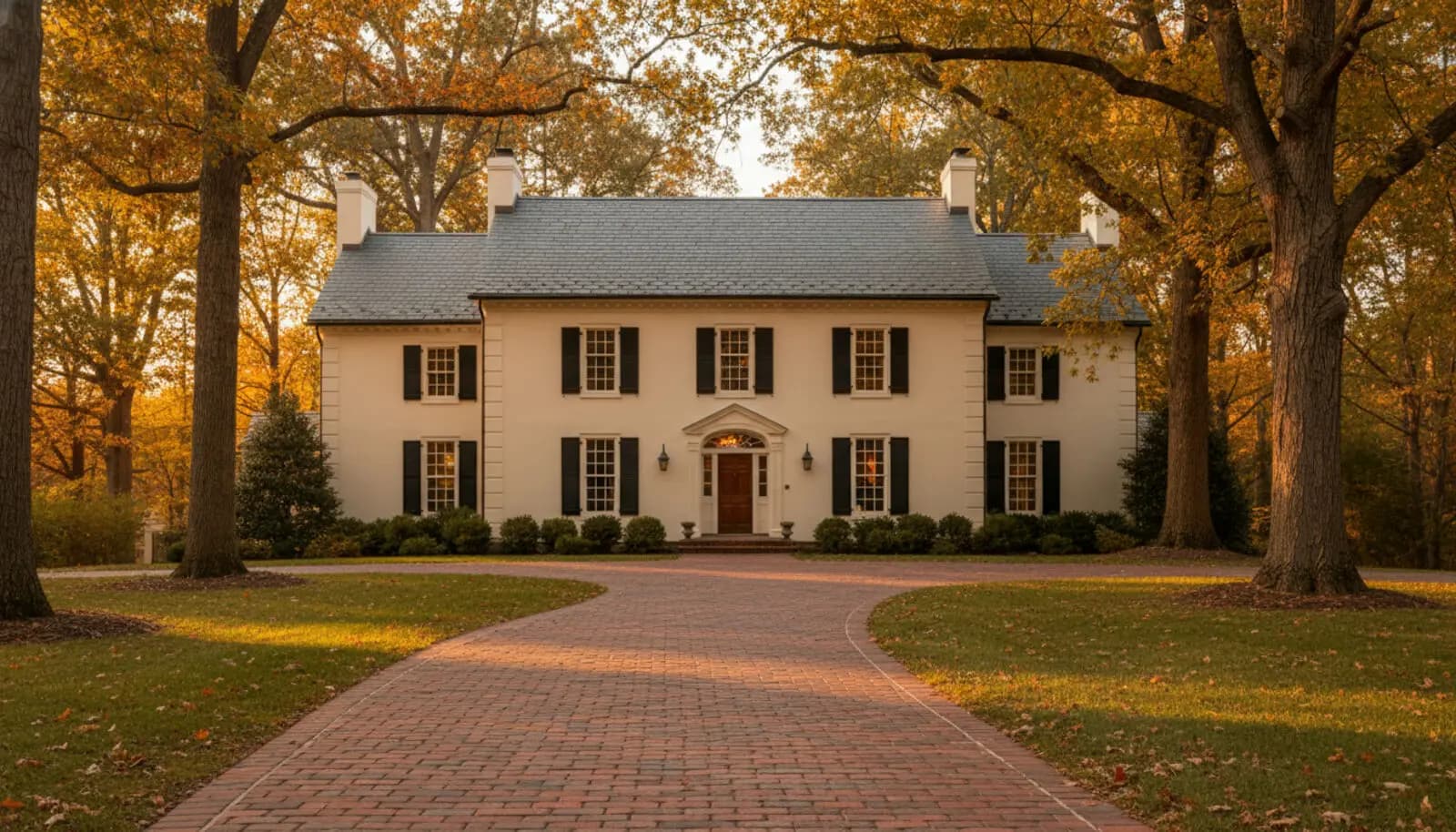
5. Brick
Curb appeal rating: 8/10
Classic brick driveways evoke timeless charm. The warm red-brown tones complement traditional architecture beautifully. Brick develops a gorgeous patina over time that actually improves its appearance.
Pros: Timeless aesthetic, develops beautiful patina, individually repairable, excellent for traditional homes.
Cons: Can be expensive ($14–$25/sq ft), susceptible to moss and algae in damp climates, mortar joints need periodic maintenance.
Best for: Colonial, Georgian, and traditional homes, historic districts, homeowners who appreciate classic aesthetics.
6. Modern Poured Concrete
Curb appeal rating: 7/10
Don't underestimate clean, modern concrete. Large-format slabs with precise expansion joints create a sleek, contemporary look that pairs perfectly with modern architecture. The key is in the finishing — smooth broom finish, clean edges, and geometric joint patterns.
Pros: Most affordable paved option ($8–$15/sq ft), extremely durable, minimal maintenance, clean modern aesthetic.
Cons: Can crack, limited decorative options, plain appearance if not designed thoughtfully.
Best for: Modern and contemporary homes, minimalist design preferences, budget-conscious projects.
7. Concrete & Turf Diamond Pattern
Curb appeal rating: 8.5/10
This emerging trend combines poured concrete with integrated turf strips in geometric patterns. The green turf softens the hardscape and creates a striking visual that's both modern and eco-friendly. It also helps with drainage.
Pros: Unique and eye-catching, eco-friendly (reduces runoff), cooler surface temperature, distinctive modern aesthetic.
Cons: Turf requires mowing and maintenance, higher installation cost, turf sections may brown in drought, not ideal for heavy traffic areas.
Best for: Modern homes, eco-conscious homeowners, properties in warm climates, design-forward neighborhoods.
How Does Your Home's Architecture Affect Material Choice?
The best driveway material isn't just about looks in isolation — it's about harmony with your home's architecture. A cobblestone driveway in front of a mid-century modern ranch looks as wrong as a plain concrete slab in front of a Georgian colonial.
Colonial and Traditional homes pair best with brick, natural stone, or interlocking pavers in warm earth tones. Running bond and herringbone patterns complement the symmetrical architecture.
Modern and Contemporary homes call for clean lines — modern poured concrete with geometric joints, large-format pavers in gray tones, or concrete-turf diamond patterns. Avoid busy patterns or warm-toned brick.
Craftsman and Ranch homes look excellent with exposed aggregate, natural stone, or pavers in muted earth tones. The textural quality of exposed aggregate complements the handcrafted aesthetic.
Mediterranean and Spanish homes suit natural stone (especially travertine), warm-toned pavers, or stamped concrete in flagstone patterns. The key is warm colors that complement stucco and terracotta.
What About Permeable Driveway Options?
As municipalities tighten stormwater regulations, permeable driveways are becoming increasingly popular — and sometimes required. Several materials on this list offer permeable options:
- Permeable pavers have wider joints filled with gravel that allow water to drain through. They look nearly identical to standard pavers but manage stormwater on-site. - Gravel is inherently permeable and is the simplest permeable option. - Concrete-turf diamond patterns are semi-permeable thanks to the turf sections. - Permeable concrete (pervious concrete) is a specialized mix that allows water to pass through the slab itself.
If your property has drainage challenges or your municipality requires stormwater management, permeable pavers offer the best combination of aesthetics and function. They cost about 10–15% more than standard pavers but can eliminate the need for separate drainage systems.
Which Material Has the Lowest Lifetime Cost?
Looking at total cost over 30 years (installation + maintenance + repairs), the ranking shifts significantly from upfront cost alone:
- Gravel is cheapest upfront but requires periodic regrading and fresh material ($200–$500 every 2–3 years). 30-year cost: $5,000–$10,000. - Asphalt needs seal coating every 3–5 years ($400–$800 each time) and typically needs resurfacing at year 15. 30-year cost: $10,000–$18,000. - Plain concrete needs minimal maintenance — just occasional sealing. 30-year cost: $6,000–$12,000. - Pavers need joint sand reapplication every 3–5 years ($200–$400) but rarely need replacement. 30-year cost: $10,000–$20,000. - Natural stone has the highest upfront cost but almost zero maintenance. 30-year cost: $13,000–$32,000.
Plain concrete and natural stone actually have the lowest maintenance burden over time, making them the best "set and forget" options at different price points.
8. Gravel
Curb appeal rating: 5/10
Gravel is the most affordable paved driveway option and works well for long rural driveways and cottage-style properties. A mix of crushed granite in warm beige and tan tones looks surprisingly elegant when properly edged and maintained.
Pros: Cheapest option ($2–$5/sq ft), permeable (great drainage), easy to install, works for any driveway length.
Cons: Requires periodic regrading, loose stones can migrate, not ideal for steep grades, can be noisy to drive on.
Best for: Rural properties, long driveways, cottage and farmhouse aesthetics, budget-conscious projects.
9. Cobblestone
Curb appeal rating: 9.5/10
Traditional cobblestone brings Old World charm that few materials can match. Hand-cut granite setts in fan or arc patterns create a timeless, historic look. The slightly uneven surface and weathered texture only improve with age.
Pros: Stunning historic aesthetic, extremely durable (100+ year lifespan), increases property value, ages beautifully.
Cons: Very expensive ($25–$50/sq ft), rough ride surface, labor-intensive installation, can be slippery when wet.
Best for: Historic homes, European-style architecture, high-end properties, homeowners who want a one-of-a-kind look.
10. Travertine
Curb appeal rating: 9/10
Travertine tile in a French pattern layout brings Mediterranean luxury to your driveway. The warm ivory and cream tones with natural pitting and veining create a refined, upscale appearance with a honed matte finish.
Pros: Luxurious appearance, naturally cool surface (great in hot climates), durable, unique natural veining.
Cons: Expensive ($18–$35/sq ft), requires sealing, can stain from oil or leaves, limited color range.
Best for: Mediterranean, Spanish, and luxury homes, warm climates, homeowners who want an elegant natural stone look.
11. Asphalt
Curb appeal rating: 5/10
A freshly sealed asphalt driveway has a clean, uniform dark appearance. It won't win design awards, but a well-maintained blacktop driveway looks professional and tidy — and it's the most practical option in cold climates.
Pros: Affordable ($7–$13/sq ft), flexes with freeze-thaw cycles, quick installation, dark surface melts snow faster.
Cons: Needs resealing every 3–5 years, softens in extreme heat, limited aesthetic options, 15–20 year lifespan.
Best for: Cold climates, long driveways, practical homeowners who prioritize function over design.
12. Resin-Bound Aggregate
Curb appeal rating: 7.5/10
Resin-bound driveways combine small natural stones in a clear resin, creating a smooth, permeable surface with a warm, golden appearance. The finish is flat and even with no loose stones — a modern upgrade from traditional gravel.
Pros: Permeable (meets drainage requirements), smooth surface, low maintenance, attractive natural appearance, no loose stones.
Cons: Moderate cost ($15–$25/sq ft), requires professional installation, UV exposure can yellow the resin over time, limited repair options.
Best for: Modern homes, eco-conscious homeowners, properties with drainage requirements, a gravel look without the mess.
13. Porcelain Tile
Curb appeal rating: 8.5/10
Large-format porcelain tiles with a concrete-effect texture in cool gray tones create a sleek, contemporary driveway. The matte anti-slip finish looks refined without being reflective. Staggered brick bond patterns add subtle visual interest.
Pros: Sleek modern aesthetic, stain-resistant, frost-resistant, very low maintenance, consistent color and finish.
Cons: Expensive ($20–$40/sq ft), can crack under heavy point loads, requires precise installation on a solid base, slippery if wrong finish is chosen.
Best for: Modern and contemporary homes, minimalist design preferences, homeowners who want a clean European aesthetic.
See Every Material on Your Driveway
Reading about materials is one thing — seeing them on your actual home is another. Upload a photo of your driveway and get AI-generated renderings across all 6 styles instantly. It's the fastest way to find the perfect match for your home's architecture and style. Already narrowed it down to two options? Read our stamped concrete vs pavers comparison or check the full cost breakdown for detailed pricing.
About the author
Noah James
Founder, DrivewAI
Noah James is the founder of DrivewAI, an AI home visualization platform that helps homeowners, contractors, and real estate agents preview renovations before committing. He built DrivewAI to close the gap between inspiration and execution in home improvement.
His writing focuses on practical renovation decision-making, material comparisons, and how AI visualization tools are changing the way people plan projects — from driveway replacements to full interior staging.
See your home transformed by AI
Upload a photo and get AI renderings across every style. Designs from $9 with a 24-hour refund guarantee.
Try DrivewAI Free