Kitchen Cabinets Design: Style, Cost, and What to Skip
By Noah James
• 8 min read • Founder, DrivewAI
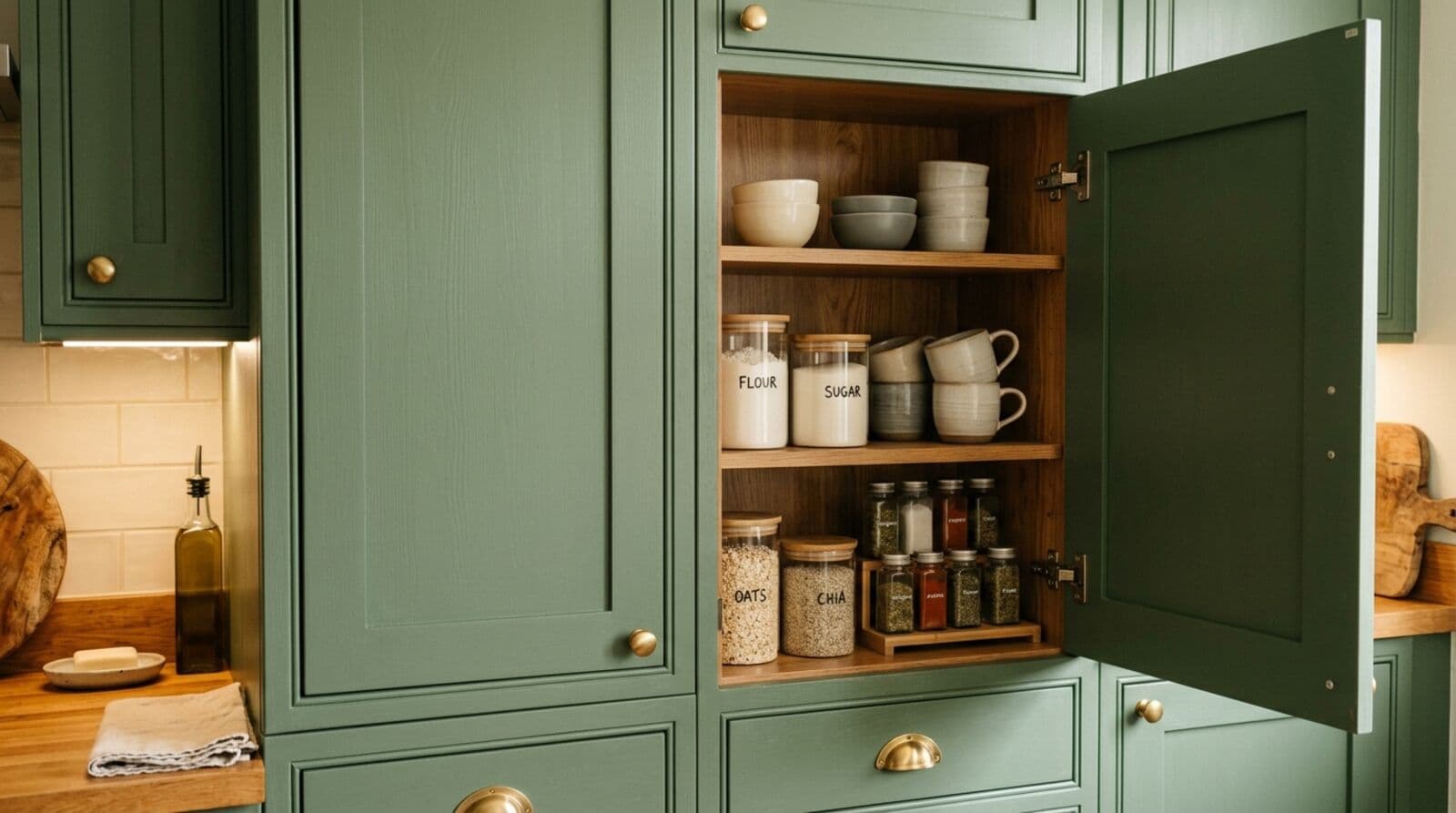
Kitchen cabinets design decisions eat up 30 to 40 percent of your total remodel budget, which means they're also the area where mistakes are most expensive. A bad countertop choice costs you $3,000 to $8,000 to fix. Bad cabinet choices cost $10,000 to $30,000. And unlike countertops, cabinets define the visual identity of your kitchen — they cover more surface area than any other element and set the tone for everything else.
The good news is that cabinet design in 2026 offers more legitimate options than ever before. The bad news is that the sheer number of choices — style, material, color, hardware, construction method — can paralyze you into either defaulting to boring or overcorrecting into trendy. Let's cut through it.
Shaker, Flat-Panel, Raised-Panel, and Open Shelving
These are your four main door styles, and each sends a different signal.
Shaker is a five-piece door with a recessed center panel and clean lines. It's been the most popular cabinet style in America for over a decade, which is both its strength and its weakness. Strength: it's versatile, it works in traditional and contemporary kitchens, and it won't look weird in five years. Weakness: it's everywhere, so achieving a distinctive look with shaker doors requires strong choices in color and hardware.
Flat-panel (slab) is a single flat surface with no frame or detailing. This is the go-to for genuinely modern kitchen cabinets design. It looks best in matte finishes or wood grain where the material speaks for itself. The downside: flat-panel doors highlight imperfections. Warping, alignment issues, and gaps are more visible without a frame to mask them. They also tend to cost 10 to 20 percent more than shaker doors in comparable materials.
Raised-panel features a center panel that's raised above the surrounding frame. This is traditional kitchen territory — think Georgian, Colonial, or French Country. If your home has crown molding, chair rails, and traditional trim, raised-panel cabinets will feel coherent. In a modern open-plan kitchen, they'll feel out of place. This style has been declining steadily and now represents less than 15 percent of new cabinet sales, according to the Kitchen Cabinet Manufacturers Association.
Open shelving isn't really a cabinet style — it's the absence of cabinets. I covered this in more detail in our modern kitchen ideas guide, but the short version: use it sparingly as an accent, not as your primary storage solution, unless you enjoy dusting and curating your kitchen like a retail display.
The Refacing vs Replacing Decision
This is where the real money conversation happens. Cabinet refacing means keeping your existing cabinet boxes and replacing just the doors, drawer fronts, and applying veneer to the visible box surfaces. Replacing means tearing everything out and installing new cabinets from scratch.
Refacing costs: $4,000 to $10,000 for an average kitchen. This includes new doors, new drawer fronts, veneer for exposed surfaces, and new hardware. The existing boxes, shelves, and layout stay the same.
Replacing costs: $12,000 to $35,000 depending on whether you go stock, semi-custom, or fully custom. Stock cabinets (Home Depot, IKEA) are on the low end. Semi-custom (KraftMaid, Diamond) fall in the middle. Full custom is where budgets balloon.
When refacing makes sense: Your existing cabinet boxes are solid (not warped, water-damaged, or falling apart), your layout works well, and you just want a visual refresh. Refacing is also much faster — typically 3 to 5 days versus 3 to 6 weeks for full replacement.
When refacing doesn't make sense: Your layout needs to change, boxes are damaged, you want to change cabinet depth or height, or your current cabinets are from the 1970s and the construction quality was marginal to begin with. Also, refacing won't fix functional problems like drawers that don't close properly or shelves that sag.
The honest question to ask yourself: do I hate how my cabinets look, or do I hate how they work? If it's just looks, refacing is probably the right call. If it's function, you're likely looking at replacement.
Hardware That Transforms Cheap Cabinets
Cabinet hardware is the highest-impact, lowest-cost change in kitchen cabinets design. Swapping hardware on a full kitchen costs $100 to $500 and takes an afternoon. The visual impact is disproportionate to the effort.
Pulls vs knobs: Pulls (bar handles) read as more contemporary. Knobs read as more traditional. Mixing both — pulls on drawers, knobs on doors — is standard practice and looks intentional rather than mismatched.
Size matters: Oversized pulls (8 to 12 inches) on drawers make a visual statement and are more ergonomic — easier to grip, especially with wet or slippery hands. Tiny pulls and knobs on large drawer fronts look undersized and dated.
Finish guide for 2026: Matte black remains strong and is likely the safest "modern" choice. Unlacquered brass ages beautifully but requires acceptance that it will patina (darken and develop character over time). Brushed gold is still going but may be peaking. Brushed nickel and chrome feel safe but unremarkable. Avoid polished brass unless you're leaning into a retro-glam aesthetic — it can look cheap on standard cabinets.
Placement trick: Centering hardware on the door stile (the vertical frame piece) is standard. Placing pulls at the top edge of lower cabinet doors and the bottom edge of upper cabinet doors creates a cleaner line and is more ergonomic for opening.
Painting Existing Cabinets: When It Works and When It Fails
Painting cabinets is the most popular kitchen DIY project and also the most commonly botched. The difference between a professional-looking paint job and a streaky, peeling mess comes down to preparation, primer, and paint type.
When painting works: Your cabinets are real wood or MDF with a smooth surface. The existing finish is in reasonable condition (no major peeling, water damage, or deep scratches). You're willing to invest serious time in prep — degreasing, sanding, priming, and applying multiple thin coats.
When painting fails: Your cabinets are thermofoil (vinyl-wrapped MDF). Paint will not adhere to thermofoil without specialized primers, and even then it peels within a year or two. If your doors are warped, painting will highlight the warp by creating visible light reflections across the uneven surface. Old cabinets with decades of grease buildup need aggressive degreasing — if you skip this step, the primer won't bond.
DIY vs professional: A professional cabinet painting job costs $3,000 to $7,000 for an average kitchen. They'll spray the doors (removing them and spraying in a shop), which gives a factory-smooth finish that brushing and rolling can't match. DIY costs $200 to $500 in materials but takes 3 to 5 full days of work. If you're a patient person comfortable with tedious prep work, DIY can look great. If you're the type who wants to skip the sanding and "just get a coat on there," hire someone.
Paint type: Use a high-quality cabinet-specific paint — Benjamin Moore Advance, Sherwin-Williams Emerald Urethane Trim Enamel, or similar hybrid enamel paints. Regular wall paint will chip within months on cabinets that get daily use. These cabinet paints are self-leveling, meaning brush marks fade as the paint cures.
Color Trends Beyond White
White cabinets have been the safe default since approximately 2010, and they'll continue to be a viable choice. But "safe default" and "interesting design" are different things. Here's what's actually happening in kitchen cabinets design color:
- Dark green is having a sustained moment. Hunter green, forest green, and deep sage on lower cabinets paired with white or natural wood uppers create a kitchen that feels grounded without being dark. Green is nature's neutral — it plays well with brass, black, wood, and stone. - Warm wood tones are replacing painted cabinets in a lot of high-end projects. White oak with a clear or light stain shows the grain and brings warmth. This works particularly well in flat-panel doors where the wood grain becomes the design element. - Navy blue is still around but has peaked. If you love it, go for it — it's not going to look terrible in five years. But it won't feel fresh either. - Two-tone kitchens — different colors for uppers and lowers — are an established approach now, not a trend. Dark lowers with lighter uppers make the room feel grounded and airy simultaneously. The key is keeping the contrast deliberate, not random — choose colors from the same palette family. - Black cabinets work in large, well-lit kitchens with high ceilings and significant natural light. In a small or dark kitchen, black cabinets will make the room feel like a cave. They also show dust, fingerprints, and watermarks more than any other color.
What to Skip in 2026
Not every kitchen cabinets design trend deserves your money.
Glass-front uppers everywhere. One or two glass-front doors flanking a window can look beautiful. Converting all your uppers to glass means you need to keep everything inside curated and presentable at all times. That's a lifestyle demand most people don't enjoy.
Integrated LED lighting inside cabinets. It seems cool in the showroom. In practice, it illuminates your mismatched mugs and expired spices. Under-cabinet lighting (on the outside, pointed at your counter) is far more useful.
Ultra-deep drawers for pots and pans. Deep drawers sound great until you're stacking four pots three layers deep and can't find anything. Drawer dividers and pull-out shelves at standard depth are more functional.
Cabinet crown molding in a modern kitchen. Crown molding ties traditional cabinets to the ceiling and looks intentional in a traditional home. On flat-panel or simple shaker cabinets in a contemporary space, it reads as a contradiction. Either go full traditional or skip it — take the cabinets to the ceiling instead and use a flat filler strip.
Visualize Before You Order
Cabinet decisions are hard to reverse. Once you've ordered custom or semi-custom cabinets, you're committed — most are non-returnable. Even stock cabinets involve restocking fees and the hassle of re-ordering.
Upload a photo of your kitchen to our AI staging tool and test different cabinet styles, colors, and hardware combinations before you spend a dollar. It's particularly useful for testing two-tone combinations and seeing how different door styles look in your specific room with your specific lighting. You can also pair this with our guide to countertop types to see how your cabinet and counter choices work together. Customized renders start at $9.00 each.
About the author
Noah James
Founder, DrivewAI
Noah James is the founder of DrivewAI, an AI home visualization platform that helps homeowners, contractors, and real estate agents preview renovations before committing. He built DrivewAI to close the gap between inspiration and execution in home improvement.
His writing focuses on practical renovation decision-making, material comparisons, and how AI visualization tools are changing the way people plan projects — from driveway replacements to full interior staging.
See your kitchen restyled by AI
Upload a photo and get AI renderings across every style. Designs from $9 with a 24-hour refund guarantee.
Try DrivewAI Free