Heated Driveways: Honest Costs, ROI, and When to Skip
By Noah James
• 9 min read • Founder, DrivewAI
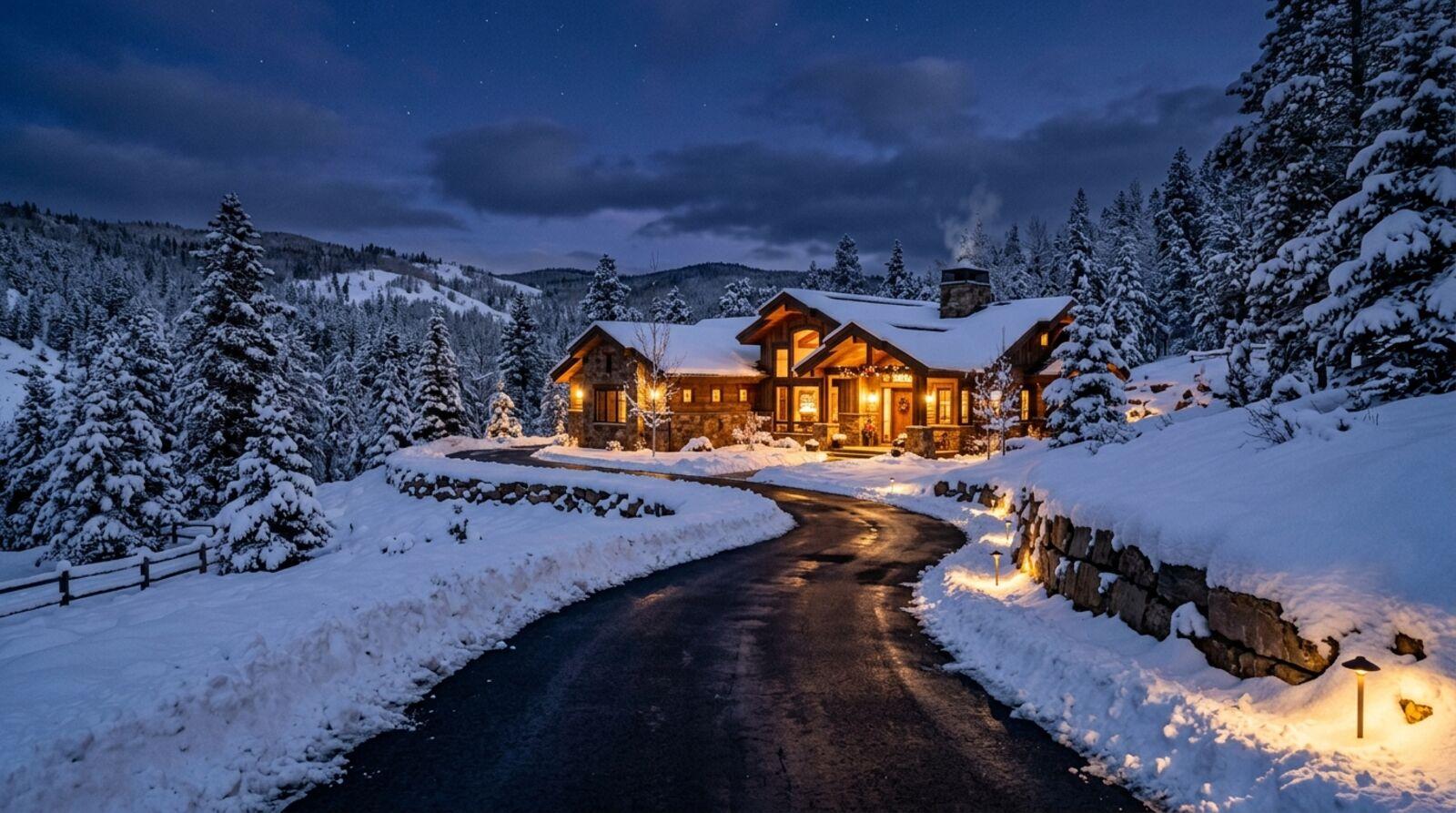
A heated driveway sounds like the ultimate luxury — wake up after a snowstorm, press a button, and watch the white stuff melt while your neighbors shovel for two hours. But at $12-$25 per square foot to install, you're looking at $7,200-$15,000 for a standard driveway. That's on top of the driveway surface itself. So the question isn't whether heated driveways work (they absolutely do), it's whether the math makes sense for your specific situation.
I'll be upfront: for most homeowners, a heated driveway is a luxury, not an investment. But for a specific subset — steep driveways in high-snowfall regions, elderly homeowners worried about falls, properties where salt damage is a recurring expense — the numbers can actually work. Let's dig into the real costs and honest tradeoffs.
How Heated Driveways Work: Electric vs Hydronic
Two technologies dominate the heated driveway market. They accomplish the same thing through very different means.
Electric radiant systems embed resistance heating cables or mats in the driveway surface, similar to in-floor heating in a bathroom. An electric current passes through the cables, generating heat. The system is controlled by a sensor that detects temperature and moisture — when conditions indicate snow or ice, it activates automatically.
Pros: Lower installation cost ($12-$18/sq ft), simpler design, no mechanical room needed, individual zone control, minimal maintenance. Cons: Higher operating cost (electricity isn't cheap), cables can't be repaired if they fail under concrete, slightly uneven heating possible with cable systems.
Hydronic systems circulate heated fluid (typically a glycol/water mix, like antifreeze) through a network of PEX tubing embedded in the driveway. A boiler heats the fluid and pumps it through the tubing loops. The U.S. Department of Energy documents this as the same technology used in radiant floor heating, scaled up for outdoor use.
Pros: Lower operating cost (especially with a gas boiler), more even heat distribution, tubing is more durable than electric cables, can share a boiler with indoor radiant heating. Cons: Higher installation cost ($16-$25/sq ft), requires a mechanical room for the boiler and pumps, more complex design, boiler maintenance needed annually.
For most residential installations, electric systems win on simplicity and upfront cost. Hydronic systems make sense for larger driveways (1,000+ sq ft) where the lower operating cost offsets the higher installation, or when you're already installing a boiler for interior radiant heating.
Real Installation Costs Broken Down
Let's price out a typical 600 sq ft two-car driveway:
Electric heated driveway: - Heating cables/mats: $3,600-$5,400 - Snow sensor and controller: $500-$1,200 - Electrical panel upgrade (if needed): $500-$2,000 - Installation labor (embedded during concrete pour): $3,000-$4,500 - Total for heating system: $7,600-$13,100 - Plus the driveway surface itself: $2,400-$10,800 depending on finish - Grand total: $10,000-$23,900
Hydronic heated driveway: - PEX tubing and manifolds: $2,400-$4,200 - Boiler (gas or electric): $3,000-$6,000 - Circulation pumps and controls: $1,500-$3,000 - Snow sensor and controller: $500-$1,200 - Installation labor: $4,000-$7,000 - Total for heating system: $11,400-$21,400 - Plus the driveway surface: $2,400-$10,800 - Grand total: $13,800-$32,200
These numbers are real and they're steep. Anyone quoting you $8 per square foot for a complete installed system is cutting corners somewhere — either on the cable spacing (which means cold spots) or on the control system.
Operating Costs: The Number Everyone Forgets
Installation cost gets all the attention, but operating cost is what hits your wallet every winter for the next 20+ years.
Electric system operating costs depend on your electricity rate and snowfall: - Average electricity rate in the US: $0.16/kWh (varies wildly — $0.10 in the Southeast to $0.35 in New England) - A 600 sq ft electric system draws approximately 12-18 kW when running - At $0.16/kWh running for 8 hours during a storm: $15-$23 per snow event - A city like Buffalo (60+ snow days): $900-$1,380 per season - A city like Philadelphia (15-20 snow days): $225-$460 per season - A city like Denver (25-30 snow days, but less accumulation): $375-$690 per season
Hydronic system operating costs depend on gas prices and boiler efficiency: - Natural gas is roughly 3-4x cheaper than electricity per BTU - Same 600 sq ft system, same conditions: roughly 40-60% lower operating cost - Buffalo: $400-$700 per season - Philadelphia: $100-$250 per season
The idle draw matters too. Most systems have an "idle" mode that keeps the slab slightly warm during winter months so it can respond quickly to snowfall. This idle mode can add $50-$150 per month from November through March even if it never snows.
Smart controllers with weather-forecasting integration can minimize this by only pre-warming when precipitation is likely. They cost more upfront ($800-$1,200 vs $300-$500 for basic sensors) but save significantly on operating costs.
The Honest ROI Question
Let's do the math that most heated driveway articles conveniently skip.
Cost of NOT having a heated driveway in a high-snow area: - Professional plowing service: $300-$800 per season - Salt and deicing chemicals: $100-$200 per season - Salt damage repair to concrete (every 5-8 years): $500-$1,500 - Risk of slip-and-fall injury: hard to quantify but real - Your time shoveling: priceless? Or $0, depending on your perspective - Annual non-heated cost: $400-$1,000
Annual cost of a heated driveway (electric, amortized): - Installation amortized over 20-year life: $380-$655/year - Operating cost: $225-$1,380/year (climate dependent) - Maintenance: $50-$100/year - Annual heated cost: $655-$2,135/year
In mild snow areas, a heated driveway costs 3-4x more than just plowing and salting. In heavy snow areas, the gap narrows significantly. Where heated driveways genuinely reach break-even or better:
- Steep driveways where plowing is impossible or dangerous and you'd otherwise need $1,500+/year in sand, salt, and manual clearing - Properties where salt damage is destroying an expensive decorative surface (salt eats stamped concrete and pavers) - Elderly or mobility-impaired homeowners where a fall means a hospital visit - Very long driveways (100+ feet) where plowing costs are high
For everyone else, it's a comfort purchase. Nothing wrong with that — just go in with eyes open.
Retrofit vs New Construction: A Massive Cost Difference
Installing a heated driveway during new construction or a full driveway replacement adds about 30-40% to the total project cost. The heating elements are laid on the gravel base before the concrete pour, and the only extra labor is placing and connecting them.
Retrofitting a heated system into an existing driveway means tearing out and replacing the entire surface. You're paying for demolition ($2-$4/sq ft), disposal, new concrete, and the heating system. A retrofit easily costs twice as much as including the system during initial construction.
The takeaway: if you're already planning a driveway replacement, that's the time to add heating. Doing it after the fact is rarely cost-justified unless the existing driveway is failing anyway.
What Can Go Wrong with Heated Driveways
Electric cable failure. If a cable breaks under the concrete, that section stops heating. Repair means cutting out the concrete, replacing the cable, and re-pouring. Most manufacturers offer 15-25 year warranties, but the labor isn't covered. This is why cable spacing and proper installation matter — a cable that's too close to the surface or improperly secured before the pour is more likely to fail.
Hydronic leaks. PEX tubing is durable, but joints and connections can leak. A leak in a glycol system under concrete is similar to the cable problem — find it, dig it up, fix it. Quality PEX and minimal below-slab connections reduce this risk.
Uneven melting. Poor cable spacing or tubing layout creates hot spots and cold spots. The driveway might be clear in some areas while ice persists in others. This is a design and installation problem, not a technology problem. Insist on a detailed layout drawing before approving the work.
Sensor malfunctions. The automatic sensor detects moisture and temperature to trigger the system. When it fails, your system either runs nonstop (expensive) or doesn't activate during a storm (defeating the purpose). Sensors should be accessible for replacement without demolishing the driveway.
Best Driveway Surfaces for Heated Systems
Not all surfaces work equally well with embedded heating:
- Poured concrete: The best match. Concrete's thermal mass stores and distributes heat evenly. Works with both electric and hydronic systems. - Asphalt: Works with hydronic only. Asphalt is laid hot, and the heat from the paving process can damage electric cables. The lower thermal mass of asphalt means faster melting but also faster cool-down. - Pavers: Work well when installed on a concrete slab with embedded heating beneath. The paver driveway guide discusses this setup. Note that sand-set pavers without a concrete base don't work with heated systems.
Making the Decision
If you live somewhere that gets fewer than 20 snow events per year, a heated driveway is a luxury. A nice one, but a luxury. If you live in the snow belt, have a steep driveway, or have mobility concerns, it can be a genuinely practical investment.
The best time to add a heated system is when you're already replacing your driveway or building new. If you're in that planning phase, try DrivewAI to visualize different surface options on your actual property before deciding on the final design. Customized renders start at $9.00 each. And for a full breakdown of the planning process, our driveway renovation planning guide and concrete driveway cost guide will help you budget the complete project, heating system included.
About the author
Noah James
Founder, DrivewAI
Noah James is the founder of DrivewAI, an AI home visualization platform that helps homeowners, contractors, and real estate agents preview renovations before committing. He built DrivewAI to close the gap between inspiration and execution in home improvement.
His writing focuses on practical renovation decision-making, material comparisons, and how AI visualization tools are changing the way people plan projects — from driveway replacements to full interior staging.
See your home transformed by AI
Upload a photo and get AI renderings across every style. Designs from $9 with a 24-hour refund guarantee.
Try DrivewAI Free