Front Yard Landscaping Ideas That Actually Boost Curb Appeal
By Noah James
• 8 min read • Founder, DrivewAI
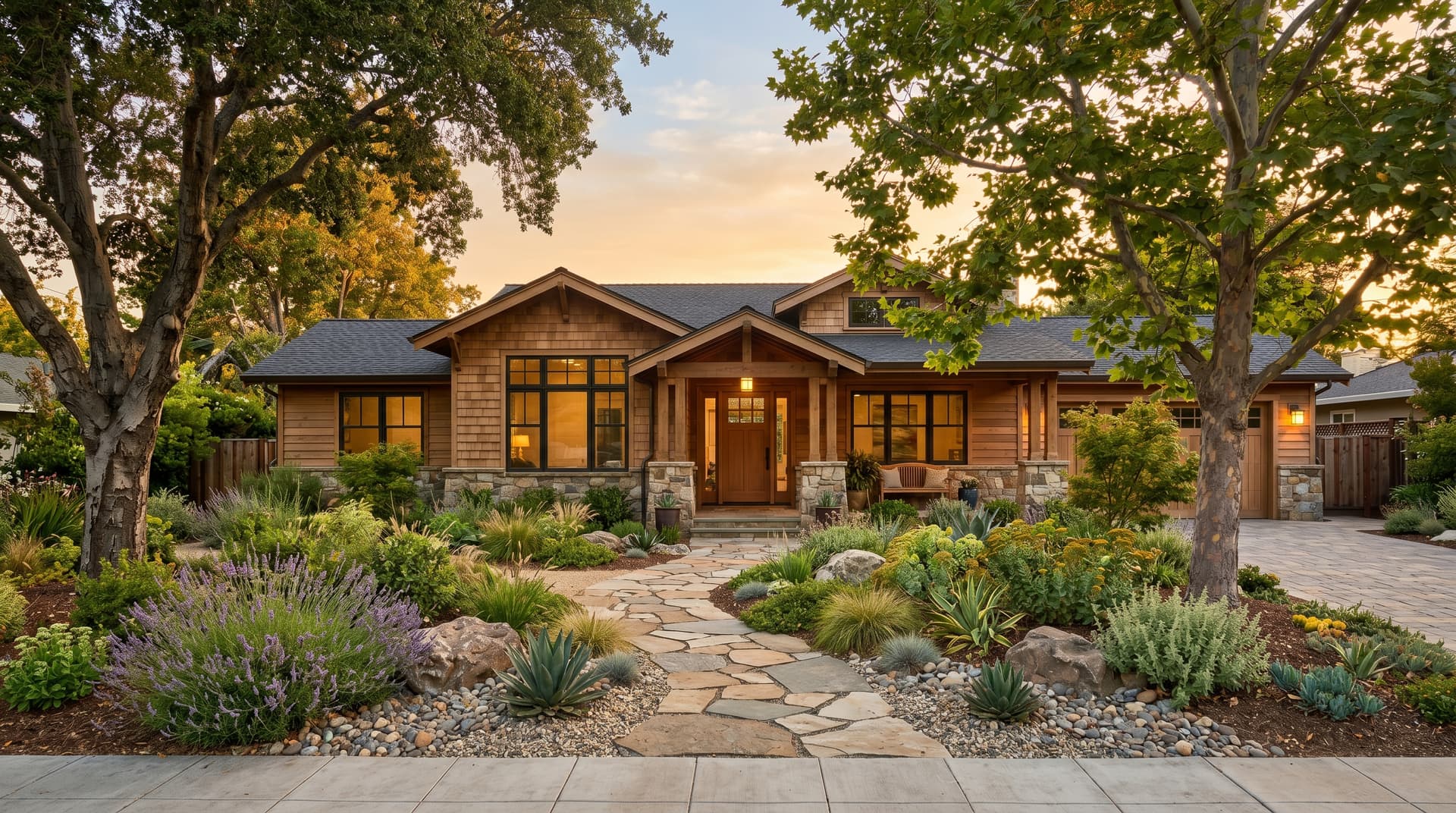
The average front yard gets one shot at a first impression — and most waste it on a rectangle of turf grass, two foundation shrubs, and a concrete path nobody thought about. Front yard landscaping ideas that actually boost curb appeal aren't about spending more. They're about designing with intention instead of defaulting to whatever the builder left behind.
Whether you're prepping to sell, tired of looking at bare mulch beds, or just want your house to stop being the least interesting one on the block, these ideas are worth considering. And with AI landscape visualization, you can preview any of them in your actual yard before hiring a contractor or buying a single plant.
Define the Entry With a Real Pathway
The path from your driveway or sidewalk to your front door is the spine of your front yard. A poured concrete slab says "builder grade." A thoughtfully designed pathway says "someone cares about this house."
Options that consistently boost curb appeal:
- Natural flagstone with ground cover between joints — works for craftsman, farmhouse, and Mediterranean styles - Paver walkways with soldier course borders — clean and structured for modern or traditional homes - Decomposed granite paths with steel edging — low-cost, drought-friendly, instantly elevated
The pathway should be at least 36 inches wide for a single-person walk and 48 inches if you want two people to walk side by side. Narrower than that and it feels like an afterthought, no matter the material.
For more on material comparisons, our driveway materials guide covers cost, durability, and aesthetics for hardscaping that extends beyond the driveway itself.
Layer Plants by Height — Front to Back
The most common front yard landscaping mistake is planting everything at the same height. A flat plane of identical shrubs reads as institutional, not residential. The fix is layering:
- Front layer (0-18 inches): groundcovers, ornamental grasses, low-growing perennials - Middle layer (2-4 feet): flowering shrubs, medium ornamental grasses, boxwood or similar structure plants - Back layer (4-8+ feet): anchor trees, tall ornamental grasses, screening shrubs near the foundation
This creates depth and visual interest from the street. Your eye travels through the layers instead of hitting a flat wall of green.
Swap Turf for Drought-Tolerant Alternatives
Full-lawn front yards are losing ground — literally — to drought-tolerant landscaping that costs less to maintain and often looks better year-round. This is especially true in the Sun Belt states where water costs keep climbing.
Alternatives that actually look good (not like you gave up):
- Ornamental grasses (fountain grass, blue fescue, muhly grass) — movement and texture with zero irrigation once established - Succulent gardens — bold, architectural, and nearly maintenance-free - Meadow-style plantings — wildflowers and native grasses that bloom seasonally - Clover lawns — stays green without fertilizer, fixes nitrogen in the soil, handles foot traffic
You don't have to eliminate all turf. A small patch of well-maintained grass surrounded by planted beds looks more intentional than an entire lawn that's half-brown by August.
Add One Specimen Tree
A single well-placed tree does more for curb appeal than $5,000 worth of shrubs. The right tree provides:
- Scale — it makes the house look proportional to the landscape - Shade — reducing surface temperatures on the house and driveway - Seasonal interest — spring blooms, fall color, winter structure - Perceived value — mature trees add 3-15% to home value, according to the USDA Forest Service
Placement matters more than species. Off-center in the front yard, roughly one-third of the way from the property line, creates an asymmetric composition that looks natural. Centered directly in front of the house blocks the facade and looks like a municipal planting.
Upgrade Your Edging
Clean edging is the difference between landscaping that looks maintained and landscaping that looks abandoned. It takes 30 minutes and costs under $50, yet it's the most neglected element in front yard design.
Options ranked by visual impact:
- Steel edging — clean, minimal, modern. Disappears into the landscape while keeping crisp lines. - Natural stone borders — casual, organic. Works for cottage and farmhouse styles. - Brick soldier course — traditional, structured. Matches homes with brick accents. - Spade-cut edges — free but requires monthly maintenance. Looks sharp when fresh, messy when neglected.
Light the Landscape, Not Just the Door
Most front yards have a porch light and nothing else. Low-voltage landscape lighting transforms a front yard from invisible at night to the best-looking house on the street.
Three lighting moves that work every time:
- Uplighting on the specimen tree — creates drama and highlights your most expensive plant investment - Path lights along the walkway — functional and inviting, spaced 6-8 feet apart - Wash lighting on the house facade — makes the architecture visible and the property feel larger
Total cost for a basic DIY low-voltage system: $200-$500. The University of Michigan's lighting research shows that landscape lighting is the single highest-ROI upgrade for perceived home value at night.
Create a Focal Point That Isn't the Garage Door
On many homes, the garage door is the dominant visual element from the street. Good front yard landscaping redirects attention to something more interesting.
Focal point ideas:
- A water feature — even a small bubbling rock or wall fountain creates movement and sound - An arbor or pergola over the entry gate — frames the entrance and adds vertical interest - A boulder grouping — three natural stones of varying sizes, partially buried, surrounded by grasses - A specimen planter — one large, high-quality pot with seasonal plantings near the front door
The focal point should be positioned where your eye naturally lands when approaching the house from the street. Usually that's the front door area or the yard's largest open space.
Match the Landscape to the Architecture
Colonial homes look wrong with tropical landscaping. Modern minimalist homes look wrong with cottage gardens. The landscape should extend the architectural language of the house:
- Craftsman/Farmhouse: native plants, natural stone, informal groupings, warm-toned hardscaping - Modern/Contemporary: structural plants (agave, ornamental grasses), steel edging, concrete pavers, minimal palette - Mediterranean/Spanish: drought-tolerant, lavender, olive trees, terracotta, gravel paths - Traditional/Colonial: boxwood hedges, symmetrical plantings, brick pathways, formal structure
This doesn't mean every plant needs to match. It means the overall composition should feel like it belongs with the house, not like two different designers worked on the same property.
Don't Forget the Driveway Edge
The strip between your driveway and the lawn is prime real estate for curb appeal. Most homeowners ignore it entirely or let grass creep over the edge. Better options:
- Low ornamental grasses along the driveway edge - A narrow planting bed with groundcover and small perennials - Pavers or cobblestone apron where the driveway meets the street
If you're considering a full driveway redesign, plan the landscaping at the same time. The two should be designed together — a paver driveway with no landscape integration looks unfinished.
Preview Before You Plant
Front yard landscaping is expensive to redo if you get it wrong. Mature plants cost $50-$500 each, hardscaping runs $8-$25 per square foot, and labor adds 40-60% on top of materials. A front yard redesign can easily hit $5,000-$15,000.
DrivewAI's landscape visualization tool lets you upload a photo of your front yard and preview different landscaping styles before committing. See how drought-tolerant plantings look against your house. Test whether a stone pathway works with your driveway. Preview the impact of a specimen tree before paying $800 to plant one.
Your Every render is covered by a 24-hour refund guarantee, and a $9 4-pack unlocks enough room to compare several directions before you call a landscaper.
For more on how AI landscape design works, check out our complete guide to AI landscape visualization. And if your driveway is part of the plan, our driveway renovation planning guide covers budgeting and material selection.
About the author
Noah James
Founder, DrivewAI
Noah James is the founder of DrivewAI, an AI home visualization platform that helps homeowners, contractors, and real estate agents preview renovations before committing. He built DrivewAI to close the gap between inspiration and execution in home improvement.
His writing focuses on practical renovation decision-making, material comparisons, and how AI visualization tools are changing the way people plan projects — from driveway replacements to full interior staging.
See your home transformed by AI
Upload a photo and get AI renderings across every style. Designs from $9 with a 24-hour refund guarantee.
Try DrivewAI Free