Front Porch Ideas: Size, Style, and Cost Breakdown
By Noah James
• 8 min read • Founder, DrivewAI
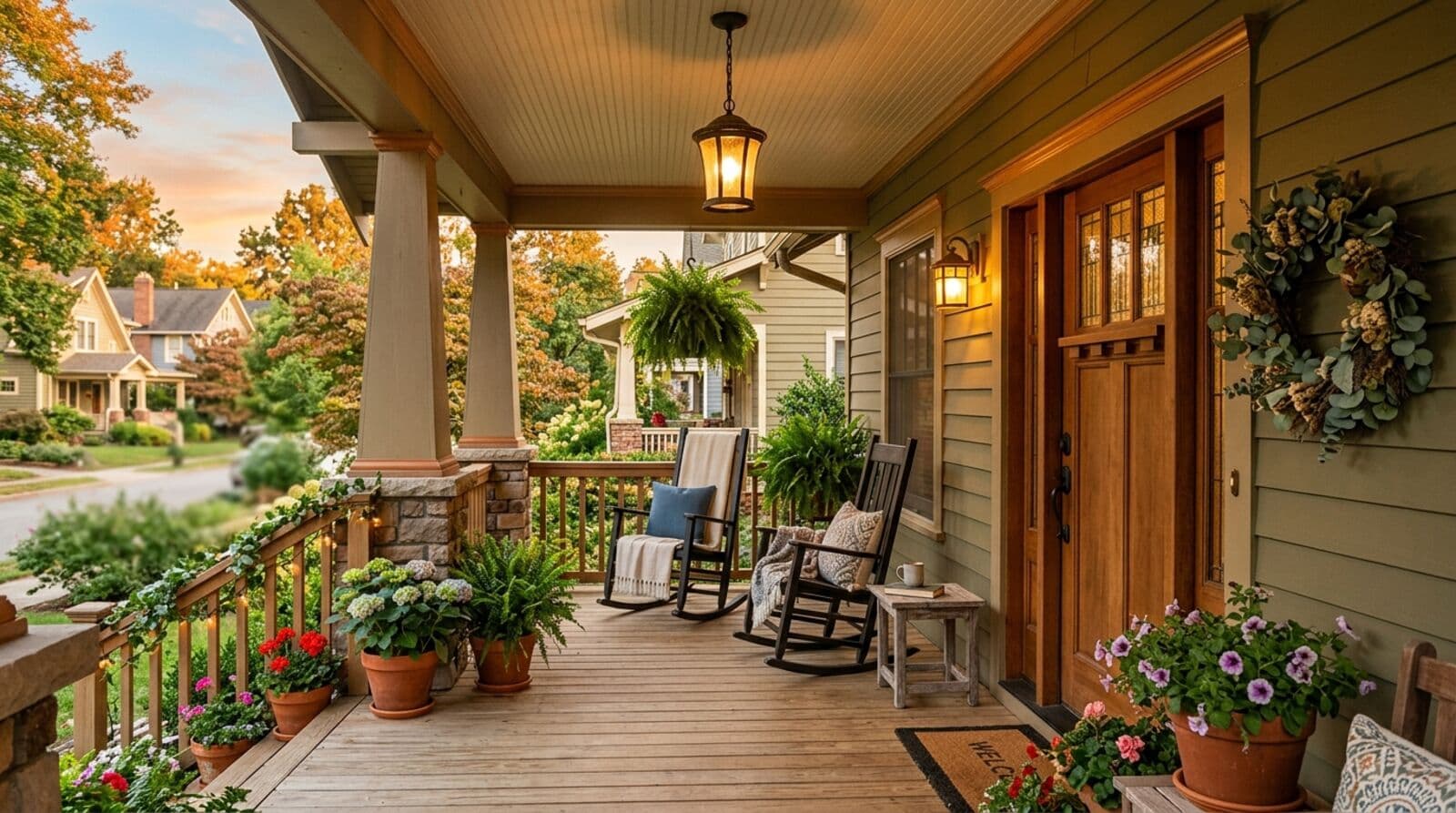
Why Front Porches Still Matter
Somewhere along the way, front porch ideas became an afterthought. Builders started slapping a small concrete slab by the front door and calling it a "covered entry." That's not a porch. That's a place to stand while you fumble for your keys in the rain.
A real front porch — even a modest one — changes how a house feels. It's a transition zone between public and private space. It says "someone lives here and they care about this house." And from a purely financial perspective, a well-designed front porch adds curb appeal that directly translates to property value. The National Association of Realtors consistently lists porch additions and improvements among the top exterior projects for homeowner satisfaction and value recovery.
The good news: you don't need a Southern plantation wraparound to get these benefits. Even compact porches can deliver warmth, function, and character when designed thoughtfully.
Small Porch Ideas That Actually Work
Let's start with the constraint most homeowners face: limited space. Maybe your lot is narrow. Maybe your front door sits close to the sidewalk. Maybe your budget doesn't stretch to a 200-square-foot outdoor room. That's fine. A 4x6-foot porch — just 24 square feet — can still be genuinely inviting.
The minimal functional porch needs three things: enough depth for someone to stand comfortably while the storm door opens outward (that's 4 feet minimum), a roof or overhang for weather protection, and some visual anchor like a single chair, a planter, or a small bench.
Space-saving strategies for small porches:
- A single statement chair rather than a pair. One Adirondack chair with a small side table reads as intentional. Two chairs crammed into a tight space reads as cluttered. - Wall-mounted planters instead of floor pots. They add greenery without eating into your limited floor space. - A bench with storage built against the house wall. It serves as seating, package storage, and visual anchor simultaneously. - Vertical interest — a hanging plant, a pendant light, or a decorative house number — draws the eye up and makes the space feel larger.
Even a small porch benefits enormously from a roof. An unprotected front stoop is just outdoor flooring. Add a roof and it becomes a room. If a full roof isn't feasible, a pergola or fabric shade sail provides partial coverage and still creates that sense of enclosure that makes a porch feel like a porch.
Covered vs Open Porches: Making the Call
A covered porch and an open porch serve fundamentally different purposes, and the right choice depends on your climate and how you'll use the space.
Covered porches protect furniture from rain and sun damage, keep the entry dry during storms, provide shade on hot days, and can be used in light rain. They cost more because they require structural support, roofing, and often a ceiling. But they're usable in a wider range of weather conditions.
Open porches (or decks with no roof) cost less, allow more natural light into adjacent rooms, and feel more expansive. But furniture weathers faster, you can't use the space in rain, and direct sun can make them uncomfortably hot in summer.
The climate question: In the Pacific Northwest, a covered porch is almost mandatory — you need rain protection eight months of the year. In Southern California, an open porch works beautifully because rain is infrequent. In the Southeast and Midwest, covered is strongly preferred because afternoon thunderstorms are a daily summer occurrence and covered porches provide relief from humidity and sun.
If you can only afford one or the other, go covered. An uncovered front porch in a rainy climate becomes an obstacle course of wet furniture cushions rather than a welcoming entry.
Railing Styles and When You Need Them
Building codes typically require railings on porches more than 30 inches above grade. Below that threshold, railings are optional — and whether you include them is a significant design decision.
No railing creates the most open, approachable feel. Low porches without railings look relaxed and inviting. They also make small porches feel larger since there's no visual barrier. If your porch floor is less than 24 inches off the ground and codes allow it, consider skipping the railing entirely.
Cable railing uses thin stainless steel cables strung horizontally between posts. It's visually lightweight, modern, and doesn't block views. Cost runs $60-$120 per linear foot installed. Cable railing works well on contemporary homes and anywhere you want the railing to disappear visually.
Wood railing is the traditional choice. Turned balusters suit Colonial and Victorian homes. Square balusters work on Craftsman and farmhouse styles. Simple flat-top rails with square pickets are the budget option at $30-$60 per linear foot. Turned or shaped balusters run $50-$90 per foot.
Wrought iron (or aluminum made to look like wrought iron) adds formality and elegance. It's common on Southern homes and Mediterranean styles. Cost ranges from $50-$100 per linear foot. The maintenance on real iron — rust prevention, repainting — makes aluminum the smarter choice for most homeowners.
Horizontal bar or modern metal railing pairs well with mid-century and contemporary architecture. Clean lines, minimal fuss, typically $40-$80 per linear foot. Horizontal bars are distinct from cable railing — they use solid metal bars rather than thin cables and have a more industrial feel.
The Ceiling Color Trick
If you only remember one design detail from this article, make it this: paint your porch ceiling. A painted ceiling transforms a porch from a covered slab into a finished room. The two classic approaches both work.
Haint blue is the traditional Southern porch ceiling color — a soft, pale blue-green. The folklore says it keeps wasps from building nests (they supposedly mistake it for sky) and wards off evil spirits. The wasp thing is debated. The visual impact is not. A blue ceiling feels airy, cool, and immediately evocative. Benjamin Moore's Palladian Blue or Sherwin-Williams' Rainwashed are good starting points.
Natural wood ceilings — usually tongue-and-groove beadboard in cedar or pine — add warmth and craftsmanship. Stained in a natural tone or painted white, a wood ceiling says "this porch was designed, not just built." Cost is higher than paint (obviously), running $8-$15 per square foot for materials plus installation. But it's one of those details that makes people pause and say "this is nice" without quite knowing why.
White is the safe choice. A plain white ceiling brightens the space, reflects light into adjacent windows, and doesn't compete with anything. If you're not sure about blue or wood, white always works.
Whatever you do, don't leave the ceiling as raw plywood or exposed framing. An unfinished ceiling makes even an expensive porch feel cheap and incomplete.
Furniture Scale: The Most Common Porch Mistake
The number one mistake homeowners make with porch furniture is buying pieces that are too large for the space. Those gorgeous oversized rocking chairs you saw at the beach house? They were on a 12-foot-deep wraparound porch. Your 6-foot-deep front porch is not that space.
The depth rule: Your porch needs at least 6 feet of depth for standard-sized chairs. Eight feet accommodates a small table between chairs. Ten feet allows for a conversation grouping. If your porch is less than 6 feet deep, look for compact or apartment-sized outdoor furniture specifically.
Measure before you buy. This sounds obvious, but most people pick furniture they love and then discover it overwhelms their porch. Measure your porch, then mark out furniture footprints with painter's tape on the floor. Walk around the tape. Open the front door with the tape in place. Can you still move comfortably? If you're squeezing past chairs to reach the door, downsize.
Good small-porch furniture options:
- Bistro sets — A small round table with two compact chairs fits in surprisingly tight spaces and looks intentional. - A single rocking chair — Better to have one comfortable rocker than two cramped ones. - A bench — Takes up less depth than chairs since it sits against the wall. Add throw pillows for comfort. - Hanging porch swing — A swing uses zero floor space when not in use and becomes the focal point of the porch. Make sure your porch roof can handle the weight (a swing with two adults can put 400+ pounds of dynamic load on the ceiling joists).
Cost to Add a Front Porch
Adding a front porch to a house that doesn't have one is a real construction project, not a weekend DIY job. Here's what the numbers actually look like.
Small entry porch (4x6 to 6x8 feet): $5,000-$10,000. This covers a concrete or composite deck surface, basic roof structure tied into the existing roofline, posts, and steps. It's the minimum viable porch — functional, protective, and a massive improvement over a bare front stoop.
Medium porch (8x16 to 10x20 feet): $10,000-$18,000. Room for a small seating area, proper railing, and a finished ceiling. This is the sweet spot for most homes — enough space to be useful without the complexity and cost of a large structure.
Large or wraparound porch (200+ square feet): $15,000-$30,000+. Wraparound porches involve complex roof framing, multiple corner posts, and significantly more materials. They look incredible on the right house but represent a major investment.
What drives costs up:
- Foundation type: Concrete piers are cheaper than a continuous footing. But some porches need a footing to meet code, especially in frost-prone areas. - Roof complexity: Tying a new porch roof into an existing roofline requires careful flashing and framing. A shed-style porch roof is simpler and cheaper than a gabled one. - Ceiling finish: Exposed framing with a painted underside costs nothing extra. Beadboard ceiling adds $1,500-$4,000. - Railing and details: Basic wood railing at $30-$50 per foot vs. custom ironwork at $80-$120 per foot adds up quickly on a 30-foot porch span.
Get at least three quotes. Porch construction pricing varies enormously by region and contractor.
Lighting That Makes Your Porch Inviting After Dark
A porch without lighting is invisible after 5pm from October through March. Lighting extends your porch's usable hours, improves security, and makes your home look warm and welcoming from the street.
Overhead fixtures are the starting point. A single flush-mount or semi-flush fixture centered on the ceiling works for small porches. Larger porches can handle pendant lights or a pair of fixtures flanking the door. Choose warm white bulbs (2700K-3000K) — cool white light makes a porch feel like a gas station.
Sconces flanking the front door are the classic approach. They provide task lighting for the entry (finding keys, seeing visitors) and decorative impact. Size matters here — the sconces should be roughly one-quarter to one-third the height of the door. An 80-inch door calls for 20-27 inch tall sconces.
String lights work on casual, relaxed porches. They create atmosphere without being formal. Hang them along the ceiling perimeter or from the porch posts. Use the larger Edison-style bulbs rather than tiny fairy lights — larger bulbs read as intentional outdoor lighting rather than holiday decorations left up too long.
Step lights improve safety and look polished. Small LED fixtures recessed into riser faces or mounted on post bases illuminate steps without glare. These run $15-$40 each and are typically low voltage, making them easy to add to an existing porch.
Seeing Your Porch Before You Build
A front porch is a significant architectural addition — it changes your home's entire street-facing appearance. Before committing to a design and spending five figures on construction, it's worth seeing what different porch styles look like on your specific house.
Upload a photo of your home's front exterior to DrivewAI to preview different porch designs, sizes, and styles. Customized renders start at $9.00 each. Test whether a full-width porch overwhelms your facade or if a compact entry porch provides enough presence. Experiment with railing styles, column proportions, and roof pitches on your actual home rather than imagining it from magazine photos.
A well-designed front porch adds daily quality of life, measurable curb appeal, and resale value. Whether you're working with a tight 4x6 space or planning a full wraparound, the principles are the same: size furniture to the space, cover the ceiling, light it well, and make it feel like a room — not an afterthought.
For more ways to elevate your home's exterior, explore our guides on curb appeal ideas and exterior house colors.
About the author
Noah James
Founder, DrivewAI
Noah James is the founder of DrivewAI, an AI home visualization platform that helps homeowners, contractors, and real estate agents preview renovations before committing. He built DrivewAI to close the gap between inspiration and execution in home improvement.
His writing focuses on practical renovation decision-making, material comparisons, and how AI visualization tools are changing the way people plan projects — from driveway replacements to full interior staging.
See your home transformed by AI
Upload a photo and get AI renderings across every style. Designs from $9 with a 24-hour refund guarantee.
Try DrivewAI Free