Free Driveway Tool
Driveway slope calculator
Estimate driveway grade, total fall, fall per foot, and cross slope before you price the project or preview materials with AI driveway rendering. A realistic driveway design has to drain, not just look good.
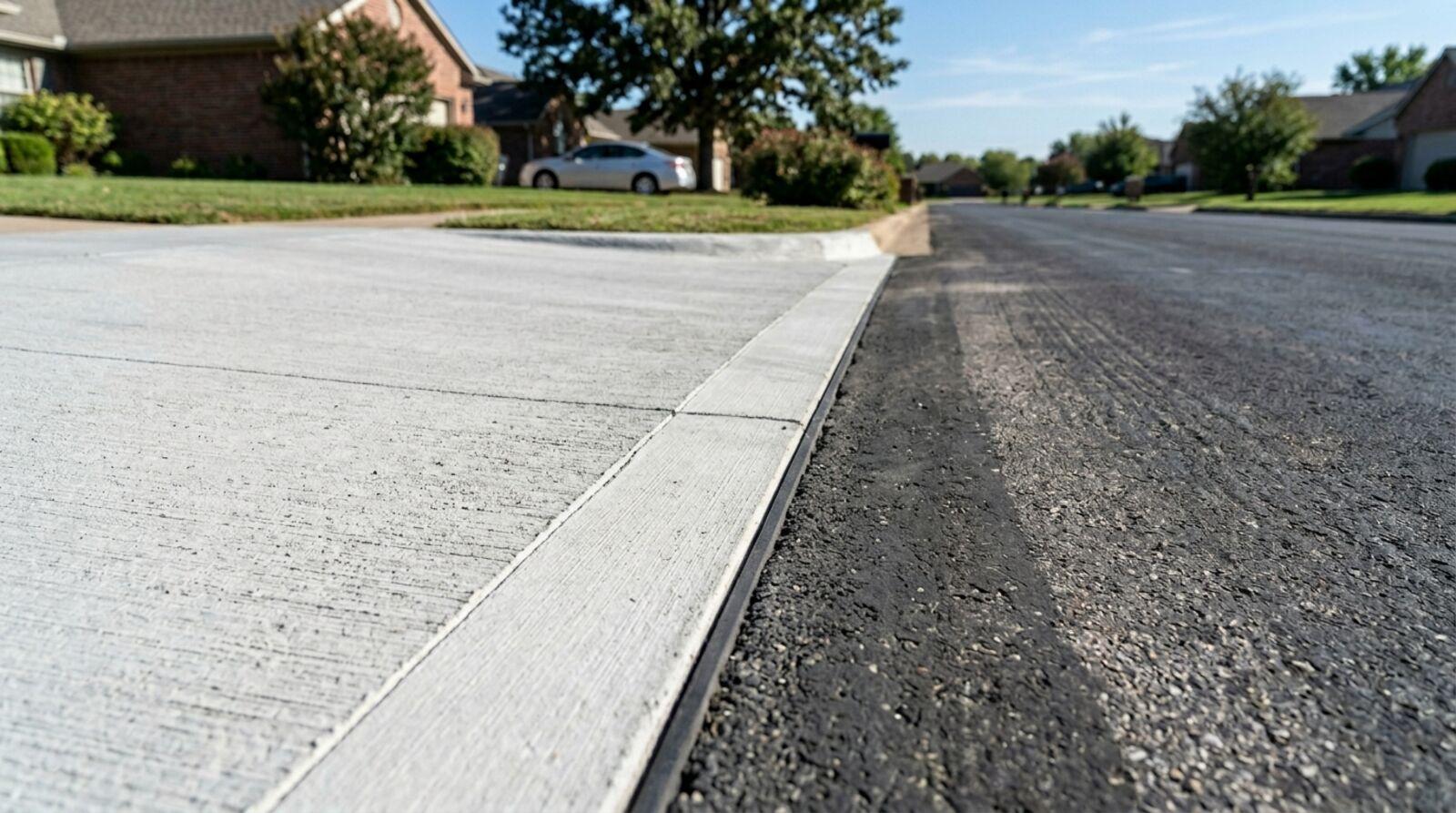
Drainage before decoration.
The prettiest driveway material still fails if water runs toward the garage, sits in low spots, or washes out the edge.
Main driveway slope
Enter the driveway run and total fall.
Cross slope
Check whether water can move sideways too.
Driveway drainage
Driveway slope is not just a number. It decides where water goes.
A driveway that looks flat in a rendering can still need grade, cross slope, trench drains, permeable joints, or edge drains in the real world. That is why slope belongs in the planning flow before you decide between concrete, pavers, asphalt, gravel, or stamped concrete.
Use this calculator for early planning and quote conversations. Final slope should be confirmed against local code, soil, garage thresholds, street apron rules, stormwater requirements, and contractor recommendations.
| Slope | Read | Planning note |
|---|---|---|
| Under 1% | Very flat | Standing water risk unless drainage is designed carefully. |
| 1% to 2% | Gentle | Can work on short driveways with a clear drainage path. |
| 2% to 5% | Practical range | Common planning range for draining water without feeling too steep. |
| 5% to 8% | Steep | Needs traction, smooth transitions, and careful material selection. |
| Over 8% | Very steep | Often needs contractor or civil drainage review before surface decisions. |
Buildable AI driveway design
After slope, check width, material, and cost.
Slope helps you avoid a design that looks good but ignores water. Next, size the driveway, estimate material quantities, price the surface, and then preview the finish on your actual home photo.
FAQ
Driveway slope questions
For early planning, many residential driveways work best around 2% to 5% slope. Below 1% can hold water if drainage is weak. Above 5% starts to feel steep and needs more attention to traction, transitions, and local rules.
Divide the total vertical fall by the horizontal run, using the same units, then multiply by 100. For example, 10 inches of fall over 35 feet is 10 divided by 420, then multiplied by 100, or about 2.4% slope.
At 2% slope, a 30 foot driveway needs about 7.2 inches of total fall. At 3% slope, it needs about 10.8 inches. The right number depends on drainage, surface material, garage threshold, and the street transition.
Yes. A steep driveway can create scraping, traction, winter access, pedestrian safety, and garage-entry problems. If a driveway is above about 8% in early planning, treat it as a grading and drainage design problem before choosing a finish.