Last updated: May 2026 · By Noah James
Driveway drainage solutions
Fix standing water, garage runoff, low spots, slick surfaces, and edge washout before choosing a driveway material. A realistic driveway redesign starts with where the water goes.
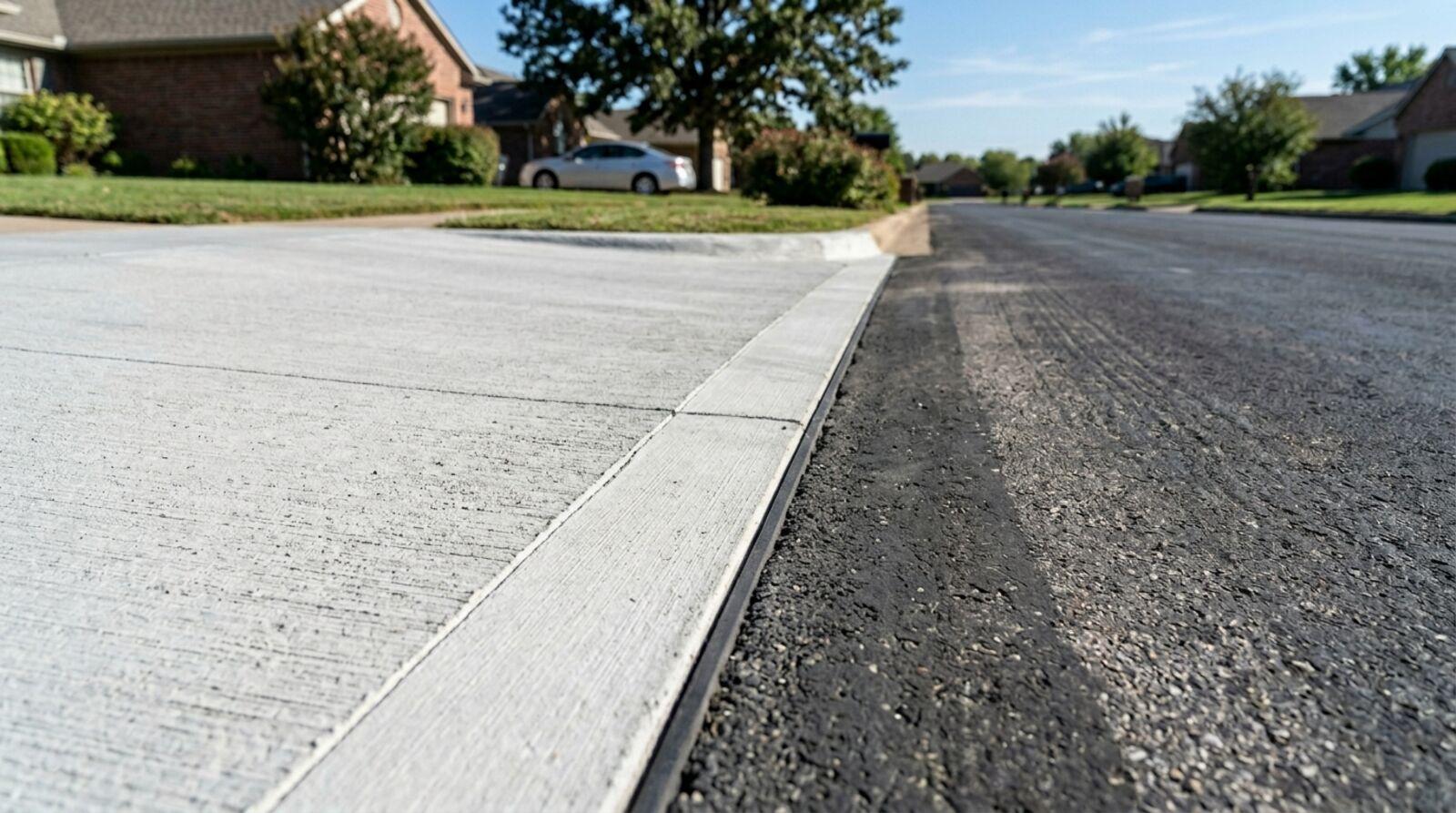
Quick rule
Do not pick the surface first if water currently pools, runs toward the garage, or cuts through the lawn edge.
Adjust slope
If the driveway is too flat or sends water the wrong way, the surface may need regrading before any finish upgrade makes sense.
Add a trench drain
A trench drain can intercept water near the garage, sidewalk, or entry path when slope alone cannot solve the route.
Open the edge
Sometimes the driveway needs a clean border, gravel strip, swale, or lower edge so water can leave without washing out planting beds.
Use permeable design carefully
Permeable pavers can help, but only when the base, soil, joints, edge restraint, and maintenance plan are designed together.
Diagnose first
Match the drainage fix to the real symptom.
Most driveway drainage problems are not solved by changing from concrete to pavers or asphalt to stamped concrete. The material matters, but the grade, base, water path, edge, and nearby roof or yard runoff usually matter more.
| Symptom | Likely cause | Planning fix |
|---|---|---|
| Water near garage | Drive slopes toward the house or garage apron is too low | Regrade, add a trench drain, or rebuild the garage transition |
| Puddles in the middle | Low spot, settlement, weak base, or surface rutting | Resurface only if the base is sound; rebuild if settlement continues |
| Washed-out edge | Water escapes through lawn edge, mulch, or weak border | Add edge restraint, curb, swale, drain rock, or a better border |
| Water crosses walkway | Driveway sends runoff through the entry route | Redirect with cross slope, channel drain, or path redesign |
| Moss or slick surface | Shade, poor drying, low slope, or trapped runoff | Improve drainage and choose a textured, high-traction finish |
AI driveway design
Once water has a path, preview the visible design.
Drainage fixes can still be attractive. Use DrivewAI to compare paver borders, trench drain placement, permeable-looking surfaces, cleaner edges, and material choices on your real driveway photo.
FAQ
Driveway drainage questions
Start by identifying why the water is sitting there: not enough slope, a low spot, blocked edge drainage, a sunken apron, soil settlement, or runoff from the roof or yard. The fix may be regrading, resurfacing, adding a trench drain, opening the edge, or rebuilding the base.
Often yes, but not always. Many driveways should drain toward the street or a designed drain, but local rules may limit runoff to sidewalks, neighbors, storm drains, or public right of way. The important rule is that water should not run toward the garage, foundation, or entry.
Permeable pavers can help when the base is designed for infiltration and local soil can accept water. They are not just normal pavers with wider joints. The base, bedding, edge restraint, soil, and maintenance plan all matter.
AI renderings can help compare visible drainage ideas like borders, trench drains, permeable pavers, swales, and cleaner edges, but final drainage still needs local measurement and contractor review.