Mediterranean landscape visualization
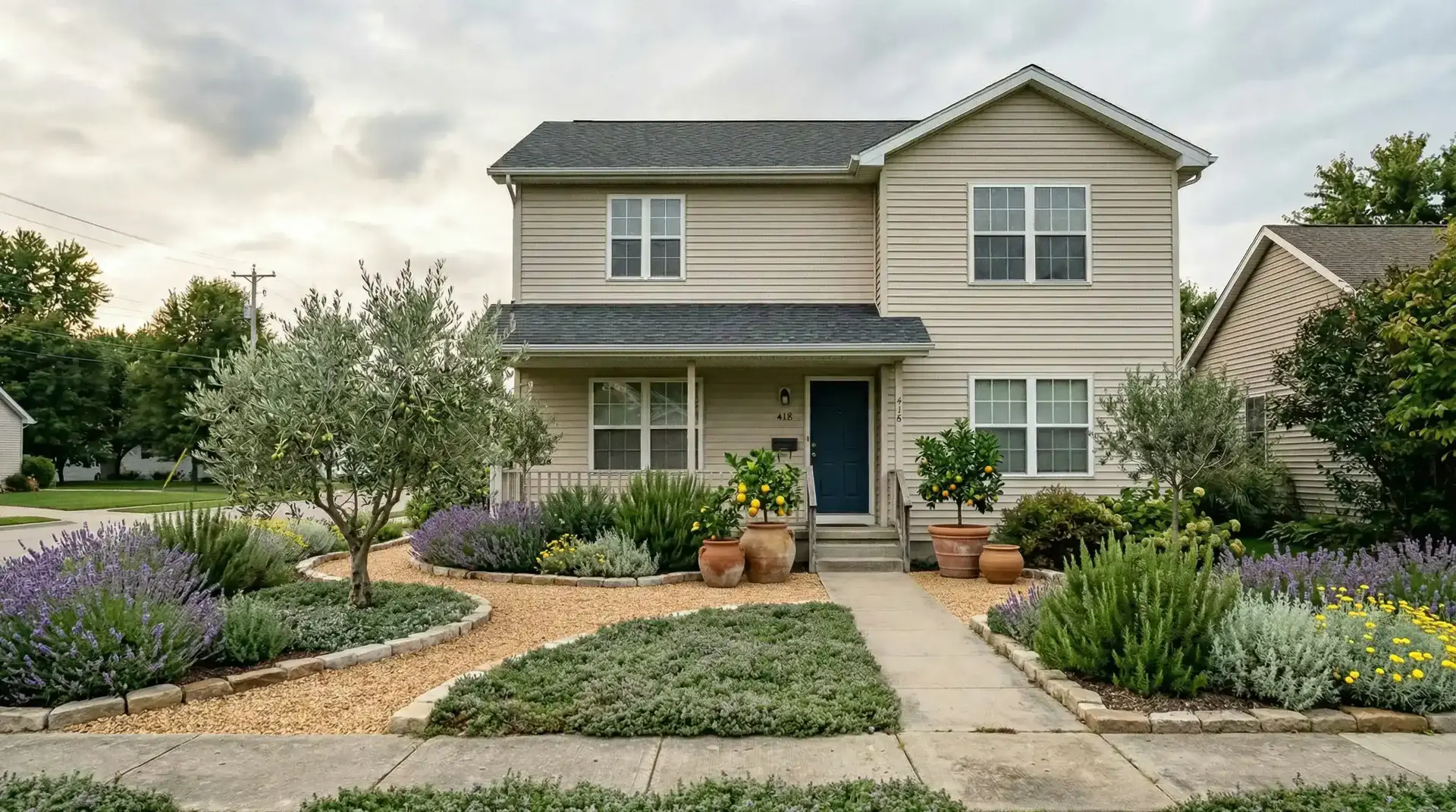
Mediterranean landscaping evokes the warmth of southern Europe — olive trees, Italian cypress, lavender, terracotta pots, and warm stone hardscape that looks sun-baked and time-worn. It's drought-tolerant, fragrant, and pairs beautifully with stucco, stone, and warm-toned homes. DrivewAI renders your yard in Mediterranean style so you can see this transformation on your property.
Last updated: March 2026 · By Noah James
The Mediterranean plant palette
Mediterranean landscapes use drought-adapted plants from southern Europe and the Mediterranean basin: olive trees as specimen anchors, Italian cypress for vertical structure, lavender and rosemary for fragrant ground-level plantings, santolina for silvery edging, and bougainvillea for dramatic color on walls and trellises. Terracotta pots with citrus trees or herbs serve as focal points. The plant palette is naturally aromatic — walking through a Mediterranean garden is a multi-sensory experience.
Hardscape and materials
Hardscape is integral to Mediterranean design. Warm-toned natural stone, terracotta, and stucco garden walls with wrought iron accents define the structural elements. Gravel pathways in warm gold tones with stone borders replace the paved walkways of other styles. Low stucco or stone walls create terraced levels and garden rooms. The materials should look weathered and time-worn, not pristine. The overall palette is warm: ochre, terracotta, cream, and sage green.
Climate and water use
Mediterranean landscaping is naturally water-efficient because the plant palette evolved in hot, dry summers. It thrives in USDA zones 8–11 and is especially popular in California, the Southwest, and the Southeast. Most Mediterranean plants need excellent drainage and suffer in heavy clay or waterlogged soil. In cold climates (zones 6–7), substitute hardy alternatives: Korean boxwood for Italian cypress, catmint for lavender, and ornamental olive varieties bred for cold tolerance.
FAQ
Mediterranean questions
Yes — it works well in zones 8–11 across the Southeast, Southwest, and Pacific Northwest. In colder zones (6–7), cold-hardy plant substitutes can capture the Mediterranean aesthetic. The hardscape elements work in any climate.
Very. The plant palette evolved in hot, dry Mediterranean summers. Once established (1–2 years), most Mediterranean plants need little to no supplemental irrigation. It uses 60–80% less water than a traditional lawn.
Explore more styles
Other landscape styles
TRY IT ON YOUR HOME
See an exterior idea on your own photo.
Driveways, walkways and front steps. Your first preview is free.
Try your photo →$9 once to unlock 3 total options + 3 refinements. No subscription.