Xeriscaping Guide: Save Water Without a Yard Full of Rocks
By Noah James
• 8 min read • Founder, DrivewAI
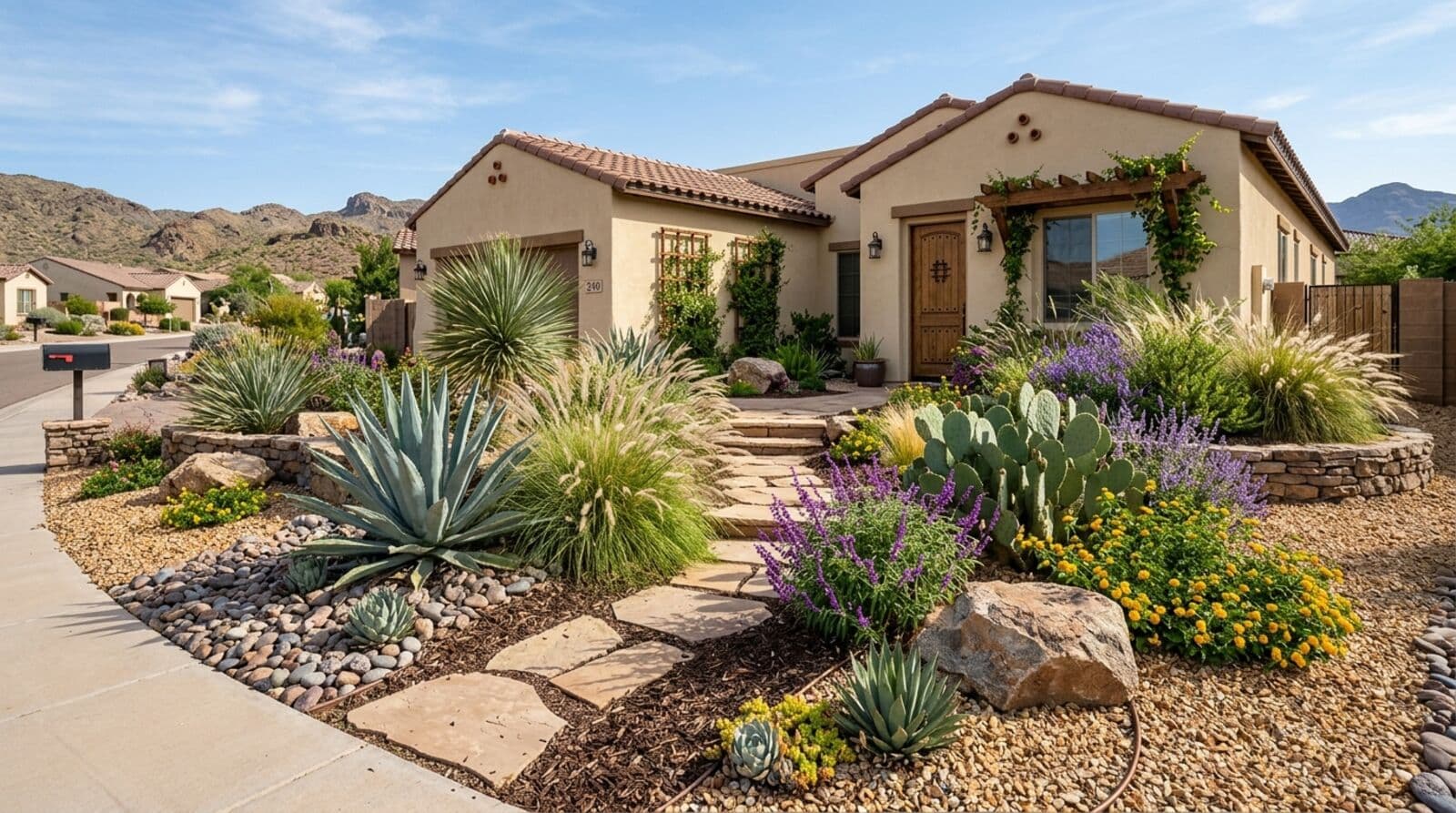
Xeriscaping has a branding problem. The word sounds clinical, and most people picture a yard full of gravel and a lonely cactus. That's not xeriscaping — that's just a neglected yard with rocks on it. Real xeriscaping is a design philosophy that uses climate-appropriate plants, smart soil preparation, and efficient irrigation to create a landscape that looks genuinely good while using 50-75% less water than a traditional lawn. In drought-prone regions, a well-designed xeriscape actually looks better than the brown, crispy lawns surrounding it.
What Xeriscaping Actually Is (And Isn't)
Xeriscaping was coined in Denver in 1981 by combining "xeros" (Greek for dry) with "landscaping." It doesn't mean eliminating all plants or covering everything in stone. It means choosing the right plants for your climate and grouping them by water needs so you're not soaking drought-tolerant plants just to keep a thirsty rosebush alive next to them.
The term is sometimes confused with "zero-scaping," which is the gravel-and-nothing approach that gives xeriscaping its bad reputation. Zero-scaping is lazy. Xeriscaping is intentional, designed, and — when done well — beautiful.
A xeriscaped yard can include flowering perennials, ornamental grasses, groundcovers, shrubs, and even some turf grass in high-use areas. The key difference from conventional landscaping is that every plant is chosen for its ability to thrive in your specific climate with minimal supplemental watering. In practice, this means native and adapted species that have evolved to handle your region's rainfall patterns.
The Seven Principles of Xeriscaping
Xeriscaping follows seven design principles, and skipping any of them undermines the whole approach.
Planning and design comes first. Map your sun exposure, soil type, drainage patterns, and existing features. Group planting areas into hydrozones — high water, moderate water, and low water — so each zone gets exactly what it needs and nothing more.
Soil improvement matters more than plant selection. Most soils in arid regions are either compacted clay or fast-draining sand. Adding 3-4 inches of compost before planting improves water retention in sandy soil and drainage in clay soil. This single step can reduce irrigation needs by 25-50%.
Efficient irrigation means drip systems and soaker hoses, not sprinklers flinging water into the air where half of it evaporates. Drip irrigation delivers water directly to root zones and uses 30-50% less water than conventional sprinklers. A basic drip system for a residential yard runs $500-$1,500 installed.
Appropriate plant selection is choosing species that match your climate. This doesn't mean only cacti and succulents. In the Pacific Northwest, it might mean native ferns and salal. In the Southeast, it could be muhly grass and coneflowers. In the Mountain West, it's penstemons, sage, and rabbitbrush. The EPA WaterSense program offers regional plant lists and water-efficient landscaping resources.
Mulching reduces evaporation, suppresses weeds, and moderates soil temperature. Three inches of organic mulch (bark, wood chips) in planting beds can reduce water needs by another 25%. Inorganic mulch (gravel, decomposed granite) works for pathways and rock garden areas but doesn't improve soil over time.
Practical turf areas means limiting grass to where it's actually used — play areas, pet runs, pathways — and replacing decorative lawn with groundcovers, mulch, or hardscaping. The average American lawn uses 30-60 inches of water per year. Replacing even half of it with xeriscaping makes a dramatic difference on your water bill.
Appropriate maintenance is the ongoing piece. Xeriscaped yards aren't zero-maintenance, but they are significantly lower maintenance than conventional landscapes. Less mowing, less fertilizing, less watering, less everything. Once established (usually after two growing seasons), most xeriscapes need watering once a week or less.
Xeriscaping Costs: What the Conversion Actually Runs
Converting a traditional lawn to xeriscaping costs $3-$8 per square foot for a professional installation. A typical front yard of 1,000 square feet runs $3,000-$8,000 depending on your region, plant selection, and hardscaping choices. Customized renders start at $9.00 each.
That breaks down roughly as:
- Lawn removal: $1-$2/sqft (sod cutter rental or solarization) - Soil amendment: $0.50-$1/sqft (compost and tilling) - Drip irrigation: $0.50-$1.50/sqft - Plants: $1-$3/sqft (using smaller sizes that fill in over 1-2 seasons) - Mulch and decomposed granite: $0.50-$1.50/sqft
DIY conversion drops costs to $1.50-$4 per square foot, mainly because labor is 40-50% of a professional installation. The tradeoff is time — a 1,000 square foot conversion is several weekends of hard work, including removing existing sod, amending soil, installing irrigation, and planting.
The payback period depends on your water costs. In areas where water is expensive (much of California, Nevada, Arizona, Colorado), the water savings alone can recoup the investment in 3-5 years. In areas with cheap water, the payback is longer, but the reduced maintenance time and improved curb appeal still make it worthwhile.
Rebate Programs Most People Don't Know About
Here's where xeriscaping gets financially interesting. Many water utilities and municipalities offer substantial rebates for lawn-to-xeriscape conversions, and most homeowners have no idea these programs exist.
Las Vegas (Southern Nevada Water Authority) offers up to $3 per square foot for removing grass, capped at the first 10,000 square feet. That can cover most or all of a residential conversion.
Los Angeles (LADWP) has offered $3-$5 per square foot in turf replacement rebates, though amounts fluctuate with drought conditions and funding.
Denver Water offers rebates up to $3 per square foot for qualifying xeriscape conversions, plus free landscape design consultations.
Tucson, Austin, San Diego, Sacramento — the list goes on. If you live in a western state, check your water utility's website before you start planning. Some programs require pre-approval before work begins, so don't rip out your lawn first and apply later.
Even in eastern states where drought is less common, some utilities are starting to offer incentives as water infrastructure costs rise. It's always worth asking.
Plant Selection by Region
The best xeriscape plants depend entirely on where you live. What thrives in Phoenix will die in Portland, and vice versa.
Desert Southwest (Phoenix, Las Vegas, Tucson): Desert marigold, red yucca, agave, penstemon, brittlebush, Texas sage, desert willow. These are the true low-water champions, thriving on rainfall alone once established.
Mountain West (Denver, Boise, Salt Lake City): Blue grama grass, Apache plume, rabbitbrush, Russian sage, yarrow, native penstemons. These handle cold winters and dry summers.
California Mediterranean: Manzanita, California fuchsia, deer grass, lavender, ceanothus, toyon. California's native plant palette is genuinely stunning and wildly underused in residential landscapes.
Pacific Northwest: While not traditionally considered xeriscape territory, the dry summers increasingly warrant water-wise planting. Oregon grape, kinnikinnick, native sedges, sword fern in shade areas.
Texas and Southern Plains: Blackfoot daisy, flame acanthus, mealy blue sage, buffalo grass, Mexican feather grass. These handle both drought and the intense summer heat.
Why Xeriscaping Looks Better Than a Dying Lawn
This is the contrarian take that turns out to be obviously true once you see it: in any region with water restrictions or regular drought, a xeriscaped yard looks dramatically better than the surrounding lawns.
During drought restrictions, traditional lawns go brown, patchy, and sad. They look like failure. A xeriscaped yard with native plants, textured gravel, and boulder accents looks intentional and alive because everything in it is actually thriving, not just surviving.
The visual variety of a good xeriscape also beats a monoculture lawn. You get different textures, heights, colors, and seasonal interest. Ornamental grasses catch the wind. Flowering perennials bloom in succession from spring through fall. Evergreen shrubs provide winter structure. A lawn is just a lawn — green (when watered) or brown (when not).
For front yard curb appeal, a well-designed xeriscape signals that the homeowner is thoughtful and intentional about their property. In water-conscious communities, it's increasingly seen as the sophisticated choice rather than the frugal one.
Common Xeriscaping Mistakes
Too much rock, not enough plants. This is the most common mistake and the reason xeriscaping gets a bad reputation. A yard that's 80% gravel and 20% plants looks barren. Aim for at least 50% plant coverage at maturity. Plants start small, so the first year might look sparse, but they fill in.
Ignoring soil prep. Sticking drought-tolerant plants into unimproved compacted clay and wondering why they die. Even drought-tolerant plants need decent soil to establish roots. Spend the money on compost and soil amendment — it's the foundation of everything.
Planting non-native "drought-tolerant" species. A plant that's drought-tolerant in its native Mediterranean climate might be invasive or inappropriate in your region. Stick to species native or well-adapted to your specific area.
No design cohesion. Randomly dotting plants across a gravel field looks like a nursery clearance sale, not a landscape. Group plants in drifts of three to seven, vary heights from front to back, and repeat key species throughout the design for visual rhythm.
Visualizing Xeriscaping Before Committing
The transition from lawn to xeriscape is a big visual change, and many homeowners hesitate because they can't picture what the result will look like. That hesitation is reasonable — you're replacing a familiar look with something fundamentally different.
Before you rip out a single square foot of grass, upload a photo of your yard to our landscaping tool and preview how xeriscape designs would look in your actual space. You can experiment with different plant groupings, gravel colors, and hardscape features to find a style that matches your house and your taste. The worst version of xeriscaping is the one you do impulsively and regret — take the time to visualize it first, and you'll end up with a yard that's both water-smart and genuinely beautiful.
About the author
Noah James
Founder, DrivewAI
Noah James is the founder of DrivewAI, an AI home visualization platform that helps homeowners, contractors, and real estate agents preview renovations before committing. He built DrivewAI to close the gap between inspiration and execution in home improvement.
His writing focuses on practical renovation decision-making, material comparisons, and how AI visualization tools are changing the way people plan projects — from driveway replacements to full interior staging.
See your home transformed by AI
Upload a photo and get AI renderings across every style. Designs from $9 with a 24-hour refund guarantee.
Try DrivewAI Free