Kitchen Remodel Cost: Real Numbers by Tier in 2026
By Noah James
• 9 min read • Founder, DrivewAI
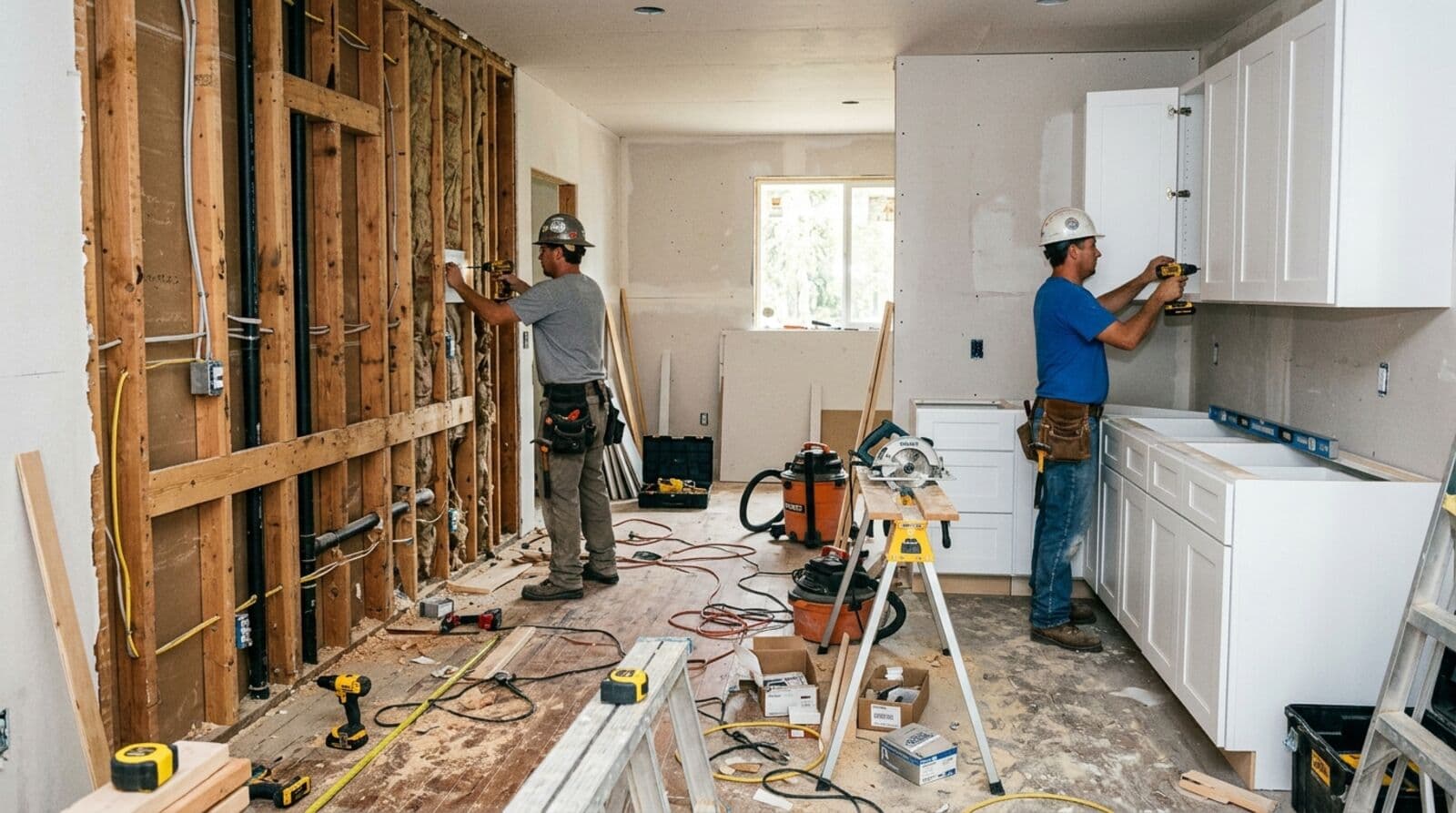
Kitchen remodel cost is the question every homeowner Googles first and understands last. The reason is that "kitchen remodel" describes everything from painting cabinets and swapping hardware over a weekend to a six-month gut renovation that moves walls, reroutes plumbing, and requires a structural engineer. These are not the same project and they do not cost the same money. A cosmetic refresh runs $5,000 to $15,000. A mid-range remodel lands between $25,000 and $50,000. A full gut renovation starts at $50,000 and regularly exceeds $100,000 in high-cost markets. This guide breaks down what actually drives those numbers, where you can save money without the kitchen looking like you cut corners, and the one budget line item that almost everyone underestimates.
The Three Tiers of Kitchen Remodeling
Understanding which tier you are in determines almost everything about your budget, timeline, and stress level. Be honest with yourself about which category your project falls into.
Tier 1 — Cosmetic Refresh ($5,000 to $15,000): You keep the existing layout, cabinets, and major appliances. Work includes painting or refacing cabinet doors, new hardware, updated light fixtures, fresh paint, new backsplash, and possibly a countertop replacement if you choose a budget material like butcher block or laminate. This tier can often be completed in one to two weeks with minimal disruption to daily life. No permits required in most cases.
Tier 2 — Mid-Range Remodel ($25,000 to $50,000): You replace cabinets, countertops, and appliances while keeping the existing layout mostly intact. This is the most common kitchen remodel scope. Work includes new cabinet boxes and doors, stone or quartz countertops, new appliances, updated backsplash, new flooring, and improved lighting. Plumbing and electrical fixtures stay in their current locations, which keeps costs manageable. Timeline is typically four to eight weeks. You will probably need permits for electrical and plumbing work even if locations do not change.
Tier 3 — Full Gut Renovation ($50,000 to $100,000+): You change the layout. Walls move, plumbing gets rerouted, electrical panels get upgraded, and the kitchen may expand into adjacent spaces. Everything is new — cabinets, countertops, appliances, flooring, lighting, plumbing fixtures, electrical circuits. This is the tier where surprises live. Opening walls reveals old wiring, outdated plumbing, inadequate framing, and occasionally asbestos or lead paint in older homes. Timeline is three to six months. Multiple permits and inspections are required.
Where the Money Actually Goes
According to Remodeling Magazine's Cost vs. Value Report, the typical mid-range kitchen remodel has a surprisingly consistent cost distribution. Understanding this breakdown helps you prioritize spending.
Cabinets and hardware: 30 to 35 percent of total budget. This is almost always the single largest line item. Stock cabinets from a big-box store cost $75 to $150 per linear foot. Semi-custom cabinets run $150 to $350 per linear foot. Fully custom cabinets start at $500 per linear foot and go much higher. For a kitchen with 25 linear feet of cabinets, that is $1,875 to $3,750 (stock), $3,750 to $8,750 (semi-custom), or $12,500 and up (custom). This single decision can swing your total budget by $10,000 or more.
Labor: 20 to 25 percent. General contractor fees, demolition, installation, specialized trades (plumber, electrician, tile setter). Labor rates vary dramatically by market. In a mid-cost city, expect to pay $50 to $85 per hour for skilled trades. In New York, San Francisco, or Boston, double that.
Countertops: 8 to 12 percent. Laminate costs $10 to $25 per square foot installed. Butcher block runs $40 to $70. Quartz and granite land between $50 and $100. Premium natural stone like marble starts at $75 and climbs steeply. A typical kitchen has 40 to 60 square feet of countertop, so the material choice creates a $400 to $6,000 spread.
Appliances: 12 to 18 percent. A basic appliance package (refrigerator, range, dishwasher, microwave) costs $2,500 to $5,000 for reliable mid-range brands. A premium package with a professional-style range, built-in refrigerator, and quiet dishwasher runs $10,000 to $25,000. Appliances are the line item where lifestyle preferences can blow up a budget fastest.
Flooring: 5 to 8 percent. Luxury vinyl plank at $4 to $8 per square foot installed. Ceramic or porcelain tile at $6 to $15. Hardwood at $8 to $15. For a 150-square-foot kitchen floor, the range is $600 to $2,250.
Everything else: 15 to 20 percent. Backsplash, lighting, plumbing fixtures, paint, permits, design fees, and the inevitable surprises. This "everything else" category is where budgets get out of control because homeowners allocate carefully for cabinets and countertops, then forget that a new sink faucet costs $300, undercabinet lighting costs $800, and a tile backsplash costs $1,500 to $3,000.
The One Thing People Always Underbudget
Electrical and plumbing rough-in work. Every single time. If your kitchen remodel involves moving the sink, adding an island with a prep sink, upgrading to a gas range from electric, or adding more outlets and circuits — and almost every mid-range-or-above remodel involves at least one of these — the rough-in work will cost more than you expect.
Moving a sink three feet costs $500 to $1,500 in plumbing labor and materials. Running a new gas line for a range costs $300 to $800. Bringing your kitchen electrical up to current code — GFCI outlets every four feet, dedicated circuits for major appliances, proper arc-fault protection — can cost $2,000 to $5,000 depending on your panel capacity and the distance from the panel to the kitchen.
These costs are invisible in the finished kitchen. Nobody admires your new 20-amp dedicated dishwasher circuit. But they are non-negotiable if you want the remodel done safely and to code. Budget 10 to 15 percent of your total project cost specifically for electrical and plumbing rough-in, separate from fixture costs.
Where to Save Without It Looking Cheap
Not all cost-cutting is equal. Some saves are invisible in the finished kitchen. Others are immediately obvious to anyone who walks in.
Good saves that nobody notices: stock or semi-custom cabinets instead of fully custom (the box quality is nearly identical at the semi-custom level), laminate or LVP flooring instead of hardwood (modern laminate is visually indistinguishable from hardwood at a glance), a single-bowl undermount sink instead of a farmhouse sink (saves $500 to $1,500), and standard-depth countertops instead of waterfall edges or extended overhangs.
Bad saves that everyone notices: cheap cabinet hardware (you touch it every day and feel the difference), low-quality faucets (the finish wears and the cartridge fails), builder-grade lighting (nothing kills a kitchen renovation like boob lights on the ceiling), and skipping the backsplash (the wall behind the stove will look greasy and unfinished within months).
The best single save: keep your existing layout. The moment you move plumbing or knock down a wall, you add $5,000 to $15,000 in structural, plumbing, and electrical costs. If your current layout works reasonably well, pouring that money into better cabinets and countertops within the existing footprint produces a better-looking kitchen for less money.
Timeline Reality Check
Cosmetic refreshes take one to two weeks. Mid-range remodels take six to ten weeks from demolition to final punch list. Full gut renovations take three to six months and sometimes longer.
Every kitchen remodel takes longer than the contractor initially estimates. This is not because contractors are dishonest — it is because supply chain delays, inspection scheduling, and scope changes are genuinely unpredictable. Add 20 to 30 percent to whatever timeline your contractor quotes and you will be closer to reality.
Plan for eating without a kitchen. Depending on your scope, you will be without a functioning kitchen for two weeks to three months. Set up a temporary kitchen in another room with a microwave, toaster oven, electric kettle, and a folding table. Budget $200 to $500 per month in increased takeout and dining costs. Nobody talks about this, but it adds up.
Does a Kitchen Remodel Pay for Itself
The short answer: partially, and it depends on the tier. Remodeling Magazine's data consistently shows that mid-range kitchen remodels recoup 60 to 75 percent of their cost at resale. Major upscale remodels recoup 50 to 60 percent. A $40,000 mid-range remodel adds roughly $24,000 to $30,000 in home value.
This means kitchen remodels are not pure investments — they are lifestyle improvements that happen to recover a significant portion of their cost. If you are remodeling purely for resale return, you will almost certainly lose money. If you are remodeling because you cook every day and your kitchen is genuinely dysfunctional, the daily quality-of-life improvement over years of use provides value that resale numbers do not capture.
The best return on investment comes from Tier 1 cosmetic refreshes. Painting cabinets, new hardware, updated light fixtures, and a fresh backsplash can transform a dated kitchen for $8,000 to $12,000 and recover 80 to 90 percent at resale. It is the highest-ROI kitchen project available.
Hiring a Contractor vs Managing Subs Yourself
For Tier 1 cosmetic work, you can reasonably manage the project yourself or hire individual trades directly. Painting cabinets, swapping hardware, and installing a backsplash do not require a general contractor.
For Tier 2 and Tier 3, hire a general contractor. Yes, the GC markup of 15 to 25 percent on subcontractor costs feels painful. But a GC handles scheduling, permitting, inspections, material ordering, and quality control across multiple trades. Managing plumbers, electricians, cabinet installers, tile setters, and countertop fabricators yourself is a full-time job, and mistakes in sequencing can cause expensive rework.
Get three bids minimum. Make sure each bid covers the same scope. The cheapest bid is not always the best value — look for detailed, itemized bids that show the contractor has actually thought through the project rather than a one-line lump sum.
Visualize Your Kitchen Before You Spend
The most expensive mistake in kitchen remodeling is changing your mind after work has started. Changing cabinet color after the order is placed costs thousands. Switching countertop material during fabrication is even worse. Before you finalize any decisions, upload a photo of your current kitchen to DrivewAI's room redesign tool and preview different cabinet colors, countertop materials, and layout concepts. Seeing the options on your actual kitchen — not a showroom mock-up — prevents costly mid-project changes. Check out our guides on kitchen backsplash ideas and small kitchen remodel ideas for more inspiration, then try the visualizer to see what works in your space. DrivewAI offers a 24-hour refund guarantee — upload a photo and see your kitchen transformed in seconds.
About the author
Noah James
Founder, DrivewAI
Noah James is the founder of DrivewAI, an AI home visualization platform that helps homeowners, contractors, and real estate agents preview renovations before committing. He built DrivewAI to close the gap between inspiration and execution in home improvement.
His writing focuses on practical renovation decision-making, material comparisons, and how AI visualization tools are changing the way people plan projects — from driveway replacements to full interior staging.
See your kitchen restyled by AI
Upload a photo and get AI renderings across every style. Designs from $9 with a 24-hour refund guarantee.
Try DrivewAI Free