Kitchen Backsplash Ideas: Materials, Costs, and Trends
By Noah James
• 8 min read • Founder, DrivewAI
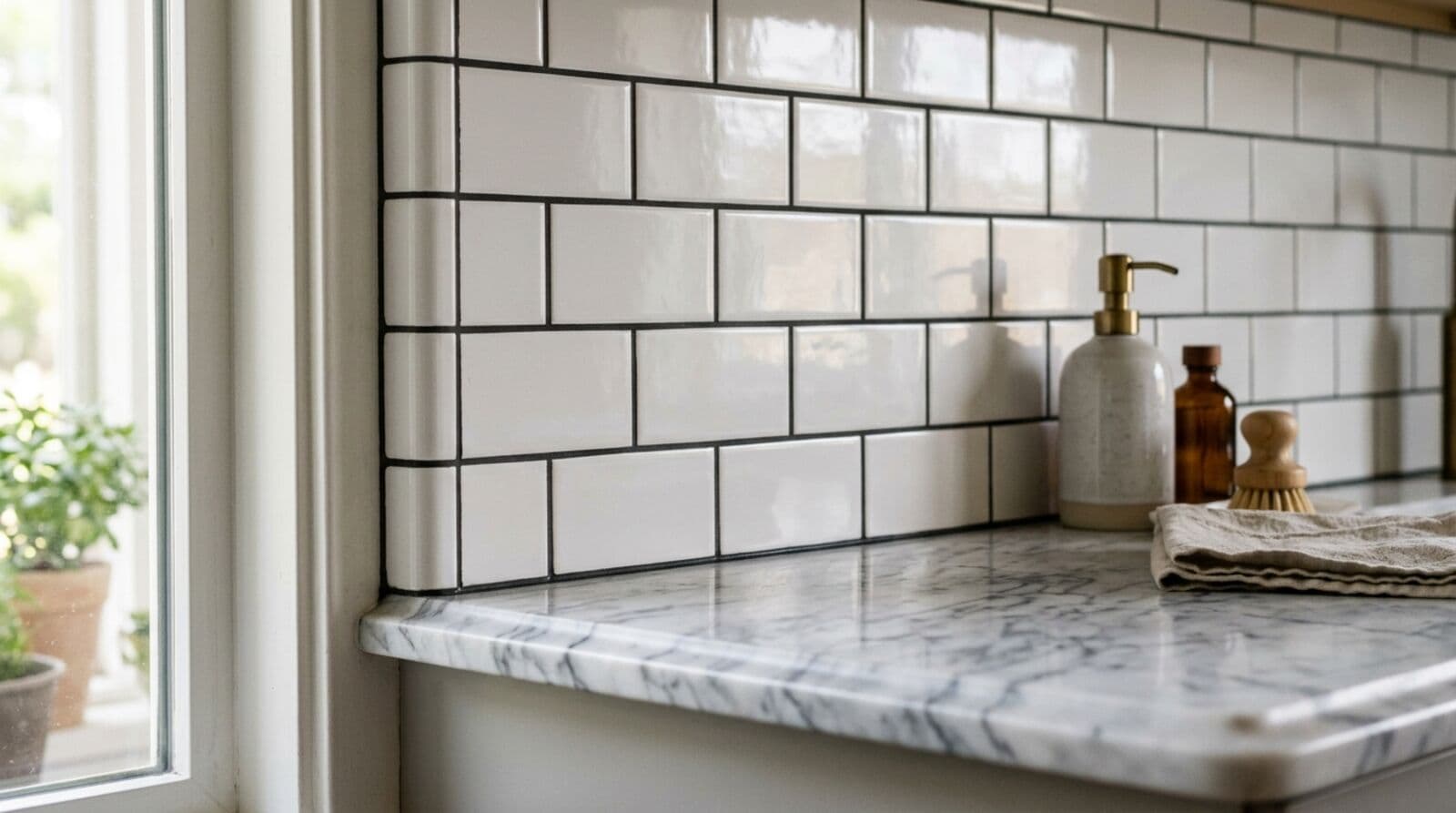
The backsplash is the most visible surface per square foot in your kitchen. You stare at it while cooking, while washing dishes, while waiting for coffee. And yet most people spend less time choosing their backsplash material than they spend choosing a couch. That is backwards. Your kitchen backsplash ideas deserve serious consideration because the backsplash sets the visual tone for the entire room — it ties cabinets to countertops, creates texture, and either dates your kitchen or keeps it looking current for decades. This guide covers the major backsplash materials with honest cost comparisons, identifies which trends are already aging poorly, and explains why grout color matters more than you think.
Ceramic Subway Tile: The Default for Good Reason
The 3x6-inch ceramic subway tile has been the most popular backsplash option for over a century, and its dominance is not an accident. It is affordable ($2 to $8 per square foot for materials), easy to install, available everywhere, and visually neutral enough to work with virtually any kitchen style.
Installed cost for a ceramic subway tile backsplash runs $8 to $20 per square foot, depending on your market and the complexity of the layout. For a typical 30-square-foot backsplash area, that is $240 to $600 in materials or $240 to $600 installed for a straightforward layout.
The knock on subway tile is that it is boring. That criticism misses the point. Subway tile is a canvas, not a statement. The layout pattern (straight stack, offset, herringbone, vertical), the grout color, and the tile finish (glossy, matte, handmade-look with irregular edges) create completely different looks from the same basic tile. A glossy white subway tile with white grout in a straight stack looks clinical and modern. The same tile with charcoal grout in an offset pattern looks warm and craftsman-inspired. Handmade-look subway tiles with slightly wavy surfaces and varied glazing look artisanal and high-end despite costing only $4 to $10 per square foot for the tile itself.
If you choose subway tile, consider going beyond the basic 3x6. Elongated formats like 4x12 or 2x8 feel more contemporary. And vertical orientation — tiles running up and down instead of horizontally — is a subtle move that makes ceilings feel taller and looks distinctly current without being trendy.
Natural Stone: Beautiful and High-Maintenance
Marble, travertine, and slate backsplashes are genuinely stunning. Natural stone brings depth, movement, and organic variation that no manufactured tile can replicate. Marble in particular — with its veining and translucency — creates a luxury feeling that is hard to achieve any other way.
Installed costs for natural stone backsplashes run $15 to $45 per square foot depending on the stone type and slab vs. tile format. Marble subway tiles are on the lower end. Full-slab marble backsplashes with bookmatched veining are on the higher end and then some.
The honest problem with natural stone in a backsplash application is porosity. Marble, travertine, and limestone are porous stones that absorb liquids and stain. Behind a cooktop where tomato sauce splatters and olive oil pops, a marble backsplash requires constant vigilance and regular sealing. Even sealed marble can stain over time. Granite and quartzite are significantly more stain-resistant but have a different aesthetic.
If you love the look of marble but cannot handle the maintenance, consider a porcelain tile that mimics marble veining. Modern porcelain marble-look tiles from quality manufacturers are remarkably convincing and essentially maintenance-free. The Tile Council of North America has resources on testing porcelain tile quality, which is worth checking before purchasing.
Glass Mosaic: Dramatic but Dated
Glass mosaic tiles had their peak moment around 2008 to 2015, when every kitchen renovation show featured iridescent glass tiles in teal, aqua, or multi-colored blends. If your kitchen currently has a glass mosaic backsplash in a rainbow of colors, you are reading this guide for a reason.
That said, glass tile is not inherently dated — it depends on execution. Single-color glass tiles in neutral tones (white, gray, soft blue) still look clean and contemporary. Linear glass tiles (long, thin rectangles) in a stacked pattern can be striking. The dated look comes from multi-colored blends and small mosaic patterns that read as busy and overly decorative.
Glass tile costs $10 to $35 per square foot for materials and is significantly more expensive to install than ceramic because it requires special adhesive, careful handling (glass edges are sharp and tiles chip easily), and experienced installers. Installed cost runs $25 to $55 per square foot. At that price, you can get natural stone or large-format porcelain that will age more gracefully.
If you want the reflective quality of glass without the cost and datedness risk, consider a glossy ceramic tile. A high-gloss glazed ceramic tile produces a similar light-reflecting effect at a fraction of the price and with much easier installation.
Peel-and-Stick: The Honest Assessment
Peel-and-stick backsplash tiles have improved dramatically in quality over the past few years. The best options — thick gel tiles, real metal tiles with adhesive backing, and premium vinyl tiles — look surprisingly convincing and cost $4 to $15 per square foot for materials with zero installation cost beyond your own time.
Peel-and-stick makes sense in two scenarios: you are renting and cannot make permanent changes, or you want a quick cosmetic update before a home sale and cannot justify a full tile installation. In these situations, quality peel-and-stick tiles are a reasonable solution.
Peel-and-stick does not make sense as a permanent backsplash in a home you own and plan to keep. The adhesive degrades over time, especially behind ranges where heat exposure is constant. Edges peel. Grout lines (when present) are printed rather than recessed, so they catch grease and are hard to clean. And anyone who has spent time around kitchens can usually tell the difference between real tile and an adhesive product.
The exception is real thin-brick or metal peel-and-stick tiles, which use actual material (brick veneer or aluminum) with industrial adhesive. These perform significantly better than vinyl alternatives and are harder to distinguish from conventional installations.
Large Format Porcelain: The New Power Move
Large format porcelain slabs — tiles measuring 24x48 inches or larger, sometimes up to 60x120 inches — are the material trend that has the most staying power right now. They install like a slab rather than individual tiles, which means fewer grout lines and a cleaner, more monolithic appearance.
Large format porcelain costs $12 to $30 per square foot for materials and $25 to $50 per square foot installed. The installation premium reflects the specialized skills and equipment needed to handle large, heavy tiles. Thin porcelain panels (3mm to 6mm thick) designed specifically for backsplash and cladding applications are lighter and somewhat easier to install.
The visual advantage is enormous. A backsplash made from one or two large porcelain panels with marble veining looks like a slab of natural marble but is completely impervious to staining, does not need sealing, and can be wiped clean with a damp cloth. No grout maintenance, no staining anxiety, no annual sealing ritual.
The downside is that large format tiles are less forgiving of imperfect walls. The substrate must be flat and solid. On a slightly wavy wall that would be fine for small tiles, a large panel will rock or show the unevenness. Wall preparation may add to total cost.
The Grout Color Secret
Here is the detail that makes or breaks a backsplash installation: grout color. The same tile with white grout and dark grout produces two entirely different looks, and most homeowners do not consider this until the tile is already on the wall.
Matching grout (grout that closely matches the tile color) creates a seamless, monolithic look where individual tiles blend together. This is the modern, clean approach. White tile with white grout looks like a smooth surface. It lets the tile texture and layout pattern do the visual work rather than emphasizing the grid.
Contrasting grout (grout in a noticeably different color from the tile) highlights every individual tile and emphasizes the pattern. White subway tile with dark gray or black grout creates a graphic, industrial look that reads as very intentional. This approach works well with simple tile shapes where you want the pattern to be the feature.
The practical reality: light grout shows stains. Behind a cooktop, white grout lines between tiles will collect grease and discolor over time, requiring periodic cleaning with bleach or oxygen-based cleaners. Dark grout hides cooking stains much better. If low-maintenance is a priority, choose grout one or two shades darker than your tile even if you want a subtle, blended look.
Unsanded grout is used for joints narrower than 1/8 inch. Sanded grout is used for wider joints. Epoxy grout costs more but is virtually stain-proof and does not need sealing — worth considering for the area directly behind your cooktop even if you use standard sanded grout elsewhere.
Why Full-Height Backsplash Is Worth the Extra Cost
A standard backsplash runs 18 inches from the countertop to the bottom of the upper cabinets. A full-height backsplash runs from the countertop all the way to the ceiling. The material cost difference for a typical kitchen is $400 to $800 in additional tile, and the visual impact is disproportionately large.
Full-height backsplash makes the kitchen feel taller, more finished, and more intentional. It eliminates the painted drywall strip between the top of the backsplash and the ceiling, which often collects grease vapor and yellows over time. On walls where there are no upper cabinets — the trend toward floating shelves and open concepts has created many of these — a full-height tile treatment provides a visual anchor that paint alone cannot deliver.
The cost increase is modest because you are adding square footage to an installation that already has a tile setter on site with materials and tools. The marginal cost of additional tile and an extra hour of labor is small relative to the baseline cost of the backsplash project. If there is one place to spend an extra few hundred dollars in a kitchen remodel, extending the backsplash to the ceiling is it.
Trends That Will Date Your Kitchen
Some current backsplash trends will look fresh for years. Others will be the 2020s equivalent of that brown and cream glass mosaic from 2009. Here is an opinionated but honest assessment.
Likely to age well: white or off-white subway tile in any format, natural stone or stone-look porcelain in neutral tones, large format slabs with minimal grout, simple geometric patterns in single colors.
Already aging: hexagonal mosaics in trendy colors (forest green hexagons had about three good years), heavily patterned cement-look tiles used floor to ceiling, metallic or mirrored tiles, and any tile that requires a specific color scheme to work.
The safe bet: a neutral, timeless backsplash material paired with trendy accessories that are easy to swap. Your backsplash is semi-permanent. Your dish towels, small appliances, and open-shelf displays are not. Let the replaceable items carry the trendiness and keep the tile classic.
Preview Your Backsplash Before You Order
Tile samples on a kitchen counter tell you almost nothing about how a backsplash will look installed. The lighting, the scale, the relationship to your cabinets and countertops — these only become clear when you see the material in context. Upload a photo of your kitchen to DrivewAI's room redesign tool and preview different backsplash materials, patterns, and colors on your actual walls. It is the fastest way to narrow your choices from twelve Pinterest saves to two real contenders. For more kitchen renovation guidance, check out our kitchen remodel cost breakdown and AI kitchen visualizer guide, then try the tool yourself to see what different backsplash options look like in your space. DrivewAI offers a 24-hour refund guarantee — one photo, dozens of possibilities.
About the author
Noah James
Founder, DrivewAI
Noah James is the founder of DrivewAI, an AI home visualization platform that helps homeowners, contractors, and real estate agents preview renovations before committing. He built DrivewAI to close the gap between inspiration and execution in home improvement.
His writing focuses on practical renovation decision-making, material comparisons, and how AI visualization tools are changing the way people plan projects — from driveway replacements to full interior staging.
See your kitchen restyled by AI
Upload a photo and get AI renderings across every style. Designs from $9 with a 24-hour refund guarantee.
Try DrivewAI Free