Dining Room Ideas Worth Testing Before You Buy a Chair
By Noah James
• 7 min read • Founder, DrivewAI
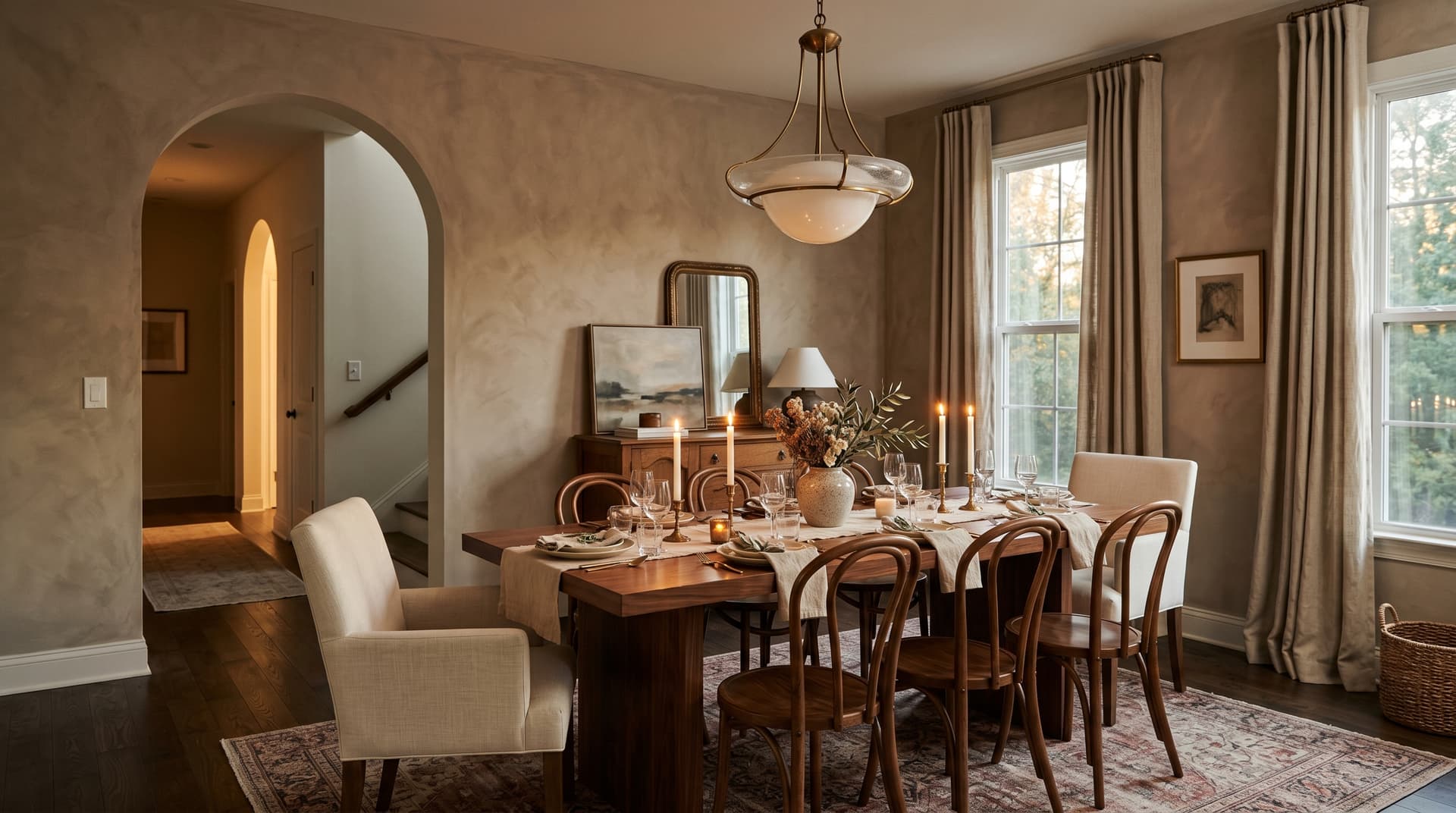
Most dining room ideas fail for the same reason: people buy the table first and design the room around it. The table arrives, it's six inches too wide for the space, the chairs don't push in far enough, and the pendant light that looked perfect online hangs at forehead height. The dining room ends up feeling cramped, mismatched, or both.
The fix isn't better taste — it's better sequencing. Start with the room's proportions and lighting, then choose furniture that fits. And before you spend $2,000 on a table and $400 per chair, preview how the full composition looks in your actual space using AI room visualization.
Get the Table Size Right — Everything Else Follows
The dining table is the anchor, and getting the size wrong ruins everything. The rules that matter:
Minimum clearance: Leave at least 36 inches between the table edge and the nearest wall or furniture. Less than that and people can't pull chairs out comfortably. In a room where you need a walkway behind seated diners, aim for 42-48 inches.
Table size by seating: - 4 people: 48 inches round or 48x30 inches rectangular - 6 people: 60-72 inches long, 36 inches wide - 8 people: 72-84 inches long, 36-40 inches wide - 10+ people: 96+ inches or consider an extendable design
Shape by room shape: Round tables work best in square rooms. Rectangular tables suit long rooms. Oval tables split the difference — they seat more people than round but feel less formal than rectangular, and the lack of corners makes traffic flow easier in tight spaces.
The single most common mistake: buying a table that's technically the right length but too wide for the room. A 42-inch-wide table in a 12-foot-wide room leaves only 39 inches on each side — barely enough. Dropping to 36 inches wide buys you an extra 6 inches of clearance that makes the room feel dramatically more open.
Lighting That Makes or Breaks the Mood
Dining room lighting has one job: make the food look good and the people look better. Overhead fluorescents and recessed cans fail at both. The lighting setup that works:
Chandelier or pendant over the table: The centerpiece fixture should hang 30-34 inches above the table surface in standard 8-foot ceiling rooms. Add 3 inches for every additional foot of ceiling height. The fixture width should be roughly half to two-thirds the table width — a 36-inch-wide table calls for an 18-24 inch fixture.
Dimmer switch: Non-negotiable. Tuesday dinner needs different light than Saturday hosting. A dimmer turns harsh overhead light into warm ambient glow for under $25. This single addition changes how every meal feels in the room.
Candles or low accent light: Table-level light from candles, a low lamp on a sideboard, or LED strips under floating shelves adds depth. Overhead light alone creates harsh shadows on faces. Light from below and the sides softens everything.
The trend in 2026 is away from crystal chandeliers and toward sculptural pendants — organic shapes in plaster, hand-blown glass, or woven natural fibers. These fixtures become art pieces during the day and light sources at night. The American Lighting Association recommends layering at least three light sources in any dining space for visual warmth.
Chair Strategy — Mix, Don't Match
The era of buying eight identical dining chairs is over. The dining room ideas that look most intentional in 2026 use mixed seating — and there's a method to it.
The formula that works:
- Host chairs (2): upholstered armchairs at the heads of the table. Slightly different from the side chairs. These anchor the composition and give the table ends visual weight. - Side chairs (4-6): matching or complementary chairs along the sides. Can be wood, metal, or a mix — but they should share a visual thread (same color family, same height, same leg style).
Why mixing works: identical chairs in a row read as institutional — like a conference room or hotel banquet. Mixed seating reads as collected and personal. The trick is controlled variety — different pieces that share enough in common to feel cohesive.
Budget hack: Buy the two host chairs new (these get the most visual attention) and source the side chairs vintage or secondhand. Vintage wood chairs in good condition run $40-$80 each at estate sales — a fraction of new retail.
Wall Treatment Ideas That Add Depth
Flat painted walls are fine but forgettable. The dining room is one of the few spaces where wall treatments genuinely earn their cost — you sit facing the walls for the duration of every meal.
Treatments worth considering:
- Limewash or microcement — textured, matte finishes that create depth and movement as light shifts through the day. Cost: $4-$8 per square foot applied. The warm, plaster-like effect is the defining dining room aesthetic in 2026. - Board and batten or shiplap on the lower third — a chair-rail-height treatment that adds architectural interest without overwhelming the room. Paint it the same color as the upper wall for a tonal effect, or a contrasting shade for definition. - Wallpaper on one wall — a single accent wall in a bold pattern adds drama without the commitment of wrapping the entire room. Peel-and-stick options make this reversible. - Gallery wall — frames of mixed sizes and styles on one wall. Best behind a sideboard or buffet where the art and furniture create a composed vignette.
For more wall treatment strategies that work across rooms, our interior design ideas guide covers principles that apply beyond the dining room.
The Sideboard Is the Most Underrated Piece
A sideboard or buffet along one wall transforms the dining room from "table and chairs" to an actual room. It provides:
- Storage for table linens, candles, serving pieces, and the good dinnerware you don't want in the kitchen - A surface for serving dishes during meals, a bar setup during parties, or everyday display - Visual balance — a long, low piece opposite the table fills the wall and gives the room a second focal point beyond the overhead light
The sideboard should be roughly two-thirds the length of the table for visual proportion. A 72-inch table pairs with a 48-inch sideboard. Too short and it looks like an afterthought. Too long and it crowds the room.
Make the Dining Room Work for Real Life
The formal dining room used once a year for Thanksgiving is dead. The dining rooms that get used daily are the ones designed for daily life:
- Kids' homework zone — a dining table is a better workspace than a cramped desk. Add a power strip discreetly mounted under the table edge and a drawer organizer in the sideboard for supplies. - Work-from-home overflow — on days when the home office feels claustrophobic, the dining table with a view of the rest of the house is a welcome change. Good lighting and a comfortable chair make this work. - Game night and entertaining — round and oval tables outperform rectangular for board games and conversation because everyone can see everyone. If hosting is a priority, choose accordingly.
The best dining room ideas in 2026 aren't about making the room look magazine-ready. They're about making it useful enough that you actually sit there.
Preview Your Dining Room Before Buying Anything
Dining furniture is expensive and hard to return. A solid wood table runs $1,000-$4,000. Quality chairs cost $200-$600 each. A chandelier plus installation can hit $500-$2,000. That's $3,000-$10,000 before you've touched the walls — and all of it chosen from product photos taken in rooms that look nothing like yours.
DrivewAI lets you upload a photo of your dining room and preview how different styles look in your actual space — your lighting, your walls, your flooring. Test whether a round or rectangular table works better. See how a warm contemporary style compares to a Scandinavian one. Preview the full room before committing to furniture you'll live with for years.
One rendering is free each month, and the Customized renders start at $9.00 each. covers enough to compare multiple design directions.
For more room-specific design ideas, check out our guides on living room redesign ideas, bedroom makeover ideas, and how to redesign any room with AI.
About the author
Noah James
Founder, DrivewAI
Noah James is the founder of DrivewAI, an AI home visualization platform that helps homeowners, contractors, and real estate agents preview renovations before committing. He built DrivewAI to close the gap between inspiration and execution in home improvement.
His writing focuses on practical renovation decision-making, material comparisons, and how AI visualization tools are changing the way people plan projects — from driveway replacements to full interior staging.
See your home transformed by AI
Upload a photo and get AI renderings across every style. Designs from $9 with a 24-hour refund guarantee.
Try DrivewAI Free