Free Driveway Tool
Driveway Lighting Cost Calculator
Estimate fixture count, spacing, wiring, controls, wattage, and installation range before you buy lights. Then preview the driveway, border, planting, and lighting together with AI driveway rendering.
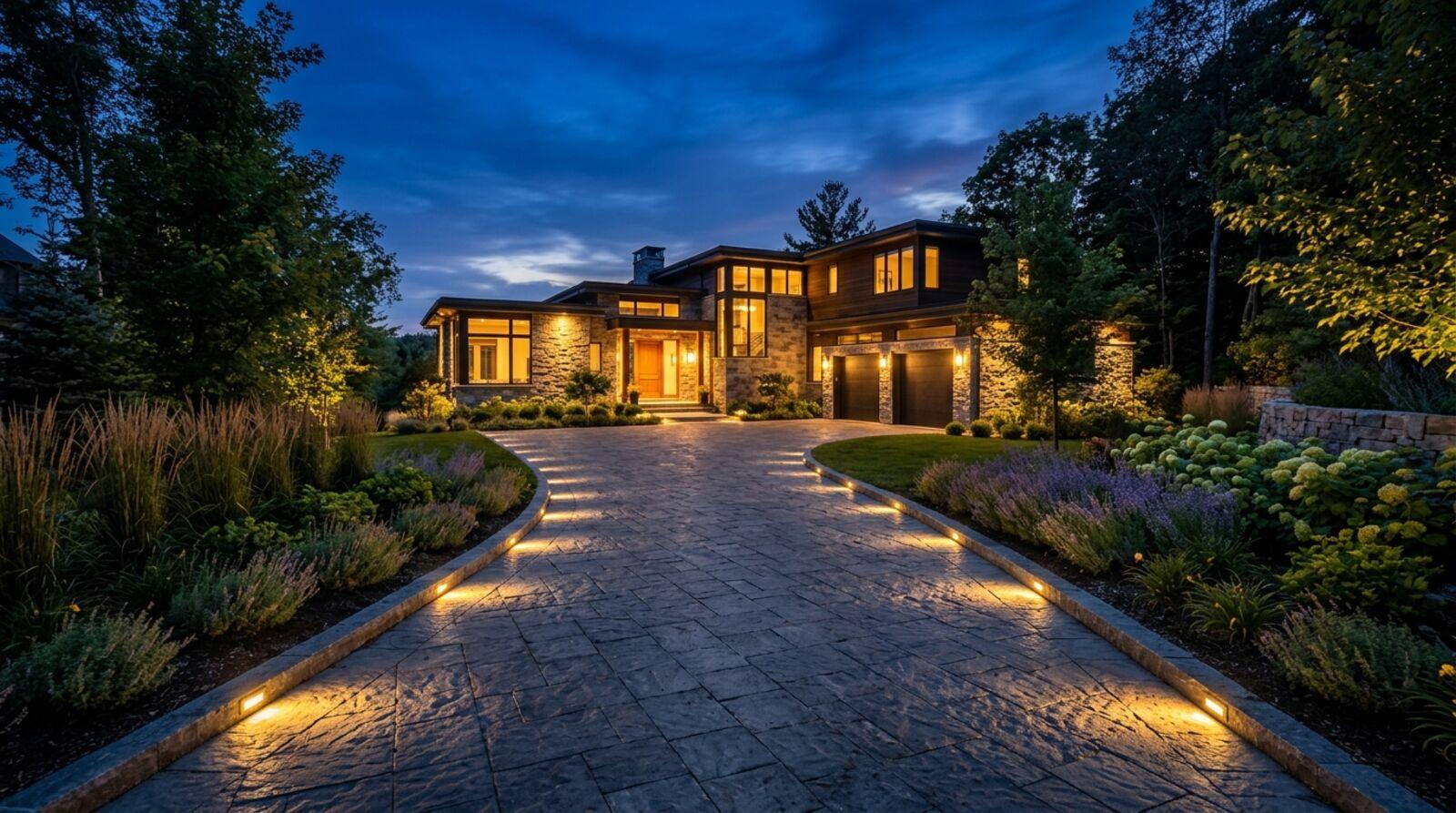
Lighting system
Lighting layout
Controls
Site complexity
Fixture rhythm
Spacing should guide the eye without making the driveway look like a runway.
Night curb appeal
Lighting changes how borders, pavers, planting, apron areas, and garage doors read after dark.
Wiring path
The best fixture is still the wrong choice if the wire run crosses hardscape or creates voltage-drop issues.
Preview before trenching
Lighting should support the driveway design, not fight it.
Compare lighting with driveway material, borders, apron shape, nearby planting, and the garage view before committing to fixture placement or buried wire.
FAQ
Driveway lighting cost questions
Driveway lighting can range from a simple solar path-light setup to a multi-thousand-dollar low-voltage or hardwired system. Fixture quality, spacing, trenching, transformer size, controls, wire length, and electrical rules drive the final price.
Many driveway path lights are planned around 8 to 14 feet apart. Tighter spacing looks brighter and more formal. Wider spacing lowers cost but can leave dark gaps, especially on curved driveways or near steps and entries.
Solar lights can work for simple accents when the driveway gets good sun. They are less reliable for strong, consistent illumination than low-voltage LED systems, especially under trees, in winter, or near shaded garages.
DrivewAI can help visualize the driveway surface, borders, planting, entry path, and lighting direction together so the final plan feels intentional before buying fixtures or hiring an installer.