Brick Driveway Guide: Patterns, Costs, and Longevity
By Noah James
• 8 min read • Founder, DrivewAI
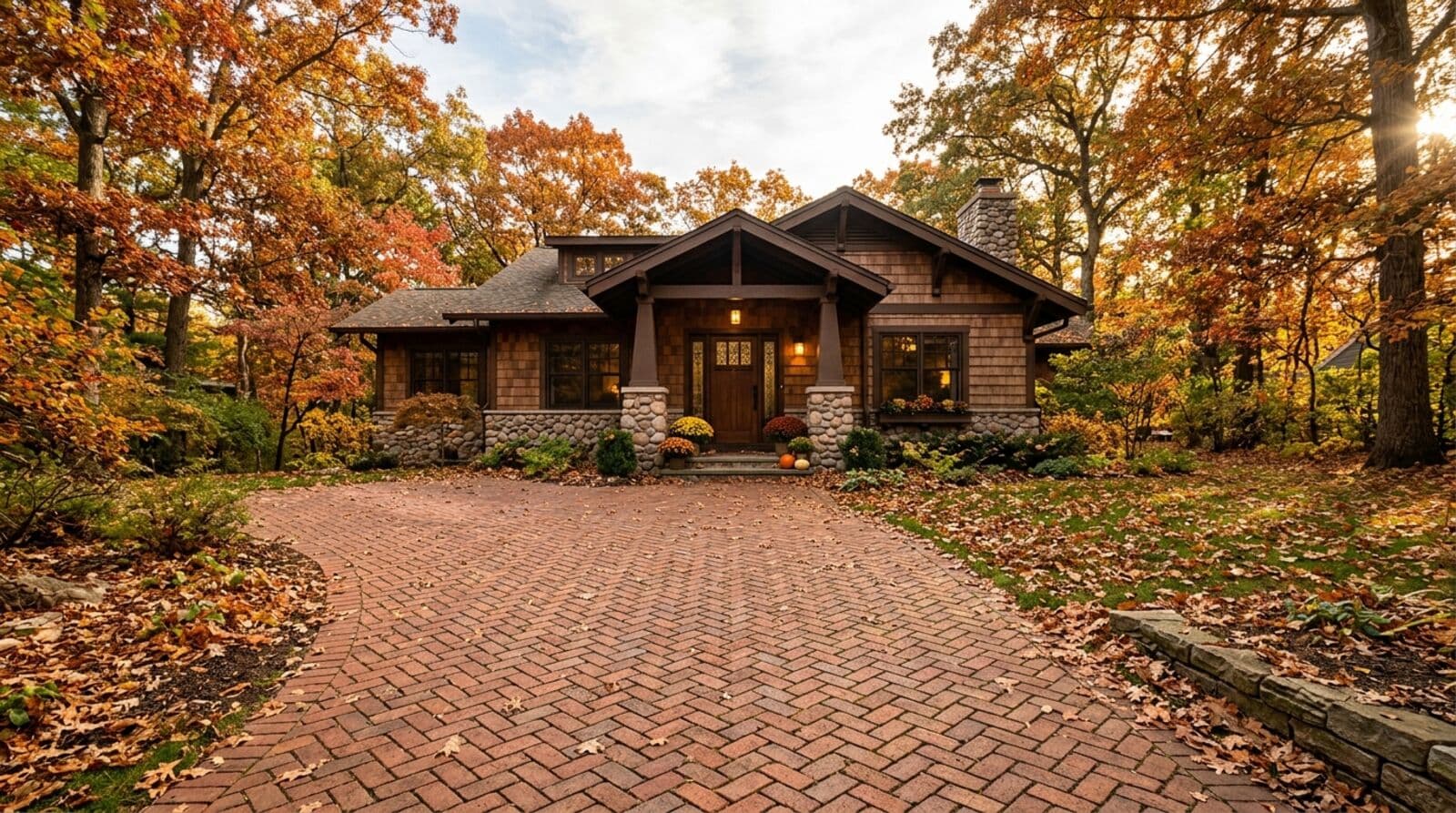
A brick driveway is the kind of surface that makes people slow down when they drive past your house. There is something about the color variation, the texture, the visible craftsmanship that signals permanence. But brick is also one of the most misunderstood driveway materials out there. People either assume it costs a fortune (sometimes true), that it falls apart in cold climates (not if installed correctly), or that it looks old-fashioned (depends entirely on the pattern). This guide covers what brick actually costs, which patterns hold up best, and when brick is genuinely worth choosing over concrete pavers or poured concrete.
What Makes Brick Different from Concrete Pavers
This is the first thing to clear up because the confusion runs deep. Concrete pavers are manufactured from poured concrete pressed into molds. Brick pavers are made from clay that is fired in a kiln at extremely high temperatures, usually above 2,000 degrees Fahrenheit. That firing process gives brick its characteristic color variation — the reds, browns, and tans are baked into the clay itself rather than added as a surface pigment.
The practical difference matters. Concrete pavers can fade over time as UV exposure breaks down the surface pigment. Brick does not fade because the color runs through the entire unit. A brick driveway installed in 1960 still looks like brick. A concrete paver driveway from 2010 might already look washed out. The Brick Industry Association publishes durability data showing properly fired clay brick lasting well over a century in paving applications.
That said, concrete pavers offer more shape variety, more color options, and generally cost less per square foot installed. Brick wins on longevity and character. Concrete pavers win on versatility and budget.
Brick Driveway Patterns That Actually Hold Up
The pattern you choose is not just aesthetic — it affects structural performance under vehicle loads. Here are the patterns worth considering.
Herringbone is the gold standard for driveways. Bricks are laid at 45 or 90 degrees to each other, creating an interlocking zigzag. This pattern distributes weight across multiple bricks simultaneously, which is why civil engineers have preferred it for centuries. A 90-degree herringbone is the strongest option and the one most installers recommend for vehicular traffic. It also happens to look great, which is a nice coincidence.
Running bond is the simplest pattern — bricks laid end to end with each row offset by half a brick, like a standard wall. It is easier and faster to install, which saves on labor costs. Running bond works fine for residential driveways that see normal passenger vehicle traffic. It does not interlock as effectively as herringbone, so you may see slightly more shifting over decades of use.
Basket weave alternates pairs of bricks laid horizontally and vertically. It creates an attractive woven appearance but is structurally the weakest of the three common patterns. Most installers recommend basket weave for patios, walkways, and decorative borders rather than the main driveway surface. If you love the look, consider using it for the apron or border while running herringbone in the traffic lanes.
Stack bond — bricks laid in a straight grid with no offset — should be avoided entirely for driveways. It has almost no interlocking strength and will shift under repeated vehicle loads.
Real Costs for a Brick Driveway
A brick driveway typically costs between $15 and $30 per square foot installed, with most homeowners landing in the $18 to $25 range. For a standard two-car driveway of around 600 square feet, that puts the total between $10,800 and $15,000.
Here is where that number gets interesting. Labor accounts for roughly 60% of the total cost. The bricks themselves are not outrageously expensive — clay pavers run about $4 to $8 per square foot for materials. But installing them correctly requires a skilled mason who understands base preparation, sand bedding, edge restraints, and pattern layout. A herringbone pattern takes significantly longer to lay than running bond, so expect labor costs to be 15 to 20 percent higher for herringbone.
The base preparation is where installers either earn their money or cut corners. A proper brick driveway needs 6 to 8 inches of compacted gravel base, a 1-inch sand setting bed, and rigid edge restraints to keep the field from migrating. Skimping on the base is the number one reason brick driveways fail. If someone quotes you $12 per square foot, ask very specific questions about base depth and compaction method.
Other cost factors include your region (labor rates vary enormously between markets), site access (tight spaces or long carry distances add cost), demolition of existing driveway surface, and whether you want a soldier course border or other decorative edge treatment.
Durability and Climate Considerations
Properly manufactured and installed brick driveways last 50 to 100 years. That is not marketing language — it is the observed lifespan of clay paving brick in vehicular applications. The key qualifier is "properly manufactured." You need brick rated for severe weathering exposure, designated as SX under ASTM C902 standards. These bricks can handle freeze-thaw cycles without spalling.
If you live in a climate with harsh winters, make sure your installer uses SX-rated brick specifically designed for paving. Wall brick and interior brick are not the same product. Using the wrong brick in a freeze-thaw climate will lead to surface flaking within a few years, and the installer will blame the brick while the brick manufacturer blames the installer.
Salt is worth mentioning. De-icing salts can damage brick surfaces over time, though brick is generally more salt-resistant than concrete. If you use salt heavily, consider switching to calcium magnesium acetate or sand for traction. Your brick will thank you in year 20.
Maintenance That Actually Matters
Brick driveway maintenance is minimal compared to asphalt or plain concrete, but it is not zero. The main tasks are joint sand replenishment and weed prevention.
Joint sand — the material between the bricks — gradually washes out from rain and gets displaced by traffic. You will need to sweep in new joint sand every two to three years. Polymeric sand, which hardens when wet, dramatically reduces this frequency and also inhibits weed growth. A bag of polymeric sand costs $20 to $30 and covers about 50 to 75 square feet depending on joint width. It is the single best maintenance investment for a brick driveway.
Weed control is the other ongoing task. Weeds grow in the joints, not through the brick. Keeping joints filled with polymeric sand is the best prevention. For weeds that do appear, a simple vinegar solution or manual pulling works. Avoid herbicides that might stain the brick surface.
Sealing is optional and somewhat controversial. A penetrating sealer can enhance color and provide some stain resistance, but it also changes the natural appearance and needs reapplication every few years. Most brick purists skip the sealer. If you do seal, use a breathable penetrating sealer rather than a film-forming topical sealer, which can trap moisture and cause problems.
When a Brick Driveway Beats Concrete Pavers
Brick is the better choice when longevity is your priority and you are willing to pay a premium for it. If you plan to stay in your home for 20-plus years, the math favors brick because it will outlast concrete pavers without fading or losing surface integrity.
Brick also wins on homes with traditional or historic architecture. A brick driveway on a Colonial Revival or Tudor home looks intentional and correct. Concrete pavers, no matter how well made, always look like concrete pavers. On a mid-century modern home, you might be better served by exposed aggregate or large-format concrete pavers that match the aesthetic.
Concrete pavers are the better choice when you want more color options, modern shapes like linear planks, or when budget is a primary concern. There is no shame in concrete pavers — they are a solid product. But they are not brick, and they will not age like brick.
The Craftsmanship Factor
Here is something that rarely appears in driveway material guides: a brick driveway is only as good as the person who installs it. This is not like pouring concrete, where a competent crew can produce a consistently acceptable result. Brick installation requires genuine skill — reading the grade, managing drainage, cutting border pieces cleanly, maintaining consistent joint width across hundreds of linear feet.
The best brick installers have years of experience and take visible pride in their work. They will have photos of driveways they installed five or ten years ago that still look perfect. Ask for those references specifically. A new installation always looks good. The question is whether it still looks good after five winters and ten thousand car trips.
Visualize Before You Commit
Choosing between herringbone and running bond, deciding on brick color, figuring out border treatments — these decisions are hard to make from samples alone. Upload a photo of your current driveway to DrivewAI and preview what different brick patterns and colors would look like on your actual property. It takes about 30 seconds and costs less than a single brick. You can also explore other driveway materials in our guides on stamped concrete vs pavers and exposed aggregate vs stamped concrete to make sure brick is the right call before you start getting quotes. Try it free — upload your driveway photo at drive-wai.com and see the transformation.
About the author
Noah James
Founder, DrivewAI
Noah James is the founder of DrivewAI, an AI home visualization platform that helps homeowners, contractors, and real estate agents preview renovations before committing. He built DrivewAI to close the gap between inspiration and execution in home improvement.
His writing focuses on practical renovation decision-making, material comparisons, and how AI visualization tools are changing the way people plan projects — from driveway replacements to full interior staging.
See your home transformed by AI
Upload a photo and get AI renderings across every style. Designs from $9 with a 24-hour refund guarantee.
Try DrivewAI Free